Summary — "The National Guard arrives in Chicago" (The Washington Post, Post Reports)
Overview
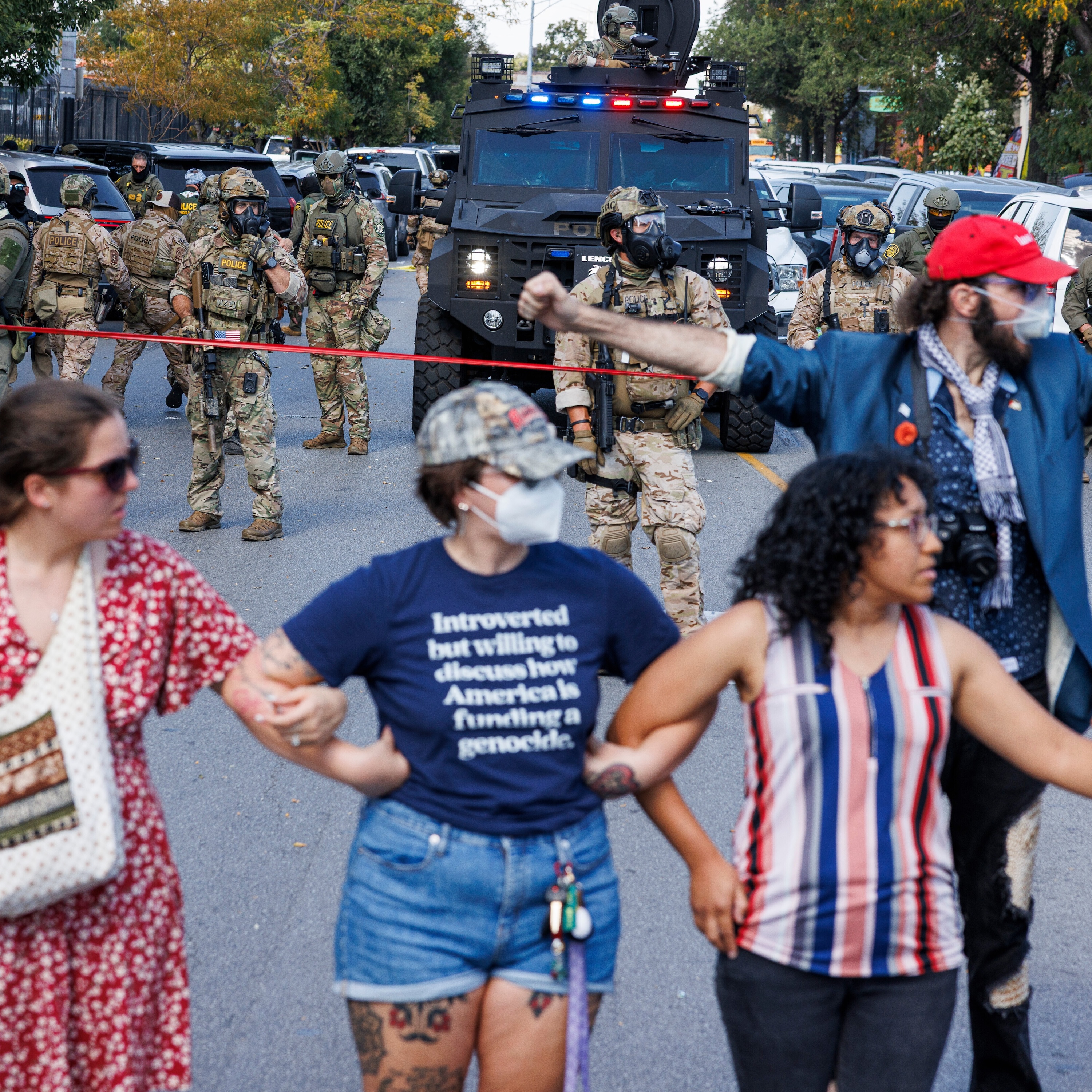
This episode examines the Trump administration’s recent escalation of federal immigration enforcement in Chicago — including the federalization and deployment of roughly 500 National Guard members — and how city residents and officials are responding. Reporter Kim Belware explains the tactics used by ICE and CBP, the mismatch between federal rhetoric and on-the-ground reality, the legal fight led by Illinois officials, and grassroots resistance tactics emerging across Chicago neighborhoods.
Key points & main takeaways
- Federal escalation
- The Trump administration launched "Operation Midway Blitz" in Chicago, increasing ICE/CBP raids and federal presence; about 500 National Guard members have been federalized and deployed in Illinois, concentrated in Chicago and nearby areas.
- Tactics and incidents
- High-profile enforcement actions include: arrests of families in public (e.g., near Crown Fountain), a dramatic pre-dawn South Shore apartment raid involving a Black Hawk helicopter and agents rappelling down, and a southwest-side incident in which a woman was shot by a CBP agent.
- Some detainees appear to be long-time community members (street vendors, day laborers) rather than the "violent criminals" the administration says it is prioritizing. U.S. citizens have reportedly been detained in some sweeps.
- Rhetoric vs. reality
- Federal rhetoric frames Chicago as lawless and dominated by immigrants committing violent crimes. Local reporting finds that the portrayal is often exaggerated and inconsistent with neighborhood life; broader research indicates immigrants generally have lower crime rates than native-born Americans.
- Community response
- Neighborhood-level mobilization is strong: know-your-rights trainings, phone/text trees, signal groups, “whistle” events to warn neighbors, and people physically accompanying vulnerable workers to deter ICE actions.
- Legal and political pushback
- Illinois Governor J.B. Pritzker and Chicago Mayor Brandon Johnson sued to block federal deployment, arguing it is unnecessary and unconstitutional. A federal judge declined an immediate injunction pending further review (decision deferred).
- The federal government’s authority to federalize state National Guard forces or use the Insurrection Act is legally complex and historically rare; governors have sought court relief in similar instances (e.g., Oregon, California).
- Risks and fears
- Residents fear that an increased militarized presence could provoke confrontations, be used as justification for further federal force, and deepen trauma within communities where detained people are integral to daily life.
Notable quotes & insights
- "Chicago has become the epicenter of President Donald Trump's war on Democratic cities." (narration)
- Governor Pritzker: "Donald Trump is using our service members as political props and as pawns in his illegal effort to militarize our nation's cities."
- Reporter insight: Neighborhoods are mobilizing not just through big rallies but by daily, community-led protective measures — whistles, phone trees, accompaniment of vulnerable workers — driven by care for neighbors who are integral to the community fabric.
Topics discussed
- Operation Midway Blitz (federal immigration enforcement initiative)
- ICE/CBP raids and arrest practices
- National Guard federalization; limits on Guard performing civilian law enforcement
- Insurrection Act and precedent (e.g., 1992 L.A. riots)
- Legal challenge by Illinois and Chicago; pending court decisions
- Community resistance strategies (know-your-rights, whistles, accompaniment)
- Specific incidents: Crown Fountain family arrest; South Shore helicopter raid; southwest-side CBP shooting
- Data and research on immigration and crime rates
Action items & recommendations (for different audiences)
- For community members / advocacy groups:
- Continue offering and attending know-your-rights trainings.
- Use organized alert systems (phone trees, signal/WhatsApp groups) to warn neighbors.
- Document and film detentions where safe; coordinate legal support for detainees.
- Mobilize civic pressure on local/state officials to pursue legal remedies and transparency.
- For local/state officials:
- Keep pursuing legal challenges while pressing federal authorities for clarity on Guard roles and locations.
- Demand release of bodycam footage and detailed charging information in high-profile incidents.
- Coordinate community outreach to reduce fear and provide legal/mental-health resources for impacted families.
- For journalists & the public:
- Scrutinize federal claims about targets (violent criminals) vs. the documented profiles of those arrested.
- Track court rulings related to national guard federalization and Insurrection Act usage.
- Seek transparency on where Guard units are stationed and what specific duties they are assigned.
Brief chronology / notable incidents
- September: Trump announces Operation Midway Blitz focused on immigration enforcement in Chicago.
- Recent week(s): Hundreds arrested in ICE raids; family arrests publicly documented; South Shore midnight raid with helicopter and rappelling agents.
- Weekend incident: CBP agent shot a woman on the southwest side; conflicting official and defense accounts; bodycam footage sealed.
- Lawsuit: Governor Pritzker and Mayor Johnson sue to block Guard deployment; judge deferred ruling (initial request for temporary injunction denied pending later decision).
Bottom line
Federal immigration enforcement and the federalization of the National Guard in Chicago have intensified tensions between the Trump administration and local communities. Reporting suggests a significant gap between the administration’s portrayal of widespread violent crime by undocumented immigrants and the reality that many arrested individuals are longstanding community members. The situation has prompted robust neighborhood-level resistance and an active legal fight over federal authority — with potential constitutional implications and real risk of escalating confrontations on the streets.