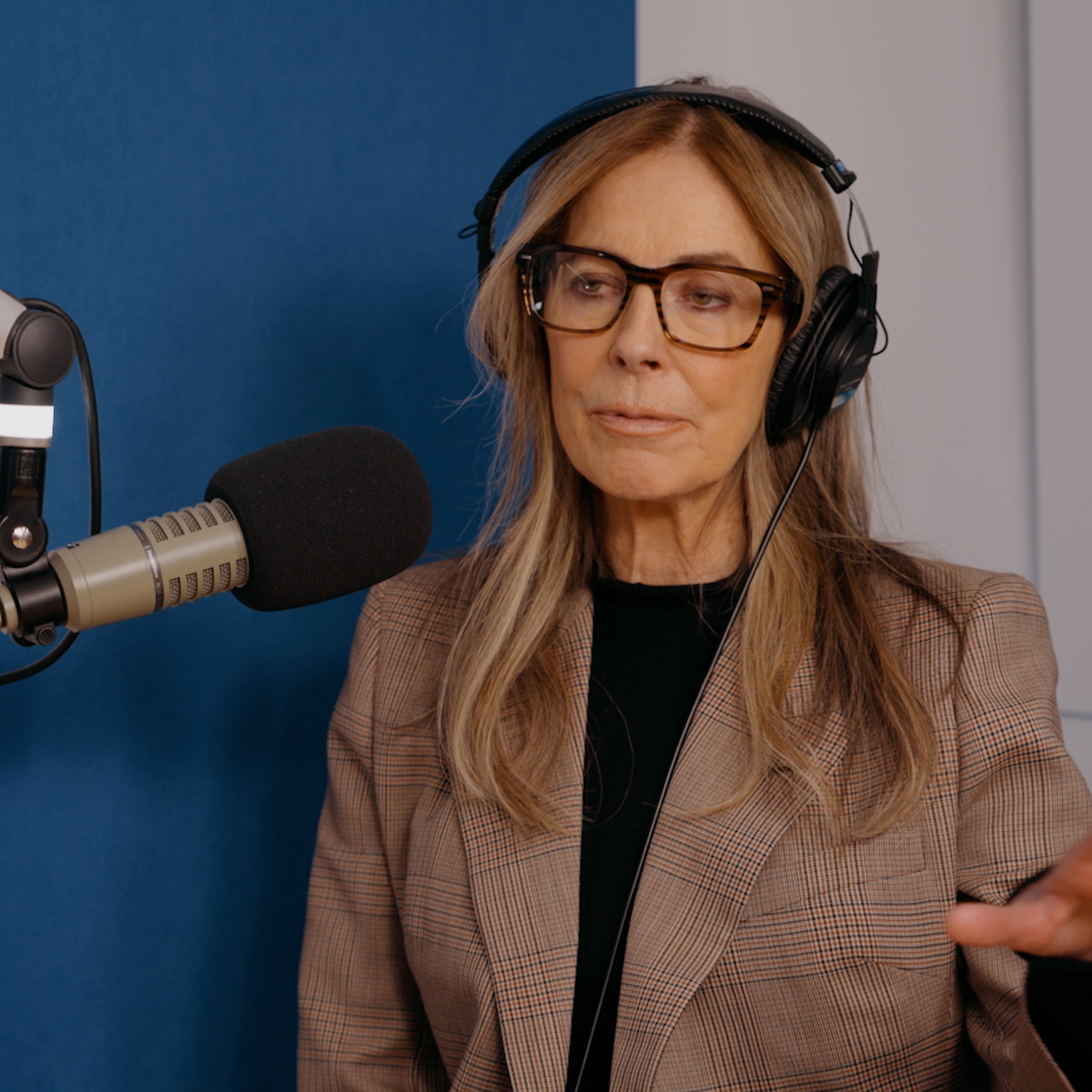
Overview of Kathryn Bigelow on ‘A House of Dynamite’ (Post Reports)
This Washington Post Post Reports interview (host Elahe Izadi) features director Kathryn Bigelow and screenwriter Noah Oppenheim discussing their new film A House of Dynamite — a real‑time, high‑stakes drama about U.S. government officials responding to an incoming nuclear missile. The conversation covers the film’s origins, research and production choices, its structure (replaying the same ~18 minutes from multiple perspectives), questions about accuracy (and Pentagon pushback), and the broader political and moral questions the movie aims to revive about nuclear weapons and preparedness.
Key facts about the film and release
- Premise: A nuclear missile is tracked on a trajectory consistent with impact somewhere in the continental U.S.; the story depicts how command‑and‑control, the White House, STRATCOM and other agencies react in real time.
- Narrative device: The film compresses and revisits roughly 18 minutes (the time it might take for a trans‑Pacific or suborbital strike to reach North America) from multiple viewpoints to emphasize speed and limited decision time.
- Research/access: Filmmakers visited the White House Situation Room and the STRATCOM “battle deck,” used former officials and subject‑matter consultants on set, and recreated environments (e.g., Raven Rock continuity facilities).
- Distribution/impact: Released on Netflix; reported as the platform’s most‑watched movie globally with ~22 million streams in the first three days (per Netflix).
Main themes and filmmaker intent
- Normalization of nuclear danger: Bigelow argues nuclear weapons have become an “elephant in the room” — backgrounded and under‑discussed — despite a growing, complicated global threat environment.
- Urgency and realism: The filmmakers intended the movie as both entertainment and a fact‑based warning, aiming to spur public debate about preparedness, missile defense reliability, and denuclearization.
- Human dimension: The film deliberately shows decision makers as ordinary people with families and flaws (e.g., an expert called away while at Gettysburg) to underscore that institutions are run by humans, not machines.
- Violence depicted obliquely: Rather than onscreen spectacle, the film focuses on imagined, off‑camera violence (psychological and moral weight) as characters confront potential catastrophe.
Accuracy, pushback, and technical debates
- Missile‑defense debate: Bloomberg reported the Pentagon’s Missile Defense Agency circulated guidance to correct perceived false assumptions about weapon systems depicted in the film. The filmmakers respond that:
- They consulted many experts and used publicly available testing data.
- Real‑world intercept tests show imperfect performance (discussed as roughly ~55–60% success in controlled tests), raising questions about whether an “impenetrable shield” is realistic.
- Consulting sources: Bigelow and Oppenheim spoke with former senior White House, Pentagon, CIA, and STRATCOM personnel and had some serve as on‑set technical advisors.
- Access timing: Some access and briefings occurred during the Biden administration.
Political context and timeliness
- Current events referenced: The interviewers and filmmakers note contemporaneous events increasing the film’s urgency — U.S. government shutdown furloughs affecting some federal workers (including those linked to the nuclear enterprise), and public statements about restarting nuclear testing by major powers.
- Intended civic effect: Bigelow and Oppenheim hope the film reignites discussion on denuclearization, nonproliferation, stockpile reduction and whether policy emphasis should shift from trying to build perfect defenses to reducing the number and role of nuclear weapons.
Notable quotes
- Kathryn Bigelow: “It really has been normalized. It's sort of the elephant in the room, and nobody talks about it anymore.”
- Noah Oppenheim: “A movie is basically a question posed to an audience, and the audience has the ability to make an answer.”
- Bigelow (metaphor): “We live... in a house of dynamite.” — framing the film’s central provocation.
Discussion prompts / actions for viewers
- After watching: Should public policy prioritize missile‑defense R&D, or focus more on arms‑control, nonproliferation, and stockpile reductions?
- Ask your representatives: How often do civilian leaders rehearse nuclear decision protocols, and what transparency or oversight exists for continuity of government plans?
- Broader civic question: How do we overcome normalization so a new generation understands nuclear risk and supports meaningful policy responses?
Bottom line
A House of Dynamite is a researched, urgency‑driven film that dramatizes how little time top officials might have in a real nuclear warning. Bigelow and Oppenheim aim not only to entertain but to provoke renewed public and policy debate about nuclear weapons, the limits of missile defense, and the need for denuclearization. The film’s realism, access to sensitive spaces, and the timing of real‑world events have made it a lightning rod for conversation and technical scrutiny.