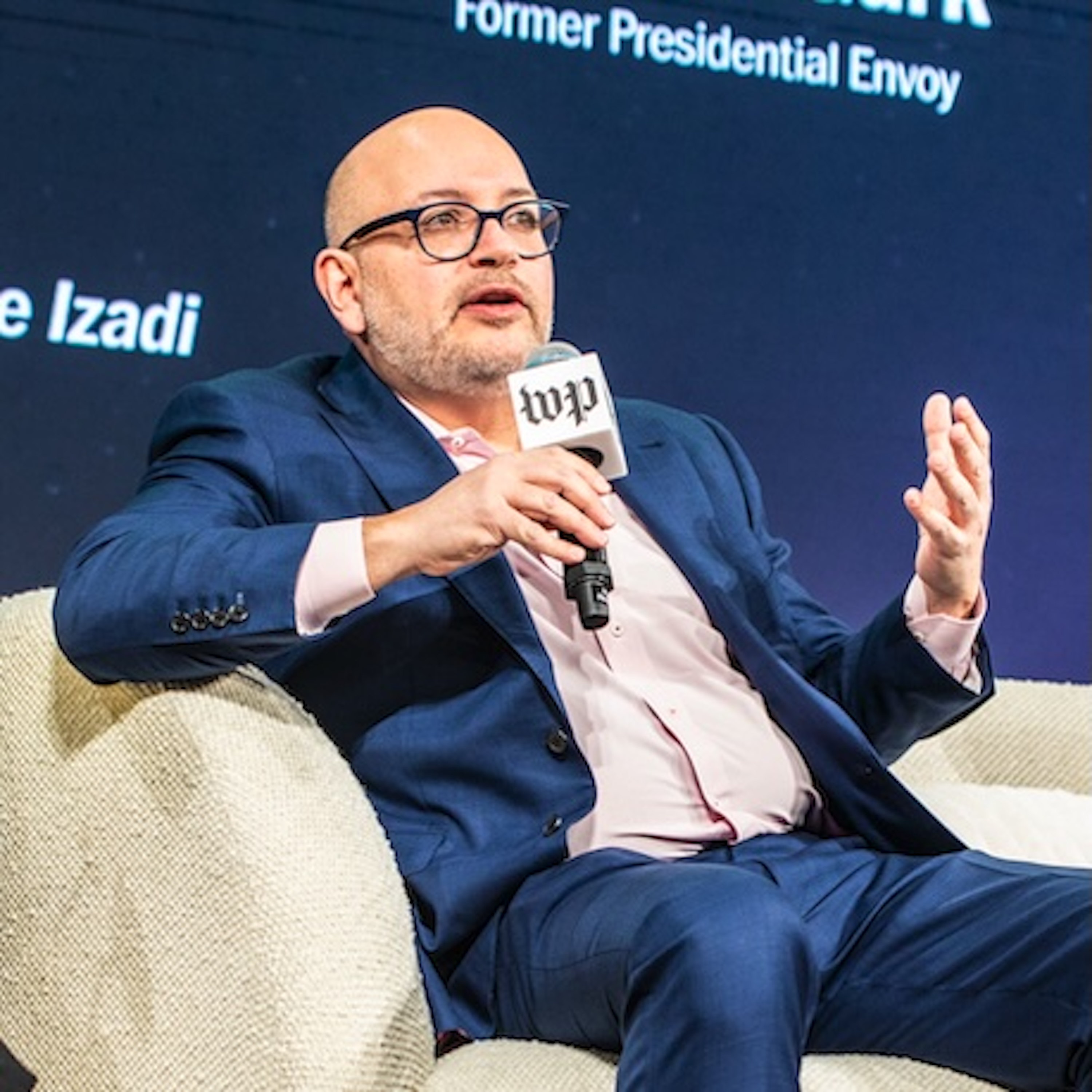
Overview of Jason Rezaian, Iran and the costs of press freedom
This Washington Post live conversation (host Ella Hay) marks the 10-year anniversary of Post journalist Jason Rezaian’s wrongful imprisonment in Iran. Guests Jason and his wife Yeganeh (Yegi) Rezaian and Ambassador Brett McGurk reflect on their experience, the personal aftermath, and the broader implications for press freedom and U.S. policy as devastating anti‑government protests and a communications blackout unfold inside Iran. The discussion covers hostage diplomacy, the shrinking window for international reporting in closed societies, immediate humanitarian concerns, and initiatives to strengthen press freedom.
Participants
- Jason Rezaian — Washington Post journalist, held 544 days in Iran; now director of The Washington Post’s Press Freedom Initiatives.
- Yeganeh (Yegi) Rezaian — Iranian‑born journalist; arrested with Jason (released after 76 days); press freedom advocate.
- Ambassador Brett McGurk — former U.S. presidential envoy involved in negotiating Jason’s release; experienced Middle East diplomat.
- Host: Ella Hay, The Washington Post.
Key takeaways
- Personal and political: The Rezaian family’s ordeal shaped their advocacy; they emphasize resilience and sustained hope while warning the world about worsening press freedom.
- Shrinking reporting window: International and independent reporting inside Iran has dramatically declined since Jason’s release—making it harder to verify events and hold authorities accountable.
- Communications blackout: A sweeping internet/phone shutdown during the recent protests has severely limited situational awareness; footage that does leak out must be painstakingly verified.
- Severe crackdown and uncertainty: Guests described a brutal, large‑scale government response with unclear casualty figures; some experts cited in discussion estimate very high death tolls.
- Regime durability and risk: Panelists argued the regime is at a weak point yet likely to cling to power through brute force; the aftermath of any collapse is unpredictable and risky.
- Policy options: There is growing Western resolve (e.g., EU action on IRGC), but panelists urged a long‑term, multilateral campaign—diplomatic, economic, communications, and, where appropriate, military deterrence—to protect civilians and deter massacres.
- Press Freedom Desk: Jason launched a Washington Post initiative to empower journalists and local sources in closed societies, improve verifiable reporting, and build methods to get trustworthy information out.
Background / timeline (concise)
- Arrests: Jason and Yeganeh Rezaian were arrested in Tehran; Yegi freed after 76 days; Jason imprisoned for 544 days.
- Release: Secured through 14 months of secret negotiations that Ambassador McGurk helped lead; greeted on the tarmac upon release.
- Today’s context: Recorded during a major wave of anti‑government protests inside Iran, accompanied by widespread repression and near‑total communications blackouts.
Main topics discussed
Press freedom and reporting challenges
- Rapid decline in foreign correspondents and independent reporting from inside Iran; very few visas granted.
- Newsrooms rely heavily on visual‑forensics work (verifying videos/images exported from Iran) and on diaspora/personal contacts.
- The Post’s Press Freedom Desk aims to equip people inside closed societies with tools and verification methods so stories can be published safely and credibly.
Current protests and repression in Iran
- Guests described an extreme communications blackout; when brief windows open, graphic footage shows violent crackdowns.
- Unclear casualty totals; human rights groups and visual‑forensics analysts are attempting to estimate.
- Panelists argued the regime is simultaneously weak and willing to use mass violence to survive.
U.S. policy, international response, and risks
- EU designation of the IRGC as a terrorist organization noted as a significant development.
- McGurk argued there may be no diplomatic off‑ramp currently and that the situation risks military confrontation unless deterrence and long‑term instruments of power are applied wisely.
- Recommendations included restoring communications, targeted sanctions, multilateral coordination, and careful use of military signals (deterrent strikes in past crises cited as precedent).
- Cautions: Avoid simplistic “parachuting” of exiled leaders into power; support must prioritize civil society and avoid exacerbating sectarian divisions.
Notable quotes
- Yeganeh Rezaian: “We can’t let go of hope… giving up and giving in to the repression… was not an option.”
- Jason Rezaian: “That was the beginning of the end of international news coverage inside Iran.”
- Ambassador McGurk: “The system is going to hold on by brute force… it is not going to simply come apart.”
Practical actions and recommendations discussed
- Prioritize restoring and protecting communications (tools, routing, and sanctions that prevent shutdowns).
- Support and fund verification and visual‑forensics teams to responsibly document abuses.
- Coordinate long‑term, multilateral policy (sanctions, diplomacy, information assistance) to protect protesters and deter mass violence.
- Assist Iranian civil society and diaspora efforts to reduce the risk of fragmentation or sectarian violence in post‑crackdown scenarios.
- Avoid policy moves that undermine dissenters (e.g., ill‑timed deportations of asylum seekers).
Human elements and closure
- The conversation mixed policy seriousness with personal stories—resilience in family life, parenting, and cultural ties (e.g., the baklava story linking Jason to an Azerbaijani prison cellmate and a bakery in D.C.).
- Tone: grave about Iran’s current violence but sustained by personal optimism and commitment to supporting journalists and civilians.
Where to learn more
- The Washington Post’s reporting and visual forensics work on Iran (search The Washington Post for related stories).
- Jason Rezaian’s podcast and the Press Freedom Desk initiative for resources on how local sources are being supported and trained in verification.