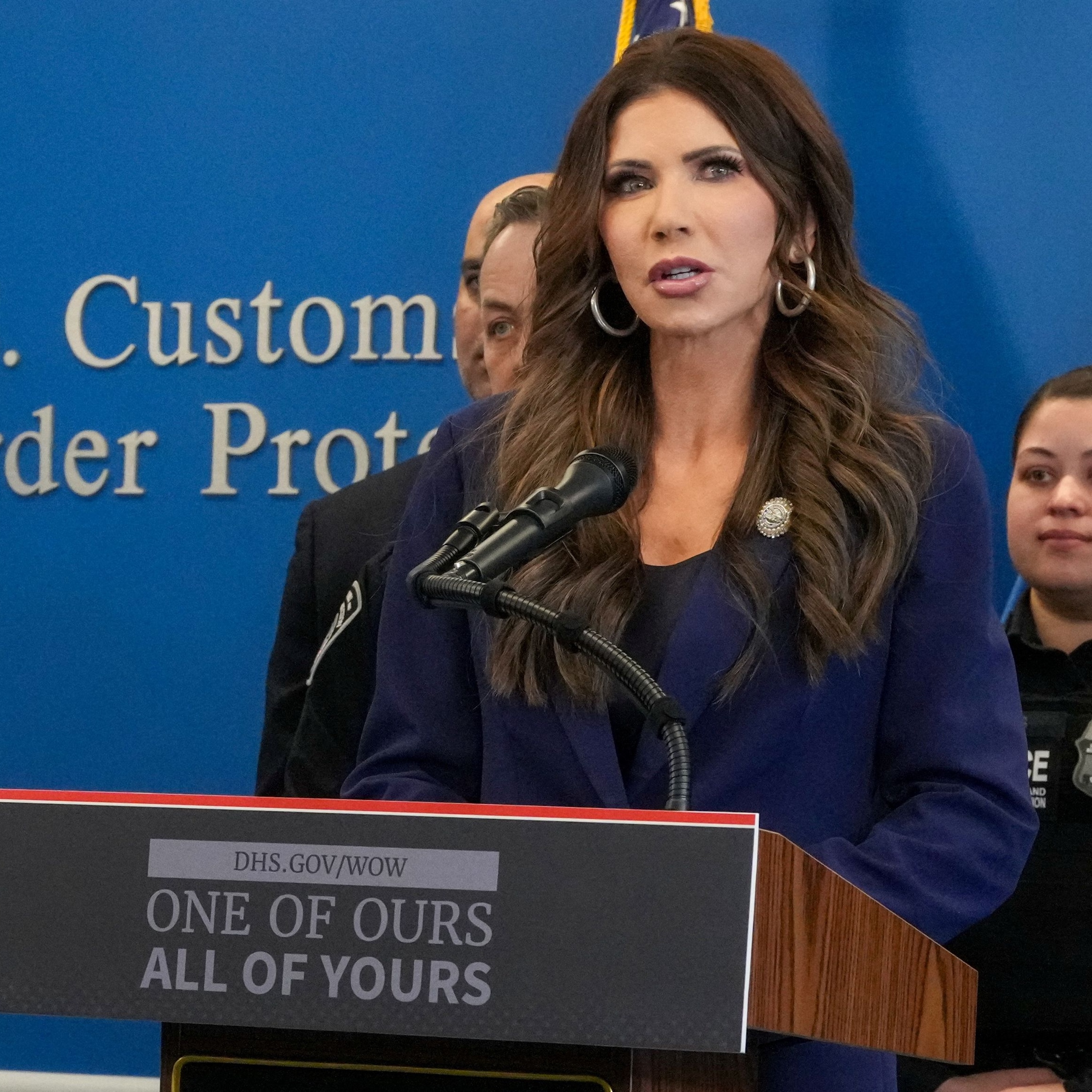
Overview of How Kristi Noem transformed immigration enforcement (Post Reports)
This episode of Post Reports (host Martine Powers) features Washington Post immigration reporter Marianne Levine explaining how DHS has shifted under Secretary Kristi Noem toward aggressive interior immigration enforcement. Levine traces Noem’s rise, details operational and organizational changes inside DHS (ICE, CBP/Border Patrol, FEMA), reviews two high-profile Minneapolis killings involving DHS officers, explores legal and oversight questions, and summarizes lawmakers’ efforts to push back—including impeachment articles and funding-condition fights.
Key takeaways
- Under Secretary Kristi Noem, DHS has refocused significant personnel and resources on large-scale immigration enforcement inside U.S. cities, not just at the border.
- Agencies and staff normally dedicated to other missions (e.g., Border Patrol, FEMA personnel) have been reassigned to immigration operations, and ICE/CBP tactics have shifted toward more aggressive interior actions.
- DHS leadership frames the shift as a public-safety/national-security effort targeting violent criminals; reporting shows many arrested individuals lack violent-crime records.
- Two recent Minneapolis shootings involving DHS officers (the deaths of Alex Preddy and Renee Good) intensified scrutiny: critics say DHS rushed to justify use of force and employ strong law-enforcement messaging (Noem called one incident “an act of domestic terrorism”).
- Congressional and local pushback is growing: House Democrats advanced articles of impeachment against Noem, and Democrats in Congress are seeking guardrails in funding negotiations. Noem is expected to testify before the Senate in March.
Background: DHS and Kristi Noem
- DHS was created after 9/11 by combining ~22 federal entities to centralize counterterrorism, immigration, disaster response, and other functions.
- Kristi Noem: former U.S. representative (elected 2010), governor of South Dakota (from 2019), media-visible conservative Republican who increased her national profile via pandemic positions and publicity campaigns.
- Political network: Noem’s close advisor is Corey Lewandowski (former Trump campaign manager), who helped connect her to the Trump political orbit and now serves as a top advisor at DHS—an important factor in her appointment and approach.
How DHS shifted under Noem’s leadership
- Resource reallocation: personnel from across government (including FEMA and other non-immigration units) reassigned to immigration enforcement.
- Border Patrol re-role: CBP/Border Patrol units are being deployed widely into interior cities (not just near the physical border)—using existing legal leeway (agents can operate within 100 miles of the border), but at an unprecedented scale.
- Tactics: ICE/Border Patrol operations in “blue” cities have included neighborhood/home arrests, tear gas at protests, detaining U.S. citizens, and high-visibility raids. DHS has also funded a large public-relations ad campaign (reportedly ~$200 million), raising questions about procurement and self-dealing.
- Messaging: Leadership emphasizes threats to officers and public safety; officials portray operations as targeting violent criminals and justify use-of-force decisions as self-defense.
Notable incidents, legal questions, and evidence
- Minneapolis shootings: Two separate incidents (Renee Good and Alex Preddy) in which DHS officers shot and killed individuals during enforcement operations prompted intense local and national debate.
- Noem’s immediate public framing: she described at least one incident as “an act of domestic terrorism” and defended the officers’ actions as self-defense—critics say this was premature and showed a reflexive blanket defense of enforcement.
- Use-of-force standards: Official policy allows deadly force when officers reasonably believe their lives are threatened. Video evidence in some incidents has cast doubt on whether that threshold was met, raising legal and investigative questions.
- Legal authority: Border Patrol can operate interior enforcement within statutory/geographic limits (commonly cited 100-mile zone from an external border), but the scale and frequency of interior deployments are highly unusual.
Political and oversight responses
- Impeachment effort: Rep. Robin Kelly introduced articles of impeachment against Noem on three grounds—obstruction of Congress (blocking access to detention facilities), abuse of enforcement tactics under her leadership, and potential self-dealing over the DHS ad campaign. 130+ House Democrats have backed the effort; passage in a Republican-controlled House is unlikely but politically significant.
- Funding and guardrails: Democrats have sought to attach restrictions to DHS funding in broader government funding negotiations; they’ve threatened to remove DHS funding from continuing resolutions unless changes are made.
- Leadership changes: Greg Bovino (frontman for Minneapolis operations) is being removed from that role, and Tom Homan (a career official) is being sent to Minneapolis—interpreted as a White House move to de-escalate and shift tactics. President Trump reportedly spoke with Minnesota Governor Tim Walz and Minneapolis Mayor Jacob Frey (administration says talks were constructive).
- Upcoming oversight: Noem is expected to appear before the Senate in March to answer questions about DHS policy and the Minneapolis operations.
What to watch next
- Senate hearing in March with Secretary Noem—possible further revelations and political consequences.
- Outcomes of impeachment push in the House (symbolic pressure vs. practical consequence).
- Any substantive changes to DHS funding bills (guardrails limiting interior deployments or use-of-force protocols).
- Local developments in Minneapolis: whether federal operations are scaled back or reframed under new leadership (Tom Homan) and whether investigations into the shootings prompt prosecutions or policy changes.
Notable quote
- From Secretary Noem about the Minneapolis shooting: “This individual who came with weapons and ammunition to stop a law enforcement operation of federal law enforcement officers committed an act of domestic terrorism.” (Used by Levine to illustrate DHS’s rapid defensive framing.)
Produced by The Washington Post’s Post Reports; guest Marianne Levine, immigration reporter.