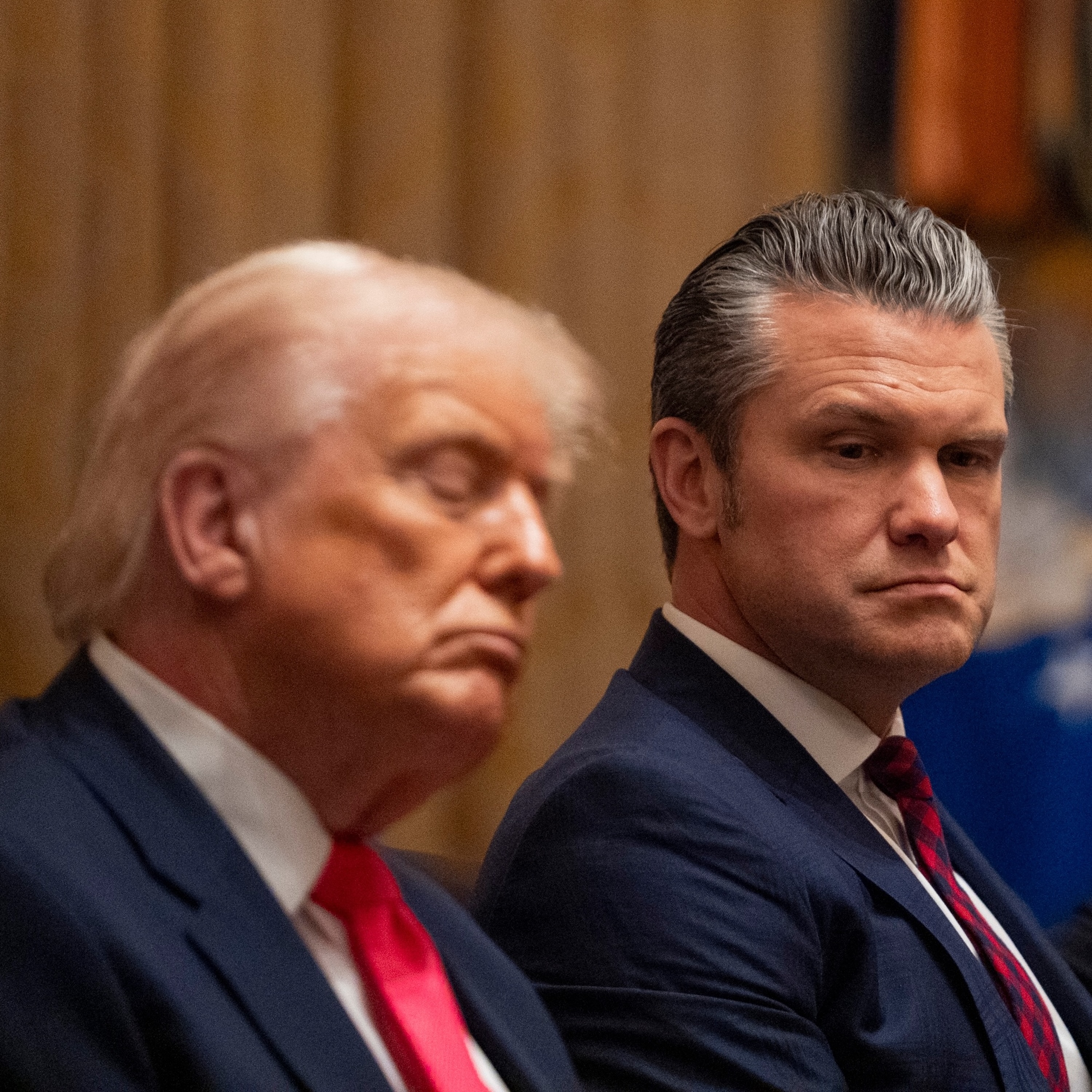
Overview of Hegseth defends boat strike; Putin rejects Trump peace plan
This episode of The Washington Post’s Post Reports politics roundtable (host Kolbie Echowicz) discusses two main stories: The Post’s reporting on Defense Secretary Pete Hegseth and a contentious U.S. boat strike in the Caribbean that killed survivors, and President Trump’s latest, ultimately unsuccessful, push to broker a Russia–Ukraine peace deal. Guests Matthew Choi (co-anchor of The Early Brief) and Michael Birnbaum (White House reporter) walk through the facts, legal and political fallout, administration messaging, Capitol Hill reaction, and the limits of Trump-style dealmaking. The show closes with listener Q&A about presidential renamings and taxpayer costs.
Key takeaways
- The Post reported that after an initial U.S. strike on a suspected drug-running boat, a second strike killed two survivors clinging to wreckage; an admiral ordered the second strike and the legality is now in dispute.
- White House and Pentagon messaging has been inconsistent: Hegseth initially denied or called the story “fake news,” later revised his account, and has shifted blame toward Admiral Frank Bradley.
- The incident has prompted bipartisan concern on Capitol Hill and likely further oversight — Bradley testified behind closed doors as the episode aired.
- Hegseth has a controversial background (former Fox host, narrow Senate confirmation, prior security lapses including “Signalgate”), which magnifies political vulnerability.
- Separately, Trump sent envoys Jared Kushner and Steve Witkoff to negotiate a Ukraine peace proposal heavily influenced by Russia; Putin did not accept the plan, highlighting limits to Trump’s leverage.
- Listener question: renaming federal entities (e.g., “Gulf of America,” “Department of War,” the U.S. Institute of Peace renamed for Trump) can be costly — DoD-level rebranding could be very expensive (news estimates around the billions), though institutional and statutory limits may constrain permanent change.
The boat strike: what The Post reported
- Incident: A U.S. military strike hit a small boat in the Caribbean suspected of carrying drugs to the U.S.
- Controversial second strike: After the initial strike, two survivors were reportedly clinging to wreckage; a second strike killed them. The attack has raised legal questions about use of force against people not posing an immediate threat.
- Chain of command: Admiral Frank Bradley (U.S. Special Operations Command) is reported to have ordered the second strike. Hegseth claims he watched the first strike but left before the second; other accounts earlier suggested he had been present for both.
Administration response and messaging problems
- Contradictions: Trump initially said he didn’t know about a second strike and implied Hegseth didn’t either; the White House later confirmed there was a second strike; Hegseth initially called The Post’s reporting “fake news” and has since revised his account.
- Defense justification: Admiral Bradley’s expected defense to Congress — survivors were seen climbing back onto the boat, which he would argue constituted a renewed threat and lawful target.
- Political protection: Trump has publicly defended Hegseth, praising commanders and attacking media coverage; Hegseth remains backed by the president for now.
Capitol Hill and oversight
- Bipartisan concern: Armed services committees are traditionally bipartisan; lawmakers from both parties have expressed alarm about transparency and potential violations of rules of war.
- Possible hearings: Bradley was testifying to lawmakers in closed-door sessions; more testimony and document requests are likely. Hegseth could be called, though that was not confirmed.
- Accumulation of issues: Hegseth’s narrow confirmation margin, prior controversies, and recent incidents (Signalgate + boat strike) have increased Hill frustration with the Pentagon’s transparency.
Hegseth’s background and security controversies
- Background: Former Fox News host, National Guard service in Iraq/Afghanistan, ran veterans groups with disputed finances; atypical presidential pick for Defense Secretary.
- Signalgate: Earlier this year Hegseth participated in group texts that included apparent operational details; the Defense Department inspector general found he violated security protocols and risked service members.
- Political standing: Seen as unpredictable and not deeply embedded in traditional Pentagon policymaking; often not the point person for complex negotiations (other cabinet officials handle those tasks).
Why the U.S. is striking boats and Venezuela context
- Rationale: Administration says strikes target drug shipments originating from Venezuela bound for the U.S.
- Policy posture: Trump has hinted at expanding strikes to land and has ramped up pressure on Venezuelan President Nicolás Maduro—aligning with hawkish allies (e.g., Marco Rubio) and domestic goals around migration and drugs.
- Risks: Kinetic actions against Venezuela would be a major shift and carry geopolitical and operational risks; some of Trump’s rhetoric (e.g., closing Venezuelan airspace) has been disruptive even when not followed by strikes.
Trump’s Ukraine peace push and why it failed
- Envoys and plan: Trump sent Jared Kushner and real-estate developer Steve Witkoff to negotiate. Witkoff’s plan reportedly leaned heavily toward Russian demands and lacked significant Ukrainian and European buy-in.
- Putin’s stance: Despite the plan favoring Russia, Putin either rejected it or demanded even more; Russia’s maximal demands (restrictions on Ukrainian sovereignty, NATO/EU constraints, limits on Ukraine’s military) make compromise difficult.
- Limits of Trump-style dealmaking: Guests argued Trump approaches conflicts like real estate deals (territory-focused), underestimating political, national, and identity stakes; the U.S. lacks leverage over Russia comparable to Trump’s influence in other mediations (e.g., Israel-Hamas ceasefire), so success was unlikely.
- Motive: Analysts suggested Trump is motivated by legacy and the prestige of brokering peace (and possibly a Nobel), but Ukraine’s conflict dynamics make a quick brokered settlement unrealistic.
Notable quotes
- “It’s been a journey in terms of the White House and Defense Department messaging.” — on shifting accounts around the strike.
- “If they were climbing back up… it seemed like they could call in help… that seems to be what he’s using to justify the strike.” — describing Admiral Bradley’s expected defense.
- “Trump wants a deal; the details are less important. He really wants a Nobel Peace Prize.” — comment on motive behind the peacemaking push.
Listener question: renamings and taxpayer cost
- Scope: Rebranding an entity like the Department of Defense would be enormous given DoD’s scale (millions of employees, huge infrastructure). Media estimates (citing NBC) suggest rebranding could cost on the order of billions.
- Smaller cases: Renaming smaller institutions (e.g., U.S. Institute of Peace to “Donald J. Trump Institute of Peace”) cost much less but still incur taxpayer expense; some changes may be easily reversed by future administrations.
- Political purpose: Guests argued rebranding is about legacy and messaging to supporters rather than administrative efficiency.
What to watch next
- Capitol Hill oversight: Further testimony from Admiral Bradley, potential subpoenas or hearings involving Hegseth, and document releases.
- Inspector General follow-ups: Any additional investigations or reports tied to the boat strike, Signalgate, or DoD transparency.
- Venezuela developments: Any shift from rhetoric to kinetic operations on land, or diplomatic steps targeting Maduro and Cuba.
- Ukraine diplomacy: Whether Trump’s envoys revise proposals, whether European/ Ukrainian input is solicited, and any changes in Putin’s negotiating posture.
Produced by The Washington Post; guests were Matthew Choi and Michael Birnbaum.