Overview of From al-Qaeda to the White House
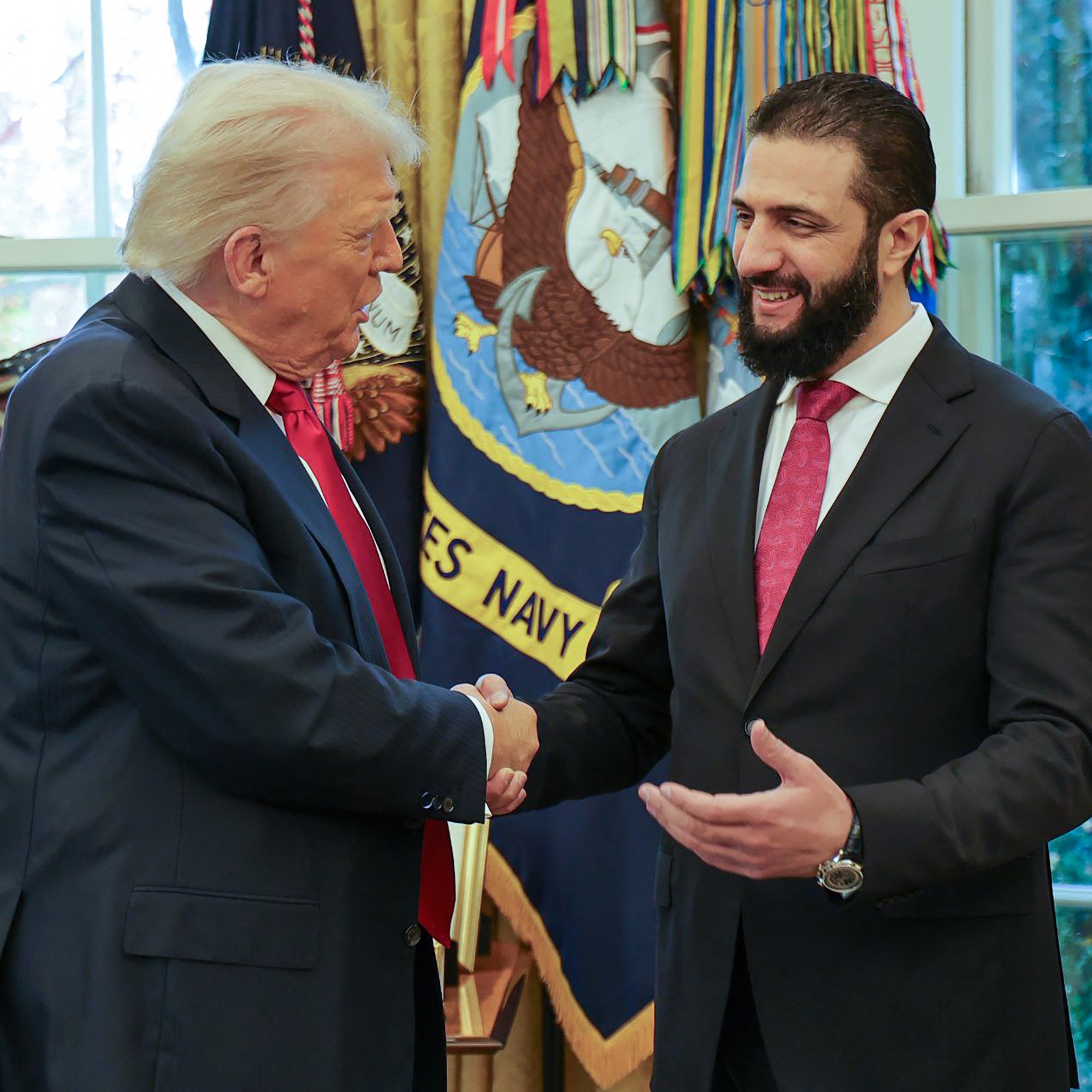
This Post Reports episode (The Washington Post) summarizes a sit‑down interview between Post reporters and Ahmed al‑Shara — the new Syrian president — after his historic visit to Washington, D.C., including a White House meeting with President Trump. The piece traces al‑Shara’s trajectory from fighting U.S. forces in Iraq and years in U.S. detention, to leading an al‑Qaeda‑affiliated insurgency in Syria, to toppling the Assad regime and seeking U.S. support to rebuild Syria and lift sanctions.
Key takeaways
- Ahmed al‑Shara went from an insurgent captured in Iraq (detained at Abu Ghraib, Taji, Bucca) to founding/leading Jabhat al‑Nusra and later an umbrella rebel group (referred to in the interview as HTS/HDS), ultimately ousting Bashar al‑Assad and declaring himself interim president.
- He is a U.S. and U.N.‑designated terrorist by past affiliation, yet recently met with President Trump — the first Syrian head of state to do so — and is lobbying Washington to lift sanctions and to pressure Israel over strikes on Syrian territory.
- Al‑Shara frames his past fighting as “noble” and defensive (fought in the region, not on U.S. soil) and insists he did not target innocents.
- His priorities now: stabilize the country, secure investment and reconstruction funds, reform security forces, and obtain international recognition/relief from sanctions.
- Major outstanding issues: congressional approval for permanent sanctions relief, continued threats from ISIS and sectarian violence, human‑rights and missing persons cases (e.g., journalist Austin Tice), and regional security dynamics (Israel’s strikes).
Background and trajectory of Ahmed al‑Shara
- Early life: Born in Saudi Arabia, raised in Syria; influenced by regional conflicts (e.g., Palestinian intifada) and the 2003 Iraq War.
- Iraq insurgency: Joined anti‑U.S. insurgency in Iraq, was captured and imprisoned for years; says prison educated him about insurgent networks and political Islam.
- Return to Syria (2011): Founded or led Jabhat al‑Nusra (al‑Qaeda affiliate) during the Syrian civil war, later broke with al‑Qaeda to form a broader rebel umbrella (HTS/HDS).
- Overthrew Assad: His forces seized Damascus, freed many prisoners, he declared Assad’s fall a victory and installed himself as interim president tasked with stabilization and preparing for future elections.
The Washington visit — objectives and reported outcomes
- Purpose: Lobby the U.S. for permanent lifting of sanctions, secure political support, seek U.S. pressure on Israel to stop strikes on Syrian territory, and attract investment for reconstruction.
- Meetings: Spent multiple days in Washington meeting President Trump, members of Congress, Syrian‑American groups; White House meeting was closed press but described as warm by official statements.
- Reported progress: Al‑Shara said talks were “going well” and he felt support from the Trump administration, but no final decisions were made — permanent lifting of sanctions would require Congress.
- Security ask: He asked U.S. assistance/pressure to halt Israeli strikes and secure Syrian sovereignty.
Domestic challenges and governance
- Stabilization: He installed a cabinet and relies on HTS/former rebel fighters as core security forces; presents his presidency as temporary to stabilize and prepare for elections.
- Major hurdles: Huge reconstruction needs, sanctions that limit investment, ongoing ISIS activity, risks of sectarian violence (tensions in Druze and Alawite areas), and the need to reform security structures.
- Public mood: Initial euphoria after Assad’s fall mixed with anxiety about rapid change and uncertainty over the new order.
Human rights, missing persons, and accountability
- Past abuses under Assad: Interview reiterated the Assad regime’s decades‑long repression and mass disappearances (estimates cited in the interview).
- Austin Tice: Al‑Shara said he met Tice’s mother with his own mother as a gesture of empathy but did not provide new, verifiable information on Tice’s whereabouts.
- Wider concerns: International observers and regional actors want faster reform of Syrian security forces and better protections for minorities; human‑rights accountability and justice remain unresolved.
Notable quotes and moments
- Al‑Shara on his past fighting: “Participating in armed struggle is a noble calling... I have fought so many wars, but I’ve never caused the death of an innocent person.”
- President Trump (public comment after White House meeting): “We’ll do everything we can to make Syria successful.”
- Personal/detail moment: Al‑Shara casually discussed playing basketball with senior U.S. military figures (e.g., David Petraeus) and said he admires Michael Jordan.
Implications and what to watch next
- Congressional action: Will Congress approve permanent lifting of sanctions? That’s the key decision point for sustained economic recovery.
- U.S.–Israel diplomacy: Whether the U.S. will press Israel to curb strikes on Syrian territory and what security arrangements might follow.
- Stability indicators: Levels of sectarian violence, ISIS activity, refugee flows/migration, and the pace/quality of security‑sector reforms.
- Accountability and human rights: Progress (or lack thereof) on missing persons (e.g., Austin Tice), civilian protections, and transitional justice will shape international legitimacy.
- Investment and reconstruction: Success in attracting foreign investment and aid will be decisive for long‑term stability; sanctions relief is central to that.
Bottom line
The interview captures a striking geopolitical pivot: a former U.S.‑detained insurgent and ex‑al‑Qaeda‑affiliate now leading Syria and engaging directly with the U.S. government. His visit to Washington signals mutual interest — at least diplomatically — but major legal, political, security, and moral hurdles remain before full normalization or large‑scale reconstruction aid become viable.