Overview of After Alex Pretti's killing, a battle of narratives
This episode of Post Reports (The Washington Post) examines the death of Alex Preddy during a January 26 federal immigration-enforcement operation in Minneapolis, the conflicting narratives from federal officials and local witnesses, and how the incident is intensifying debates over federal policing, investigations, and gun rights. Reporter Kim Bellware walks through video evidence, the official response, community reaction, and broader political implications.
What happened (video timeline and key evidence)
- Multiple bystander videos show a chaotic scene in South Minneapolis during a DHS/Border Patrol operation. (Note: the transcript alternates spellings — Pretti / Preti / Preddy — the reporting consistently refers to Alex Preddy.)
- Sequence captured on video (from multiple angles, but with limited audio):
- Bystanders were warning residents and recording agents with phones.
- Preddy is seen filming agents with his phone and not brandishing a weapon.
- Agents push a bystander; Preddy steps between that person and agents and is pepper-sprayed.
- Several agents attempt to force Preddy to the ground; he never appears fully prone.
- One agent in a gray jacket reaches toward Preddy and then appears to lift a gun from near Preddy’s waistband.
- Another agent unholsters and points a firearm at Preddy’s back; shortly thereafter gunshots are fired. Video does not clearly identify which agent fired.
- After the shooting, the agent in gray is seen holding a gun with an optical attachment that appears similar to the handgun DHS later said was recovered.
- Uncertainties in the footage: missing audio for key moments, unclear who fired, and whether other agents realized Preddy had been disarmed before the fatal shots.
About Alex Preddy
- Reported as a 37-year-old ICU nurse at the VA and a U.S. citizen with no criminal record.
- He had a firearm on his person at the time and, according to officials, was a legal gun owner with a permit.
- Friends say he had been disturbed by the federal operation and was among those trying to alert neighbors.
Federal response, narratives, and legal fight
- The Trump administration and DHS officials quickly portrayed Preddy as a threat and said agents acted according to training. DHS Secretary (Kristi Noem in the transcript) described his actions as tantamount to domestic terrorism.
- President Trump said he would send border czar Tom Homan to Minneapolis; Minnesota Gov. Tim Walz asked that immigration officers be pulled out.
- A major point of contention: local law enforcement say they were told to leave the scene by federal agents, and there is no usual joint federal-state investigation underway.
- Minnesota obtained a temporary restraining order to stop possible destruction of evidence; Attorney General Keith Ellison is pressing to preserve materials for state review.
- A federal judge is weighing whether DHS operations in the city are illegal; court rulings in other cities (e.g., Chicago) have limited federal use-of-force rules and impacted operations.
Community reaction and protests
- Deep anger and fear among Minneapolis residents; comparisons to the community trauma after George Floyd's killing.
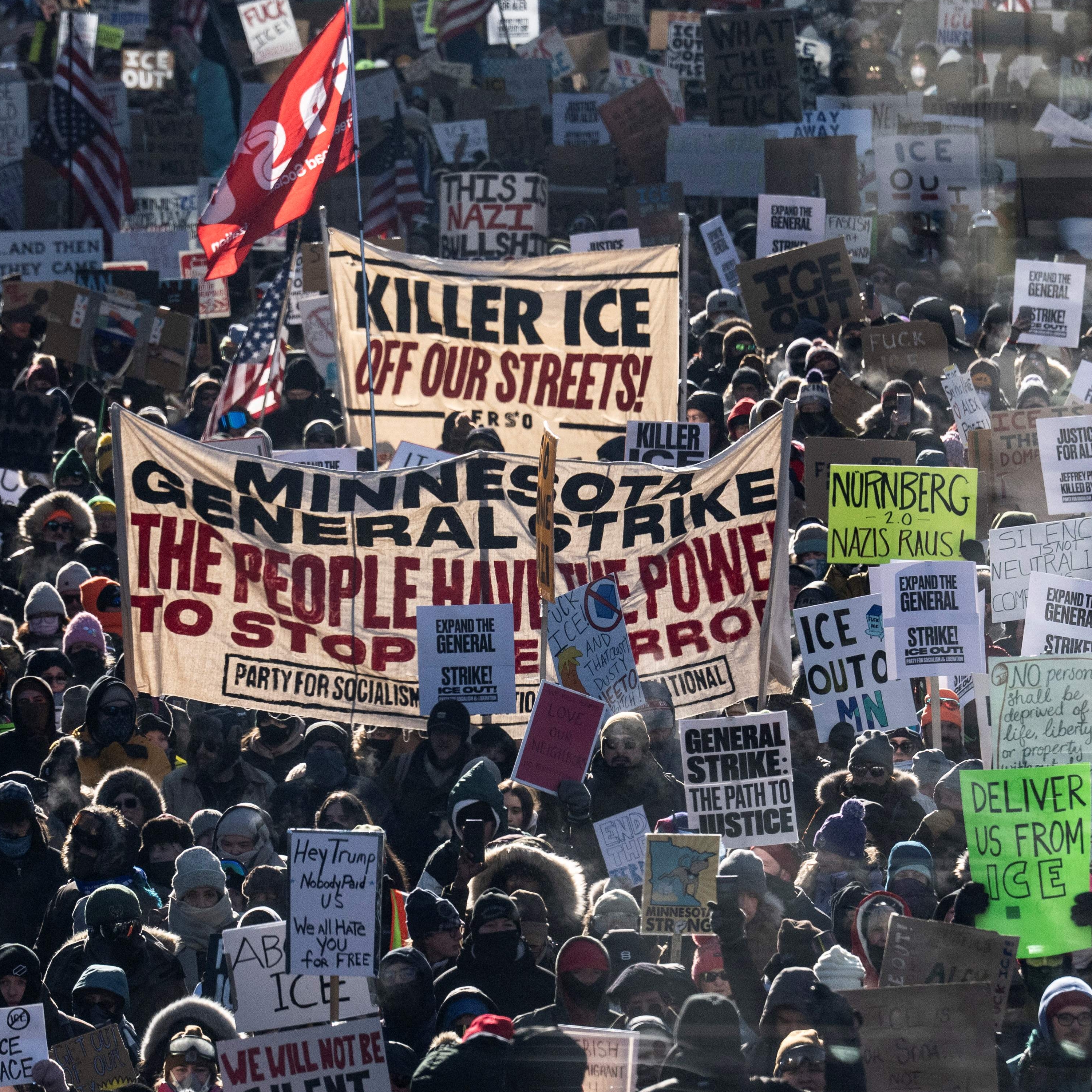
- Large-scale protests and a general strike were reported, with thousands marching and many businesses shuttered.
- Witnesses and residents express distrust of federal accounts and demand transparency and accountability.
Gun debate and political fallout
- Preddy’s lawful gun ownership complicates partisan narratives:
- Some conservative figures used the presence of a gun to justify the agents’ actions.
- Others on the right — including some Republican lawmakers like Rep. Thomas Massie and Sen. Bill Cassidy — called for a full, joint investigation and expressed concern about the videos.
- The NRA’s response was mixed: initial messaging blamed local leaders, then urged awaiting a full investigation and cautioned against broad generalizations.
- Reporters and guests draw parallels to previous high-profile cases (e.g., Kyle Rittenhouse, Philando Castile) to illustrate how gun possession and race/politics shape public reaction.
Unanswered questions and what to watch next
- Key unknowns:
- Exactly what prompted the pepper-spray use and the physical takedown attempt.
- Which agent fired the fatal shots and whether other agents knew the weapon had been removed.
- Integrity and chain-of-custody of evidence given federal control of the scene early on.
- What to watch:
- Court rulings on the restraining order and any decisions about DHS operations in Minneapolis.
- Pressings by Minnesota AG Keith Ellison and any state-led investigation outcomes.
- Federal disclosures (DHS/ICE/Border Patrol) and any independent or joint inquiries.
- Reactions from national political leaders, the NRA, and law enforcement associations (e.g., Minnesota Chiefs of Police).
Notable quotes
- Ben Porter (Minneapolis resident): “I have never felt more afraid and anxious on a daily basis.”
- DHS Secretary (as quoted): “This individual…committed an act of domestic terrorism.” (as presented in the episode)
- Rep. Thomas Massie (via X): urged full joint federal-state investigation and trust in the American people with the truth.
Main takeaways
- Video evidence raises serious questions about the timeline of events and whether the shooting was justified after the firearm appears to have been removed.
- A contentious fight over control of evidence and investigative jurisdiction increases local distrust.
- The case is amplifying national debates over federal policing authority, transparency in use-of-force incidents, and the political complexity of gun rights when a lawful gun owner is killed by federal agents.
- Ongoing legal rulings and investigations will be central to whether Minneapolis—and the nation—gets clarity and accountability.