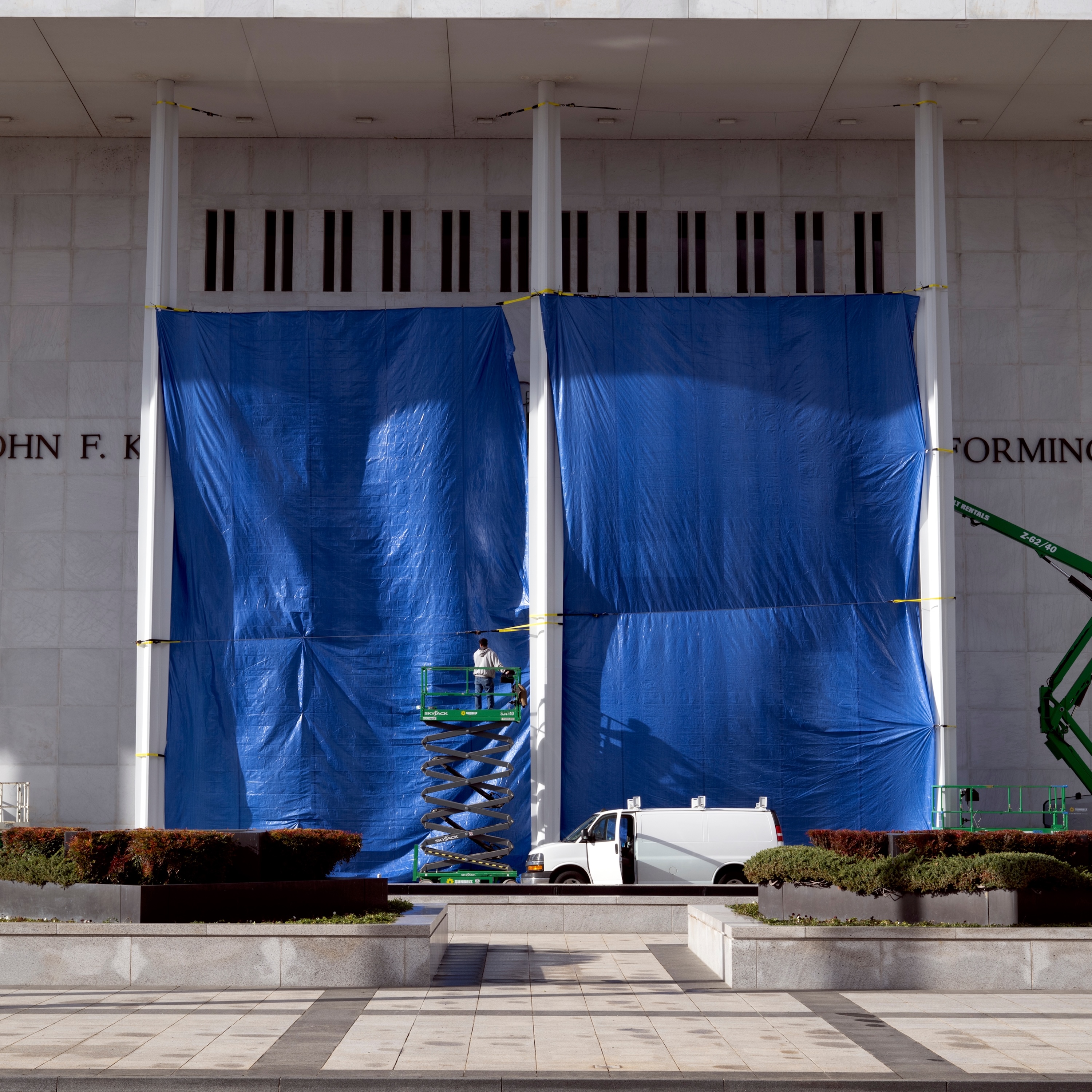
Overview of Post Reports — "A surprise Kennedy Center makeover"
This episode (host Martine Powers; guest Travis Andrews, Washington Post style reporter) explains President Trump’s recent takeover and announced two‑year closure/renovation of the Kennedy Center (recently renamed the Trump–Kennedy Center). It summarizes what Trump has said he plans to do, how artists and institutions have reacted, the financial and institutional uncertainty created by the move, and the possible outcomes and risks for the nation’s premier performing‑arts center.
Key points and takeaways
- Trump announced on Truth Social that the Kennedy Center will close around July 4 and be renovated for about two years, claiming use of “the highest grade marble” and preservation of the steel structure.
- He estimated a renovation cost of roughly $200 million — similar to the ~ $257 million Congress appropriated last year for the Center’s building maintenance.
- The announcement surprised the Center’s leadership and board; top officials reportedly learned about it after Trump’s post.
- Numerous artists and organizations have canceled performances or pulled out since Trump took control and after he added his name to the building, leaving programming and ticket sales sharply reduced.
- Major concerns: lack of clarity about the scope of work, who will pay and manage it, the short two‑year timeline for major structural work, and the risk of leaving the institution without staff or programming if the project stalls.
Background and timeline
- Trump prioritized changing the Kennedy Center in his second term: criticized its programming, replaced leadership, and had the board add his name to the building (renaming it the Trump–Kennedy Center).
- Initial artist pushback and cancellations began after leadership changes last year; a second wave followed the renaming, with more high‑profile pullouts.
- Trump’s social‑media announcement about the two‑year closure reportedly preceded formal notification to the Center’s leadership; the president of the Center (reported as Rick Grinnell) emailed staff more than an hour later with little new information.
What Trump says he will do (per the episode)
- Close the building around July 4 for two years to “do something great for America.”
- Rebuild/refurbish using high‑grade materials; he said he will keep the steel structure and use some existing marble but implied substantial demolition/ reconstruction.
- Claimed the work will cost around $200 million and that the board’s approval would be required (but the guest notes the board is likely to align with Trump).
Reactions and consequences
- Artists & organizations: cancellations include comedian Issa Rae, touring productions like Hamilton, composer Philip Glass, and the Washington National Opera announced it would move out.
- Audience behavior: subscriptions and ticket sales reportedly down substantially; theaters often have many empty seats.
- Financial and operational opacity: The Kennedy Center is a quasi‑public institution, historically receiving limited taxpayer funding for the building (not for programming); the administration has refused to share detailed financials since last year.
- New leadership rhetoric: Emphasis on “common sense programming” and programming that “pays for itself,” plus leaning on corporate sponsorships — but this hasn’t yet translated into restored audience or revenues.
Risks and uncertainties
- Scope and timeline: Two years may be too short for a near‑complete rebuild — uncertainty whether the plan is renovation or effectively reconstruction.
- Funding and oversight: It’s unclear how Congressional appropriations will be used, how much private funding may be involved, and what oversight or transparency will exist.
- Institutional continuity: Staff layoffs or departures during closure could leave the Center without personnel; if the project stalls and Trump leaves office, the Center could be left incomplete and weakened.
- Reputation and programming: Long‑term artist and audience boycotts could persist even after a physical remodel, undermining the Center’s mission.
Why the Kennedy Center matters
- Built in 1971 as a national cultural institution and memorial to John F. Kennedy, it has been a bipartisan cultural hub in Washington where national leaders and the public convene for the arts.
- The Center’s symbolic status — a non‑political cultural place — is why its politicization has provoked strong reactions.
Possible outcomes
- Best case: Renovation completed on schedule, modernized facilities attract audiences and artists return; the Center retains or rebuilds its role as a national cultural hub.
- Middle case: Physical improvements are completed but trust and programming take years to recover; reduced public engagement and budget constraints persist.
- Worst case: Project stalls or is left unfinished, staff and artists dispersed, major loss of institutional capacity and cultural programming.
Notable quotes (as reported)
- Trump: “We’ll close it on July 4th … we’re using the highest grade marbles, the highest grade everything. It’ll be brand new.”
- Reporting note: Trump also said “I’m not ripping it down” but said he would keep the steel structure and reuse some marble — phrasing that raised questions about the true extent of demolition.
What to watch next (actionable items/indicators)
- Whether and when the Kennedy Center board formally votes to approve the closure/renovation and the vote’s details.
- Public disclosure of project scope, contractor agreements, budget breakdown, and timeline.
- Status updates on staff employment and plans for preserving institutional knowledge during closure.
- Any Congressional oversight hearings or requests for accounting of how appropriated funds are used.
- Artist and presenter statements about returning or staying away post‑renovation.
Bottom line
The announced two‑year closure frames a high‑stakes gamble: a potentially transformative physical renovation for the Kennedy Center but one that amplifies operational, financial and reputational risks. The episode underscores the lack of transparency about plans and funding and the palpable anxiety among artists, employees, and the public about the institution’s future.