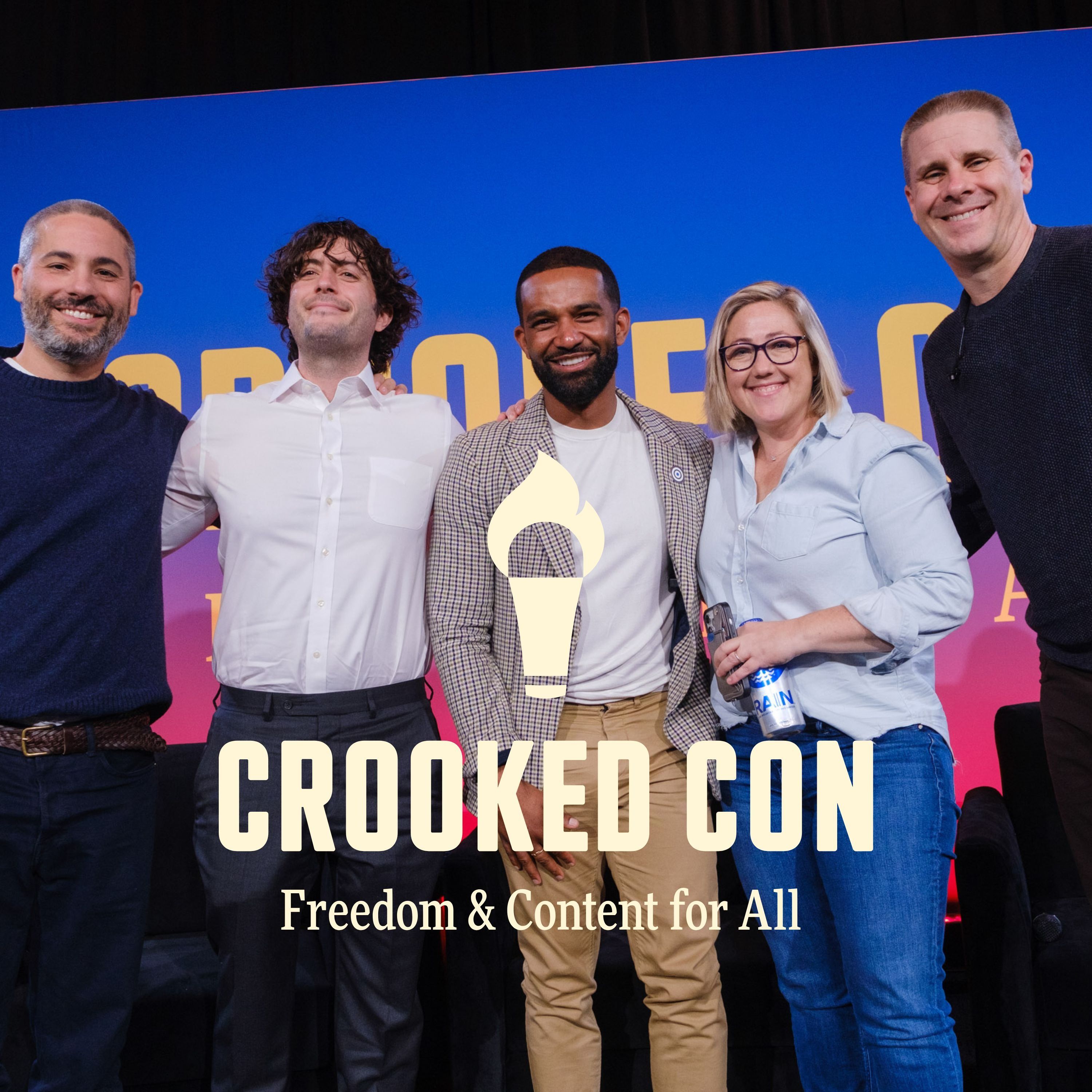
Overview of What Is the Polling Telling Us About 2026? + Gov. Andy Beshear (Crooked Con)
This episode is coverage from Crooked Con: a data-and-strategy panel on what the recent off‑year results tell pollsters and campaigners about 2026, followed by a conversation with Kentucky Governor Andy Beshear about governing as a Democrat in a red state. The panel brings together senior opinion researchers to diagnose turnout vs. persuasion, demographic swings (Latinos, young voters, Black voters, men of color), the limits of polling today, and practical messaging and policy implications. Beshear discusses running and governing with results-first politics, how he communicates his “why,” and how Democrats can win and govern in hostile environments.
Key takeaways from the panel
- Tuesday’s results were a relief for Democrats: both turnout and persuasion moved in their direction — not just nostalgia for 2024 reversal.
- The outcome was driven by a mix of turnout and persuasion (panelists estimate roughly split ~50/50), not only enthusiasm or only switching voters.
- Latino shifts were meaningful but nuanced: gains compared to 2024/2020, but not a full reversion to 2016 levels. Carlos: treat Latinos as multi‑dimensional voters (immigration, economy, identity).
- Polling remains volatile and context‑dependent: turnout models have been disrupted, and public polls are best treated as snapshots, not oracles.
- Strategic implication: Democrats should simplify and discipline messaging (focus on a few, popular issues like affordability/healthcare/jobs), combine positive agenda with sharp contrast against MAGA billionaires and Trump policy failures.
What the data and panelists emphasized
-
Demographic specifics and examples:
- Democrats improved with young voters (+~20 in Virginia, per Sarah), Latinos (+~20 in Virginia), and Black voters (+11 in Virginia — Sarah’s figures).
- Latino crossover: Carlos cited exit/field data showing roughly 15% of Latino Trump 2024 voters crossed for Democrats in some contests (New Jersey, New York), and up to 23% in some ballot measures in California.
- Black turnout: Terrence noted strong turnout improvements (e.g., Georgia moved to black turnout slightly over white turnout), and men of color were identified as a key swing group Democrats must recapture.
-
Why voters moved (multifactor):
- Immigration/ICE raids and profiling matter for Latino voters, especially when identity and everyday harassment are salient.
- Economy/cost of living remains the top issue across almost all subgroups — framing and future‑casting around affordability is critical.
- Extremism, perceived abuse of power, and the “zero‑sum” narratives pushed by MAGA resonate with worried voters; Democrats need a competing explanation for voters’ pain.
-
Polling: what went wrong / what to watch
- Polls underestimated Democratic strength in these off‑year races (opposite of the common pattern of undercounting Trump), largely because of engagement/enthusiasm patterns pollsters struggle to measure.
- Key causes: polarization by political engagement (highly engaged voters are far more partisan), Trump‑era turnout model instability, and the fact that answering surveys is itself now a politically correlated act.
- Practical polling advice: be cautious with strict likely‑voter screens, triangulate with early vote, special election results, administrative data, and treat public polls as tactical snapshots for strategy rather than emotional forecasts.
Democratic messaging and strategy — consensus advice
-
Focus and discipline:
- Pick a small set of high‑impact issues (panellists repeatedly suggested 2–4 priorities). Examples: affordability/cost of living, health care, jobs/worker pay, and anti‑corruption.
- Repeat them relentlessly; use simple, concrete proposals (the panel invoked the effectiveness of straightforward, memetic policies — the “wall” analogy, and Zoran Mamdani’s economically focused campaign).
-
Narrative and villains:
- Frame problems with a clear antagonist and explanation for voters’ pain. Several panelists urged emphasis on “MAGA billionaires” (Elon Musk, Peter Thiel as examples) and corporate concentration — the wealth divide is an accessible villain that links to affordability.
- Combine moral/values stories (the politician’s “why”) with concrete policy solutions — voters need both empathy and a plan.
-
Style and tactics:
- Pair persuasion with mobilization: turnout and vote‑switching matter together.
- Use creative, relatable content and the modern media ecosystem (content creators, video, social platforms) to build belonging and hope.
- Don’t retreat from convictions: several argued you can stand for progressive principles while spending most time on problems that matter to everyone.
Notable quotes (paraphrased / condensed)
- “If you do a bunch of unpopular things that piss off a lot of people, then you get punished for it.” — Sarah Longwell (on political gravity)
- “Partisanship is a hell of a drug.” — Carlos Odio (on stickiness of partisan ID)
- “Trump is making you poorer. He’s building a ballroom while you can’t afford groceries.” — framing used by multiple panelists as a succinct contrast
Polling practicalities — what pollsters recommended
- Likely‑voter screens are riskier now; consider broader turnout screens and scenario building.
- Supplement public polls with administrative indicators: early voting, registration, special election signals, and campaign contact data.
- Use polls as strategy tools (message tests, trend checks) rather than emotion‑management devices for the public — they’re snapshots, not destiny.
Gov. Andy Beshear interview — highlights & lessons for Democrats
- Governing strategy: spend “80% of your time on issues that matter to 100% of the people” (jobs, health care, schools, roads) and the rest standing on convictions.
- Communication: explain your “why” (Beshear often cites faith and service), be authentic and vulnerable, and pair moral stands with tangible local results (open factories, hospitals).
- Crisis response: during the shutdown Beshear shifted state reserves to feed people and pushed to get SNAP benefits processed — he framed the federal behavior (refusing food assistance) as cruel and politically motivated.
- Winning in red states: you can stand on progressive convictions (vetoing anti‑LGBTQ and anti‑choice bills) and still win if you deliver economic results and explain motivations clearly.
- On 2028: Beshear argued for a Democratic governor as the next president — governors are practical, results‑oriented executives who can be effective national candidates.
Actionable recommendations (for campaigns / organizers)
- Simplify: pick 3 big, popular priorities (affordability, health care access, jobs/worker pay), repeat them, and build memetic, concrete policies that are easily explained.
- Pair contrast and agenda: show how MAGA policies and MAGA billionaires make life worse and then offer a clear alternative that improves daily life.
- Invest in turnout + persuasion: run both fieldwork to mobilize the base and persuasion for irregular/low‑propensity swing voters (especially among Latinos and young adults).
- Modernize communications: use creators, short video, and authentic storytelling to build hope and belonging; but pair content with real policy anchors.
- Poll smart: avoid over‑reliance on single polls or rigid likely‑voter models; triangulate across administrative data and on‑the‑ground indicators.
Bottom line
The Crooked Con panel and Gov. Beshear converge on a strategic diagnosis: Democrats won some important fights in these off‑year races because they focused on everyday problems and because Trump’s governance had tangible negative consequences. The work ahead is to institutionalize that discipline: simplify messaging, present concrete solutions to affordability and health care, craft a clear villain narrative around concentrated wealth and MAGA policy failures, and adapt polling and field strategy to an electorate where engagement patterns are dramatically reshaping turnout and persuasion dynamics.