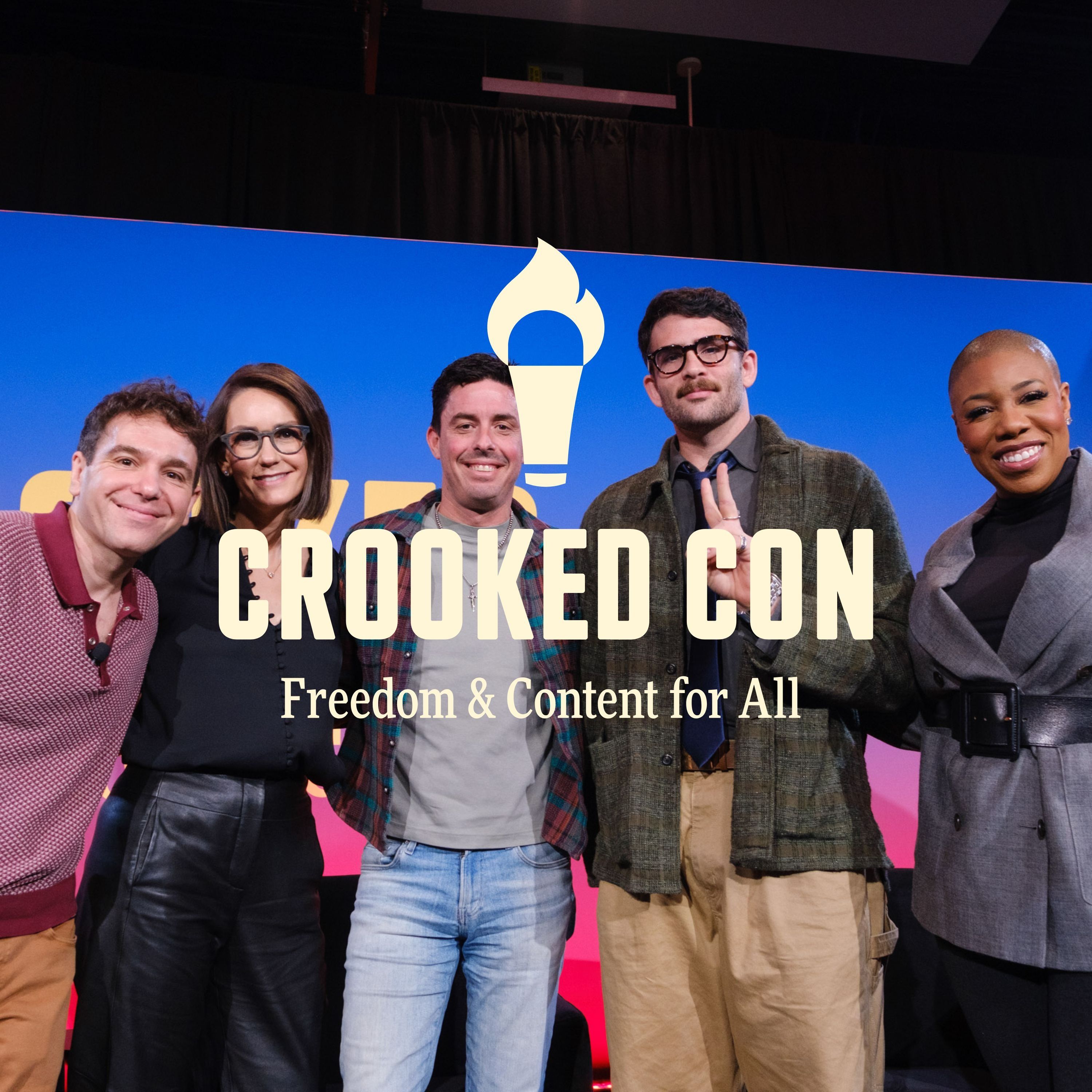
Overview of Can Democrats Lose the Downer Image? + Chris Murphy in Conversation (Crooked Con)
This Crooked Con episode stitches together a panel discussion and a short interview with Senator Chris Murphy about Democratic messaging, candidate strategy, and the party’s path after a mixed set of 2024 outcomes. Panelists (Hassan Piker, Simone Sanders, Tim Miller, Jessica Tarlov) debate whether Democrats can shed the “pious/downer” image, how to balance culture and kitchen‑table issues, lessons from Zoran Mamdani’s NYC mayoral victory, and the tactics around the current government shutdown and ACA premium crisis. Murphy offers a three‑part prescription focused on narrative, coalition building, and long‑term infrastructure.
Key takeaways
- Democrats are widely perceived by some voters as “woke, weak, and out of touch,” and that perception costs votes in some places.
- Successful left-leaning campaigns recently (e.g., Zoran Mamdani) fused clear, local economic messages with authentic, likable candidates who could communicate beyond the Democratic base.
- Panel consensus: fix strategy and messaging at the candidate level — run the race for the district, prioritize tangible affordability/economic issues, and be able to defend and explain positions.
- Long-term structural changes: invest in permanent field and messaging infrastructure (not just short-run ad buys), expand the coalition (big tent), and fight corruption/big‑money influence as a unifying narrative.
- On the shutdown/ACA premium fight, Democrats should stick to their leverage to stop premium hikes and use the moment to show resolve — capitulation risks emboldening Trump and hurting vulnerable people.
- Authenticity and the ability to engage in non‑liberal media (pods, conservative TV) matter; Democrats should cultivate spokespeople who can reach broadly and win trust.
Panel discussion — main themes and arguments
Perception problem vs. candidate-level solutions
- Simone Sanders: Democrats shouldn’t necessarily rebrand the whole party; instead run candidates who fit their districts, answer attacks directly, and communicate local issue solutions (potholes → affordability).
- Tim Miller: The party’s brand is weak; winning “despite” the brand is possible, but the goal should be to imagine a broadly popular Democratic Party — requires strategic reflection.
- Jessica Tarlov: Republicans appear joyous and unconstrained; Democrats often look joyless because of internal policing and fear of being scolded. Joy and relatability help persuasion.
Culture war tradeoffs
- Panelists argued that culture questions (trans issues, free speech, etc.) get amplified by opponents and can distract from kitchen‑table issues when left unanswered.
- Consensus: Don’t abandon defending marginalized people, but also make clear, concise, and localized responses so voters don’t accept false narratives.
Zoran Mamdani as a model
- Mamdani won by focusing on affordability and a small set of clear issues; he was authentic, able to reassure skeptical constituencies, and create enthusiasm.
- Lessons: narrow issue set, authenticity, never cede defining messages to opponents, and combine progressive goals with practical politics.
Messaging, tone, and joy
- Democratic messaging should be both substantive and emotive: concrete economic populism + compelling narrative that identifies who is “screwing” people (billionaires/corporate power).
- The panel called for more candidates and surrogates who can show fun, optimism, and authenticity — not perpetual scolding.
Shutdown & healthcare (ACA premiums) — political and tactical takeaways
- The government shutdown is inflicting real pain on federal workers and on people facing ACA premium hikes; Democrats have used the shutdown fight as leverage.
- Senator Murphy (and panelists) argue the party must use leverage to prevent catastrophic premium increases — folding too early would both hurt people and weaken Democrats’ credibility.
- Republicans are portrayed as following Trump’s cues and sometimes as “nihilists” willing to hurt their own constituencies; Democrats should exploit the political risk that causes them to relent as consequences become tangible.
Senator Chris Murphy — interview summary
Murphy’s three-part strategy for Democrats:
- Tell a clear narrative that connects policy to people’s lives — highlight who is extracting wealth (billionaires, concentrated corporate power) and propose redistributive reforms.
- Become a big‑tent party again anchored on two pillars: (a) unrigging the economy and (b) unrigging democracy (get big money out of politics). Be willing to include candidates who may differ on cultural issues but align on economic/democratic reforms.
- Spend differently — build permanent messaging and mobilization infrastructure (field staff, local organizers) rather than overinvesting in ephemeral TV/digital ads.
Other Murphy points:
- Authentic candidates who have a bit of friction with voters (a few controversial positions) often read as more real and electable.
- Defend elections: invest in state/local officials who administer voting, press social platforms to prevent election distortion, and sustain public mobilization/protest as deterrence against overt subversion.
- On the shutdown: use leverage to stop premium spikes; the political argument can win as the pain becomes real for swing voters.
Practical recommendations (actionable)
- Candidate strategy: tailor messaging to the electorate; emphasize 3–5 concrete, local “affordability” priorities.
- Messaging: unite economic populism and democracy reform (who has power, who benefits) into a single accessible narrative.
- Media strategy: cultivate spokespeople who can perform in diverse media environments (longform podcasts, conservative shows) and train candidates to handle cultural attacks without being defensive.
- Infrastructure: reallocate funding toward persistent organizing (state and local field operations) rather than one-off ad buys.
- Defend democracy: prioritize election administration investments, pressure social platforms to limit distortion, and sustain public visibility/organizing to raise the political cost of subversion.
Notable quotes from the episode
- “Woke, weak, and out of touch.” — summary of working-class perception of Democrats (from exit-poll commentary).
- “If you don't have one or two things that a voter vehemently disagrees with you on, they get suspicious of you.” — on authenticity and electability.
- “Tell a story… and tell people who’s screwing them.” — Murphy on narrative politics.
- “We need to get rid of the gerontocracy.” — panel call for new leadership and energy within the party.
Bottom line
The episode makes a clear, recurring argument: Democrats’ problem isn’t only policy preferences — it’s storytelling, authenticity, candidate quality, and strategy. Winning more broadly will require focusing on concrete affordability concerns, building a durable organizing infrastructure, expanding the tent while keeping principled stances, and sustaining public fights (and leverage) rather than retreating when under fire. Senator Murphy frames this as a coordinated agenda of economic populism, democracy reform, and long-term investment in messaging and fieldwork.