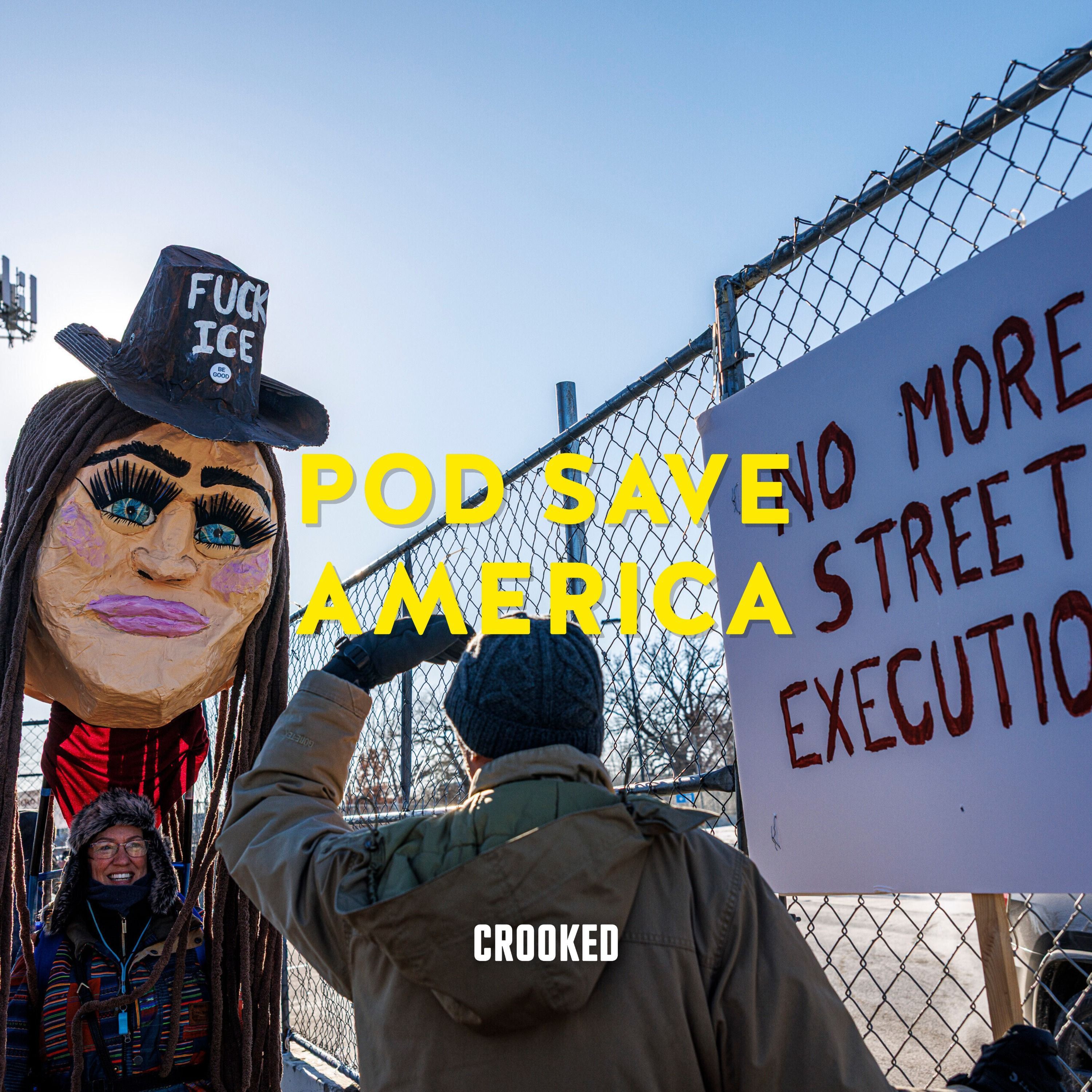
Overview of 1114: Minneapolis is a Turning Point (Pod Save America)
Hosts Jon Favreau and Dan Pfeiffer discuss the political and civic fallout from two explosive developments: the killing of Alex Preddy during an ICE/federal enforcement operation in Minneapolis and the FBI raid on Fulton County election offices in Georgia. The episode covers new video and witness testimony from Minneapolis, pushback from judges and prosecutors, the administration’s mixed signals about de‑escalation, the emerging push to tie ICE reforms to DHS funding, and broader implications for the rule of law, public opinion, and the 2026 midterms. Guest Joe Scarborough joins for a longer conversation about the GOP, the courts, organizing, and what Democrats should do next.
What happened in Minneapolis
- New footage and eyewitness accounts (most notably Stella Carlson, “pink coat lady,” interviewed by Anderson Cooper) captured the shooting that killed Alex Preddy and earlier confrontations between ICE agents and local residents.
- A separate video shows Preddy being tackled by federal agents at an incident 11 days before his death; right‑wing commentators used that clip to claim he was a violent aggressor—hosts argue that even if he vandalized a vehicle, it did not justify being shot later.
- A federal judge (a George W. Bush appointee) sharply rebuked ICE for repeatedly defying court orders in Minnesota, writing that ICE “is not a law unto itself.”
- Local witnesses describe what they call an assassination in the street; the footage and eyewitness testimony have galvanized broad public outrage.
Federal and DOJ response (or lack of it)
- Trump administration immigration official Tom Homan held a press conference in Minneapolis signaling a claimed “drawdown” and a rhetorical shift toward de‑escalation and focusing on immigrants with criminal records—hosts are skeptical this will produce concrete change.
- Reports surfaced that senior DOJ officials (Pam Bondi, Todd Blanche) initially declined to authorize standard independent federal criminal investigations into agent‑involved shootings (including the killing of Renée Good and Alex Preddy), causing internal DOJ turmoil and prompting resignations by some federal prosecutors.
- The administration has leaned on agency internal reviews rather than independent federal probes, raising concerns about accountability and a cover‑up.
Political fallout and policy implications
- Public reaction has been widespread and bipartisan enough to influence political calculations: polls show high awareness of the Preddy footage, and large shares of the public view ICE as overly aggressive (referenced polls: ~75% saw some footage; one poll had only 18% saying the killing was justified; Fox poll ~60% say ICE too aggressive).
- Senate Democrats pushed to strip DHS funding out of a larger CR to force negotiations over ICE reforms; the White House signaled openness to a short DHS continuing resolution while reforms are negotiated (rumored 1–2 week freeze).
- Hosts caution against over‑expecting massive reforms in this negotiation cycle: incremental, legally enforceable changes (warrants, federal use‑of‑force rules applying to ICE/CBP, clearer prioritization) are the realistic wins now; larger structural change requires winning future elections.
Fulton County raid and politicization of federal law enforcement
- An FBI search of Fulton County election offices (Georgia) reportedly removed hundreds of boxes of 2020 ballots. Hosts express alarm about chain of custody, the legal basis for the warrant, and the broader message: federal law enforcement being used to revisit the 2020 election.
- Georgia Senator John Ossoff described the raid as “a shot across the bow” and a sign of potential interference with elections and an escalation of the “big lie” politics.
- The hosts highlight the danger of weaponizing federal investigatory powers for political ends and warn about future abuses (e.g., hypothetical partisan raids/indictments in later cycles).
Cultural reaction, media, and public organizing
- The killing in Minneapolis has broken out of political silos—gaming communities, lifestyle influencers, previously non‑political pods and creators, and some former Trump supporters have spoken out against the federal tactics.
- Hosts see a cultural permission shift: more people feel comfortable publicly condemning the administration’s actions, which could produce lasting political pressure.
- Local organizing in Minneapolis (whistle networks, neighborhood escorts, volunteer coordination to protect migrants) is emphasized as inspiring and potentially more politically durable than single protest events.
Joe Scarborough interview — key takeaways
- Scarborough is alarmed less by Trump’s rhetoric (which he expected) and more by institutional failures: Congress, the Supreme Court, tech platforms, big corporations, and large media companies have not checked executive overreach.
- He highlights the role of hardliners like Stephen Miller in shaping violent migration enforcement and warns that even if administration PR shifts, the underlying radical agenda can continue quietly.
- Scarborough advocates pragmatic political responses: build organizing capacity (knock doors, build local infrastructure), hold leaders accountable, and focus on bread‑and‑butter issues (healthcare, housing, affordability, monopolies, AI disruption) that can win back voters.
- He emphasizes that Democrats need candidates who both inspire the base and are broadly acceptable in swing states/regions—not just elites or celebrities posting online.
Notable quotes & moments
- Tom Homan: said the administration would “draw down the number of people here” while insisting they aren’t “surrendering our mission.”
- Federal judge (Minnesota): “ICE is not a law unto itself.”
- Stella Carlson (eyewitness): emotionally detailed watching Preddy die and criticized agents’ post‑shooting behavior—hosts call the full interview “gut‑wrenching” and urge listeners to watch it.
- John Ossoff on the Fulton County raid: “This should have people across the country absolutely shook.”
- Hosts’ blunt framing: federal agents “murdered American citizens” on video and then attempted to reshape the narrative.
Recommended actions / what to watch next
- Watch Anderson Cooper’s full interview with Stella Carlson (strongly recommended by hosts) to understand the witness perspective.
- Follow the Senate/House action on the DHS continuing resolution and what concrete ICE reforms, if any, are negotiated and codified.
- Monitor DOJ decisions about independent federal investigations into agent‑involved shootings and any subsequent prosecutions or internal report releases.
- Track developments from the Fulton County seizure: court filings, chain‑of‑custody information for the ballots, and any formal DOJ explanations of the warrant basis.
- For organizers and concerned citizens: consider local organizing (volunteer escorts, neighborhood coordination), pressure your senators/representatives on independent investigations and ICE reform, and support independent journalism and legal accountability organizations that track these cases.
Bottom line
Favreau and Pfeiffer frame Minneapolis as a potential political and cultural turning point: the combination of video evidence, eyewitness testimony, judicial rebukes, and broad public reaction could constrain the administration politically and open a window for reforms—if sustained pressure and organizing continue. At the same time, they warn that the real danger is systemic: partisan capture of federal law enforcement and courtroom/policy failures that make such abuses easier. The immediate fights to watch are DHS funding/ICE reform negotiations and the legal fallout from both the Minneapolis shootings and the Fulton County raid.