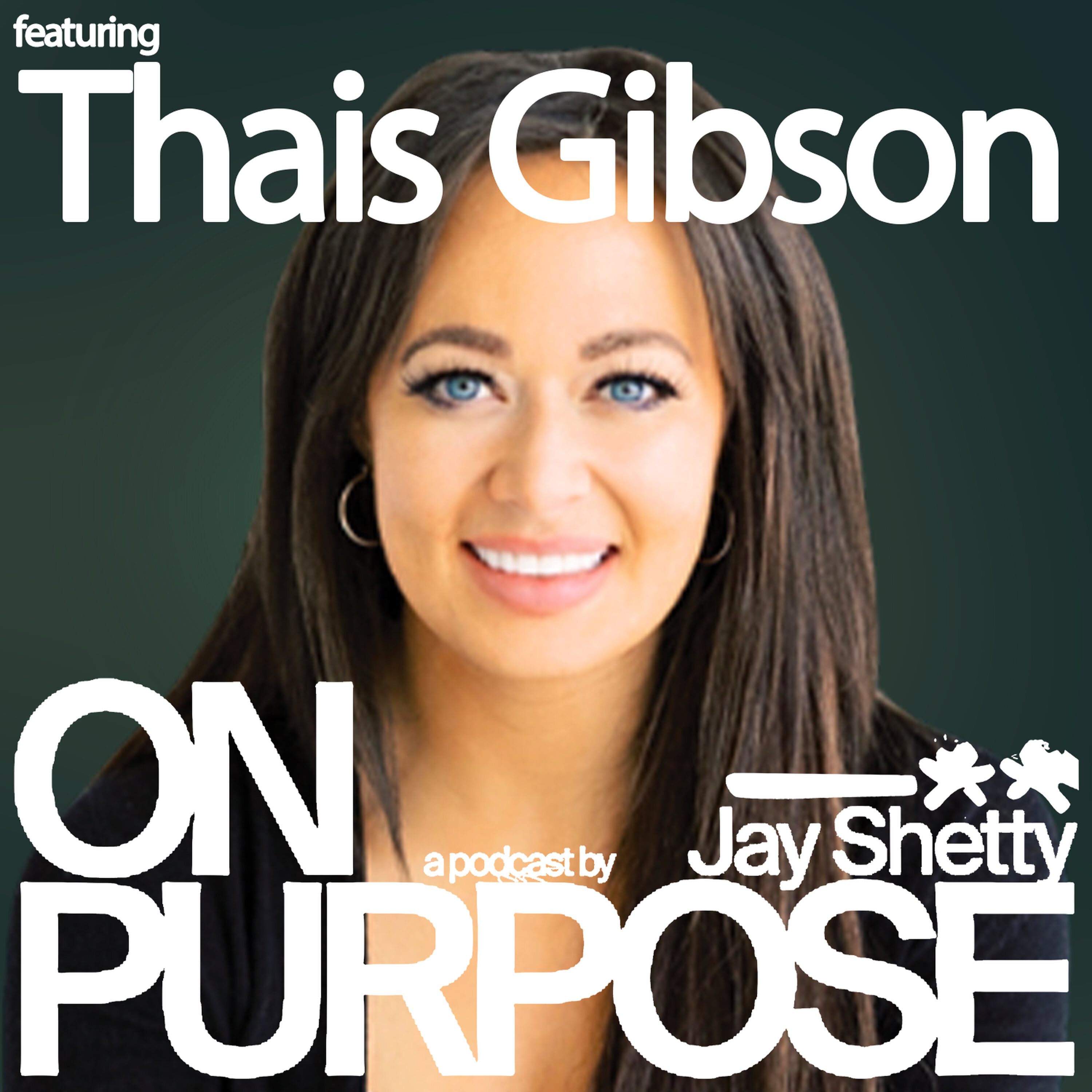
Overview of On Purpose — Episode with Thais Gibson
This episode features Thais Gibson, founder of The Personal Development School and author of The New Attachment Theory, interviewed by Jay Shetty. Thais explains why people keep repeating relationship patterns (especially attracting emotionally unavailable partners), outlines an actionable, neuroscience-informed framework to break the cycle, and gives practical tools — including a 21‑day rewiring method — for building a secure relationship with yourself and healthier partnerships.
Key takeaways
- Attachment styles are informative, not identity labels — they point to core wounds you can rewire.
- The subconscious drives ~95–97% of choices; changing dating outcomes requires subconscious (not just conscious) reconditioning.
- Thais’ model uses five pillars (sequenced) to rewire attachment at the nervous-system level and change relational patterns long-term.
- Simple, repeatable practices (21 days of imagery + emotion + listening to your own recorded script in a suggestible state) can create durable neural change.
- Communication works best when you convert criticism into needs, validate emotions, and “paint the picture” of what the need looks like specifically.
Attachment styles — quick guide
- Secure (~50% in classic data): Attuned caregiving in childhood → trust, comfort with intimacy, higher satisfaction and longevity in relationships.
- Anxious: Core wounds include fear of abandonment, rejection, not-good-enough → people-pleasing, need for reassurance, attraction to emotionally unavailable partners.
- Dismissive‑avoidant: Childhood emotional neglect → minimization of attachment needs, discomfort with vulnerability, distance/withdrawal in relationships.
- Fearful‑avoidant: Bigger trauma/chaos in childhood → hot‑and‑cold patterning, hypervigilance, fear of betrayal and being trapped.
Why you attract certain people
- Subconscious associates familiarity with safety. You’re often attracted to partners who mirror how you treat yourself (i.e., your internal patterning) or who express your repressed traits. That’s why conscious "checklists" alone rarely shift who you’re drawn to until your internal wiring changes.
The five pillars of Thais Gibson’s “New Attachment Theory”
(They must be done roughly in order — each builds the foundation for the next.)
-
Rewire core wounds
- Identify a core wound (e.g., “I’m not good enough”) and its opposite (“I am good enough”).
- Use 10 emotionally salient memories that support the new belief.
- Record yourself saying the new belief + memories and listen daily during a suggestible state (wake, pre-sleep, after meditation/exercise) for 21 consecutive days.
- Neuroscience: imagery + emotion + repetition rewires subconscious neural pathways.
-
Learn your needs and self‑source them
- Audit unmet childhood needs across life domains (career, relationships, physical, emotional, etc.).
- Create daily practices to meet those needs yourself (e.g., three wins journal for self‑validation).
- Self-sourcing reduces unhealthy pressure on partners and “fills the bucket” so external reassurance isn’t the only resource.
-
Nervous system work (regulation & somatic awareness)
- Practice somatic labeling: notice bodily sensations tied to emotions (e.g., “I feel heat in my chest—this is anger”).
- Witnessing and naming sensations helps bring activity back to the neocortex (from reptilian brain), reducing reactivity.
- Daily breathwork, polyvagal-informed exercises, and completion-cycle practices build a calmer baseline.
-
Communication (the “feeling → need → paint the picture” framework)
- In conflict: 1) express the feeling and have it validated; 2) state the need behind the feeling; 3) specify what meeting that need looks like in concrete terms.
- Convert criticism into actionable needs (e.g., “You never call” → “I need consistent check-ins; can we do 15 minutes before bed 3x/week?”).
- Validation + specificity = resolution and decreased escalation.
-
Healthy boundaries
- Audit boundaries across the seven areas of life; surface fears that prevent you from setting them.
- Rewire boundary fears (same process: identify belief → repeat emotion/imageries → exposure).
- Practice small boundary exercises (one small boundary per day) with trusted people, then scale up.
- Note attachment-pattern differences: anxious = boundaryless; dismissive = overly rigid; fearful = cyclical extremes.
Practical exercises you can do right away
-
21‑day core‑wound rewiring (starter)
- Pick one core wound.
- Write its opposite affirmation.
- List 10 memories that elicit the emotion/imagery of the opposite truth.
- Record yourself reading the affirmation + memories.
- Listen daily in a relaxed/suggestible state for 21 days.
-
Somatic labeling in a trigger moment
- Pause, breathe, name what you feel (e.g., “I feel tightness in my throat, this is anxiety”), notice where it lives in the body, soften/observe rather than react.
-
Communication script (next conflict)
- Use the framework: “I felt X when Y happened. What I need is Z (example: a 15-minute check-in). Does that seem possible? If so, here’s what it would look like...”
-
Boundary exposure
- Pick a tiny, safe boundary to set this week (e.g., ask a co-worker to return your stapler within 48 hours). Increase difficulty as your nervous system habituates.
Relationship & dating advice (common scenarios)
- Anxious + avoidant cycle: Use the feeling→need→picture method; carve out scheduled pockets that meet both needs (e.g., two nights together + solo time).
- Love‑bombing: Vet by setting a small boundary — narcissists usually reject or punish boundaries; insecure people will more often respectfully adjust.
- Partner unwilling to do work: Lead for a set deadline (e.g., 90 days). If no change and one person is doing all emotional labor, walking away may be healthiest.
- Commitment uncertainty: Have an explicit conversation about timelines, fears, and specific requests; often the hesitation hides unmet needs or poor communication skills.
- Breakups/grief: Treat breakups as grief — identify the needs the person met and actively self-source them; reclaim or express aspects of yourself you lost in the relationship.
Notable quotes & insights
- “Your conscious mind is responsible for 3–5% of your beliefs; your subconscious runs the rest.”
- “Attachment styles give context — they’re not meant to be identity labels you hide behind.”
- “Grief is love with nowhere to go.”
- “Behind every criticism is a need — convert criticism into the need and paint the picture.”
Recommended resources & next steps
- Read: The New Attachment Theory — Heal Every Relationship by Rewiring Your Brain and Nervous System (Thais Gibson).
- Free starter: personaldevelopmentschool.com — attachment quiz and detailed report.
- Try the 21‑day core‑wound exercise immediately (use voice memos for recordings).
- If you want guided support, Thais runs 90‑day programs that teach the five pillars with daily micro‑practices and live sessions.
Action checklist (what to do this week)
- Take an attachment‑style quiz (free on Thais’ site).
- Pick one core wound to work on and create the affirmation + 10 memories.
- Record your 2–3 minute audio and schedule a daily listen (morning/evening or post-meditation) for 21 days.
- Identify one unmet need and list 2–3 small self‑sourcing actions.
- Use the “feeling → need → picture” script in a low‑stakes conflict and practice somatic labeling when triggered.
This summary distills the practical tools and structure Thais Gibson shared: rewire your subconscious (21 days + imagery + voice), build self‑security, regulate your nervous system, communicate with clarity, and progressively set healthy boundaries — together these change who you attract and how you show up in relationships.