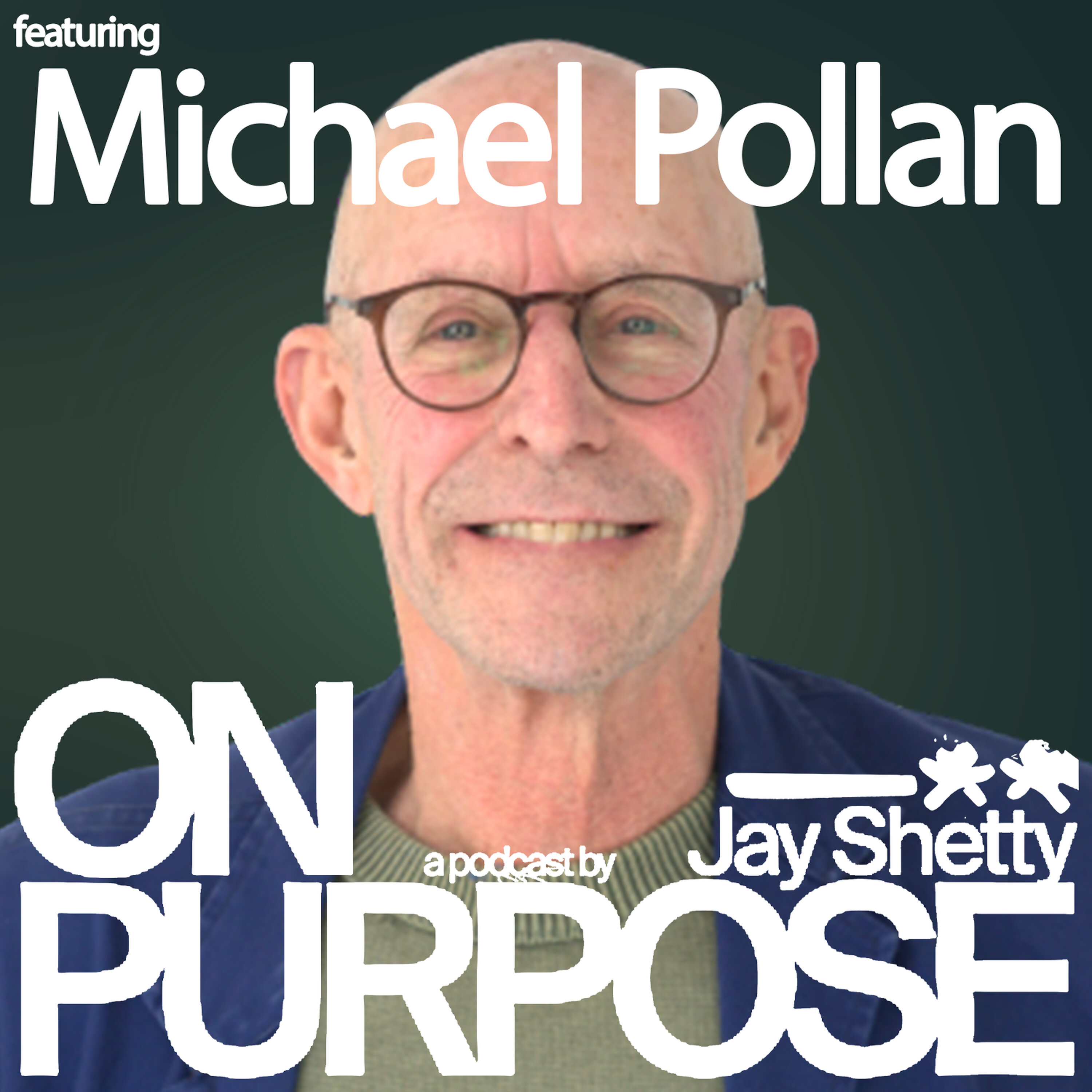
Overview of Michael Pollan on On Purpose
In this episode of On Purpose, Jay Shetty interviews Michael Pollan about his new book A World Appears, which investigates consciousness — how perception, attention and awareness shape reality. Pollan connects scientific research, meditation, and psychedelics to show how we lose and can reclaim attention and inner freedom in a distracted, tech-saturated age. The conversation covers theories of consciousness, the neuroscience behind ego and perception, the therapeutic potential and risks of psychedelics, meditation practice, and social/ethical implications of AI and digital technologies.
Key takeaways
- Consciousness remains an open, hard scientific problem; many theories exist (neural correlates, panpsychism, idealism, transmission theories), and none fully solve the “hard problem.”
- The brain/mind distinction: the mind includes vast unconscious processing; consciousness is a small “tip of the iceberg” that enables flexible decision-making and social cognition.
- Meditation and psychedelics can both broaden conscious awareness by reducing habitual constraints (e.g., default mode network activity), allowing new perspectives and therapeutic change.
- Psychedelics appear to relax predictive priors (top-down beliefs), increase brain plasticity, and can temporarily “reset” entrenched mental grooves—helpful for depression, OCD, addiction.
- Technology and social media hack attention and now aim at deeper attachment; chatbots and AI risk displacing human relationships and devaluing presence.
- Reclaiming attention requires intentional practices: meditation, phone fasts/digital detox, guided psychedelic therapy when appropriate, and cultural re-evaluation of how we treat animals and the environment.
Topics discussed
- History of consciousness research (from exclusion by early science to the modern boom).
- Why subjectivity was sidelined by science (Galileo’s methodological choice emphasizing quantifiable third-person data).
- Neuroscience concepts:
- Neural correlates of consciousness
- Default Mode Network (DMN) as a likely neural substrate for ego/narrative/rumination
- Predictive-processing models of perception
- Meditation:
- Daily practice (Pollan: ~20 minutes with his wife) and retreat experiences (silence, no eye contact, walking/sitting meditation).
- Practical effects: increased presence, diminished self-performance pressure, access to spontaneous thought.
- Psychedelics:
- Similarities with meditation (closing out external senses; inward journey).
- Typical trip trajectory: onset, intense sensory phase, then long tail conducive to introspection.
- Therapeutic applications and research: depression, OCD, addiction, end-of-life anxiety; reopening of critical learning windows.
- Safety profile and risks (psychotic breaks in vulnerable people; guided settings mitigate risks).
- AI, social media, and attachment:
- Attention-hacking to attachment-hacking (people forming strong emotional ties to machines).
- Ethical concerns about dehumanization and loss of human-to-human connection.
- Broader philosophical ideas: panpsychism, idealism, transmission models, and how empirical anomalies might pressure a paradigm shift.
Notable quotes & metaphors
- "Brains exist to keep bodies alive, not the other way around."
- Consciousness is “the tip of the iceberg” — much of mind is unconscious processing.
- Default Mode Network = likely “address” of the ego; ego dissolution when it’s deactivated.
- Psychedelics are “like a fresh snowfall” that fills habitual grooves down a hill, allowing you to take a new path.
- Mantra etymology: “man” = mind, “tra” = to transcend — mantra means to transcend the mind.
- On AI and machines: “Intelligence and consciousness are not the same thing.”
Practical recommendations / action items
- Daily meditation: short, consistent practice (Pollan averages ~20 minutes in the morning; occasional evening sits).
- Digital detoxes: extended phone-free periods (Pollan mentions 30 days off his phone annually) to reclaim clarity and presence.
- Consider guided, intentional psychedelic therapy for treatment-resistant conditions (depression, OCD, addiction) — seek clinical trials or trained facilitators; avoid use if there is risk of psychosis or mania.
- Use attention intentionally: notice and resist the reflex to pick up your phone (e.g., in lines, waiting rooms).
- If working with psychedelics: set an intention, use a prepared guide, and prioritize integration afterward.
- Cultivate awe and experiences (nature, music, art) to shrink ego’s claims and increase presence.
Who should listen
- Readers curious about consciousness, meditation, or psychedelics.
- People feeling chronically distracted or searching for practices to reclaim attention.
- Clinicians, therapists, and researchers interested in the therapeutic potential of psychedelics.
- Anyone concerned about AI’s social and psychological impacts.
Quick “Final Five” answers from Michael Pollan (one sentence each)
- Best advice received: If you have a dream, “Do it.”
- Worst advice received: “Go to law school.”
- Book cover origin: Not from a psychedelic experience, but intentionally chosen to suggest there’s something behind the visible world.
- False belief to erase about consciousness: That humans are the only conscious species.
- One law he’d impose on everyone: He declined to make one—preferring not to legislate thought or behavior.
Final thought
Michael Pollan’s conversation is an exploration more than a solution set: he invites curiosity, humility, and practice (meditation, intentional attention, and careful therapeutic use of psychedelics) as concrete ways to reclaim inner freedom and resist technological encroachments on our consciousness. His book A World Appears is recommended for listeners who want a deeper, narrative-driven investigation into these questions.