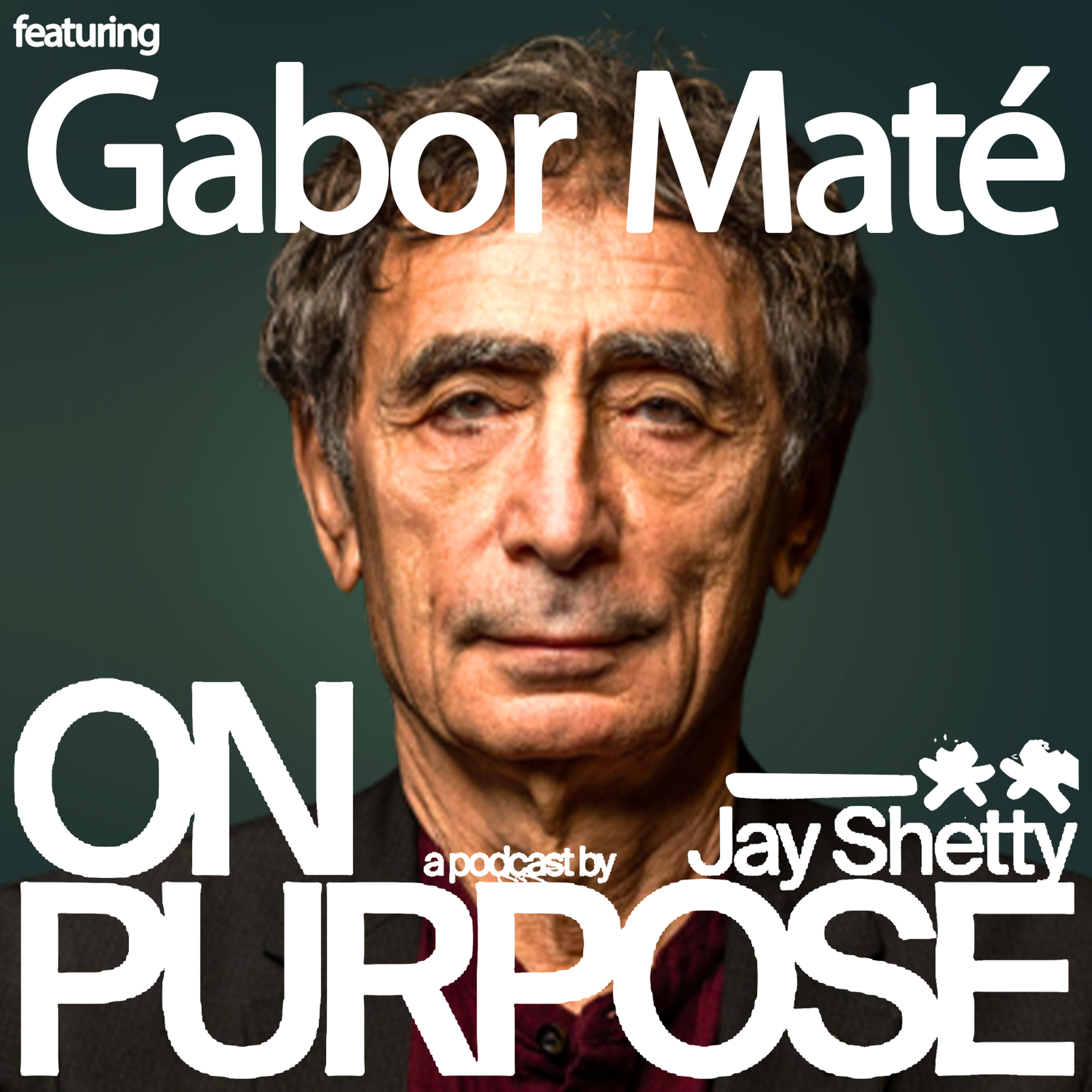
Overview of Dr. Gabor Maté: Constantly Worrying What People Think of You? (iHeartPodcast — Guaranteed Human)
This episode is a live conversation between Jay Shetty and Dr. Gabor Maté in Vancouver about why people constantly seek approval, how that pattern develops, how it damages health, and simple psychological shifts and practices (especially learning to notice and say “no”) that help you trust yourself and stop living in other people’s minds.
Key themes and takeaways
- Approval-seeking usually begins in early attachment relationships: children need to be seen. When caregivers can’t “see” the child, the child adapts by shaping an image to please others.
- Much of our self-judgment is an adaptation that once helped us survive; those adaptations can later become limitations.
- The core shift Maté recommends: learn to notice where you are not saying “no” (or not saying “yes”) and start honoring those inner signals.
- Self-worth is often conflated with productivity (Have I done enough? vs. Am I enough?). The latter requires self-compassion.
- Chronic stress (activation of adrenal hormones) protects short-term survival but, long-term, contributes to many illnesses — high blood pressure, immune dysfunction, autoimmune disease, depression, cancer risk, etc.
- Healing children’s futures primarily happens by doing your own trauma work and reconnecting to wisdom/rituals that nurture belonging (especially relevant for Indigenous communities).
Why we seek approval (origins)
- Human infants are “born for love” — they need to be seen to learn who they are (cites Bruce Perry’s Born for Love).
- If parents/caregivers are limited by trauma, depression, or cultural expectations, children adapt by hiding or exaggerating parts of themselves to gain approval.
- That adaptation creates an inner critic and inner programming that equates worth with doing, pleasing, or appearing a certain way.
The simple shift: notice where you’re not saying “no”
- Maté’s practical first step: ask often — “Where in my life am I not saying no?” (and “Where am I not saying yes?”)
- Most common arenas: personal relationships and work.
- Saying “no” is essential for a separate self; being unable to say no leads to chronic stress.
- Differentiate reactive/no-quality “no” vs. a “high-quality no” (clear, compassionate, boundary-respecting).
- Practice checking bodily sensations to access the truth inside you.
Compassionate Inquiry (briefly demonstrated)
- Maté uses a therapeutic approach called Compassionate Inquiry:
- Assumes nothing is fundamentally wrong with a person; adaptive behaviors had reasons.
- Uses respectful, curious questioning and bodily attention to reveal personal truth.
- In the live demo, guiding someone to check body-feelings revealed confidence and peace already present.
Stress, the body, and health
- Hans Selye’s stress research: stress hormones (adrenaline, cortisol) are adaptive short-term but harmful long-term.
- Chronic stress contributes to: hypertension, heart disease, osteoporosis, immune suppression or misdirected immunity (autoimmunity), depression, increased cancer risk, inflammation, central adiposity.
- Maté: culture’s driven values push people into stress that literally makes them sick — “When the Body Says No” (title and theme).
Actionable recommendations (what to do next)
- Daily/weekly inquiries:
- “Where did I not say no today/this week?” — notice situations where you acquiesced out of fear of disapproval.
- “Where did I not say yes?” — notice missed opportunities born of busyness or fear.
- “What is true for me?” — a lifelong question Maté encourages.
- Practice bodily checking: pause, feel where the noticing lives in your body (peace, tightness, confidence).
- Cultivate self-compassion: treat yourself like you would treat a friend or a child.
- Work on your own trauma rather than just trying to be a “better parent” — healing yourself is the best way to interrupt intergenerational transmission.
- For Indigenous listeners: combine modern trauma work with reclaimed cultural traditions (chants, drumming, sweat lodges, ceremony).
- Read Maté’s books (When the Body Says No; The Myth of Normal) and explore Compassionate Inquiry trainings if interested in deeper work.
Notable quotes & memorable lines
- “We live in other people’s minds.” (Thomas Merton, referenced)
- “We are essentially born for love.” (reference to Bruce Perry)
- “Where in your life are you not saying no?” — Maté’s central practical question.
- “Have I done enough? — yes. Am I enough? — I still don’t know.” (Peter Levine quote Maté cites)
- “What is true for me?” — the single question Maté suggests everyone keep asking.
Short anecdotes & illustrations used
- Elvis Presley: adaptation to please others, later loss of authentic self; artistic and personal cost.
- Indigenous woman who forgot her language after residential school — an adaptation that saved her life but later caused shame.
- References to historical thinkers: Hans Selye (stress), Nietzsche and Thomas Edison reframing failures as learning.
Audience Q&A highlights
- Saying “no”: use a “high-quality no” (clear, non-reactive) to maintain boundaries without escalating conflict.
- Healing intergenerational trauma: do your own trauma work and re-engage with cultural traditions.
- Self-improvement vs. self-acceptance: reframe as seeking your “full potential” rather than accusing yourself of being insufficient.
- Young people doubting readiness: challenge the belief “I’m too young” (belief vs. feeling); apply to yourself the same compassion you give others.
Recommended resources mentioned
- Dr. Gabor Maté — When the Body Says No; The Myth of Normal
- Bruce Perry — Born for Love
- Hans Selye — early stress research
- Compassionate Inquiry (Maté’s therapeutic approach and trainings)
- Films referenced: The Wisdom of Trauma; The Eternal Song
Final takeaway
Start from inside. Regularly ask “Where am I not saying no?” and “What is true for me?” Attend to bodily signals, cultivate self-compassion, do your own trauma work, and you’ll erode the habit of living in other people’s minds and move toward a life guided by inner truth rather than external approval.