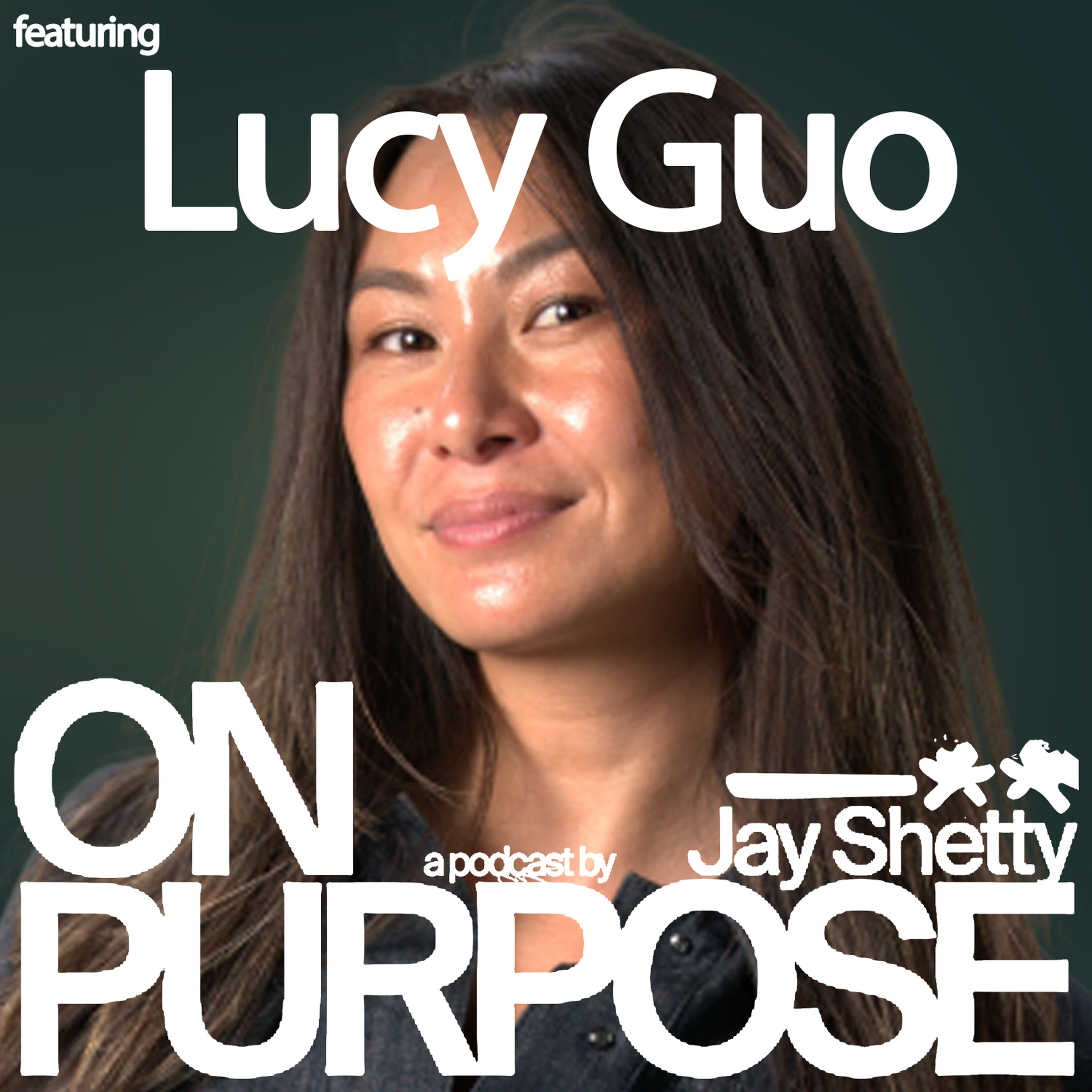
Overview of On Purpose with Lucy Guo
In this episode of On Purpose, Jay Shetty speaks with entrepreneur and investor Lucy Guo, co-founder of Scale AI and one of the youngest self-made female billionaires. The conversation focuses on her playbook for building businesses fast, why execution beats ideas, how AI is changing the rules for founders and workers, and why she believes college, networking, and learning agility still matter more than credentials.
Key Themes and Main Takeaways
College is useful for the network, not the degree
Lucy argues that college is increasingly outdated as a path to career success, especially in the AI era. However, she still sees huge value in college for:
- Building a strong network
- Forming emotional connections
- Practicing communication and sales
- Meeting ambitious, high-performing peers early
Her advice: if you go to college, go for the relationships and learning—not just the credential.
Execution matters far more than ideas
A repeated theme is that “ideas are cheap and execution is everything.” Lucy says:
- Good ideas are everywhere
- Someone else can build the same thing quickly
- What matters is speed, shipping, and learning from real users
She emphasizes that founders should stop obsessing over originality and start focusing on how fast they can move.
Avoid decision paralysis
Lucy warns ambitious people against over-consulting mentors and getting stuck in analysis. She shared how every mentor told her to stay at Snapchat, but she trusted her instincts and left to build her own company.
Her view:
- Get advice, but don’t outsource your decisions
- It’s better to make an imperfect move than to stay stuck
- Learning and momentum are more valuable than waiting for certainty
Solve problems for yourself first
She believes the best startup ideas come from solving your own pain points. If you need the product, chances are others do too.
Benefits of this approach:
- You know the problem deeply
- You can use the product yourself
- You can iterate based on real experience
- You can validate demand before overbuilding
Lucy Guo on Building Businesses Fast
Ship early, don’t wait for perfection
Lucy says many founders waste months on product design and “perfect UX.” Her philosophy is to:
- Build a 90% version quickly
- Launch it
- Test demand in the real world
- Improve only after people show interest
She recommends landing pages, calls, LOIs, and even pre-selling before building too much.
Use AI to accelerate from day one
She believes AI tools now let founders build and test ideas far faster than in the past. Her advice includes using:
- ChatGPT for consumer-side brainstorming and research
- Claude for business and enterprise workflows
- Replit, Cursor, and Claude Code for rapid product creation
She sees AI as a major reason entrepreneurship is becoming more accessible.
Don’t confuse comfort with progress
Lucy says many talented people stay at big companies because of “golden handcuffs”:
- High salaries
- Stock grants
- Bonuses
- Comfortable routines
But she argues that staying too long can delay bigger opportunities. Her own approach was to work on side projects, gain traction, and only then leave.
AI, the Future of Work, and Changing Skills
The most valuable human skills in the AI era
Lucy believes that as AI automates more tasks, humans should focus on what AI can’t replace easily:
-
Human connection and high EQ
- Sales
- Negotiation
- Retention
- Relationship-building
-
Taste
- Knowing what good looks like
- Choosing the best output from AI
- Making creative judgment calls
-
Scaling personal productivity with AI
- Becoming a 10x employee
- Automating repetitive work
- Learning AI tools quickly to increase output
Jobs that may disappear
She predicts that some creative roles will shrink or change significantly, including:
- Videography
- Photography
- Editing
- Writing
Her point is not that creativity disappears, but that AI will increasingly generate content while humans shift toward directing, curating, and editing.
The biggest AI mistake
Lucy says people make a huge mistake when they trust AI output blindly. Her warning:
- AI is only as good as the data and prompts it gets
- Junior users may create more problems than they solve
- Great engineers using AI become vastly more powerful
- Weak users may create technical debt and bad outputs
Mindset, Risk, and Personal Growth
Be delusional, but in a useful way
Lucy says founders need a level of delusion to succeed. You have to believe:
- You can be part of the tiny percentage that wins
- You can build something big even when others doubt you
- You can break from the expected path
For her, confidence came from being around founders who had already done it.
Optimize for learning, not just success
When evaluating risk, Lucy uses two questions:
- Will this be life-changing?
- Am I learning?
If something doesn’t offer meaningful learning or upside, she doesn’t think it’s worth pursuing.
Rejection should not derail you
Lucy presents herself as highly optimistic and fast-moving. She doesn’t dwell on rejection and treats setbacks as a signal to move on quickly.
Personal Insights
Self-worth vs. net worth
Lucy says a big part of her self-worth changed when she moved to Miami, where people liked her energy rather than her title or money. That experience helped her feel seen as a person, not just as a successful founder.
Money solves some problems, creates others
She says money removed a lot of stress from her early life, especially the instability of couch surfing. But it can also create complacency, which she sees as a downside.
Her relationship with passion
Lucy does not believe everyone should turn their passion into a career. Instead, she suggests:
- Do what you’re best at
- Use that to create leverage and wealth
- Then support or access the passions you care about
For her, DJing, music, and philanthropy are examples of passions she can now pursue because of the success she built elsewhere.
What she would do as a parent
Lucy says she would not force her kids into a passion. Instead, she would:
- Observe what they are naturally good at
- Accelerate that skill early
- Give them a head start in something they enjoy and can excel in
Final Five: Lucy Guo’s Quick Answers
Best advice she ever received
- “Just ask.”
- The worst outcome is usually a no.
Worst advice she ever received
- Hire executives with decades of experience just to have an “adult in the room.”
- She believes this can slow early-stage companies down.
What she learned at 30 that she wished she knew at 20
- Looking wealthy or polished makes life easier and opens doors.
Entrepreneurial hero
- Whitney Wolfe Herd, for turning rejection into a competitive advantage and building Bumble.
One law for the world
- Be nice to every human being.
Bottom Line
Lucy Guo’s message is blunt and practical: move fast, trust your instincts, use AI aggressively, and stop waiting for permission. Her philosophy is that success comes from speed, strong networks, constant learning, and the willingness to act before everything feels safe or perfect.