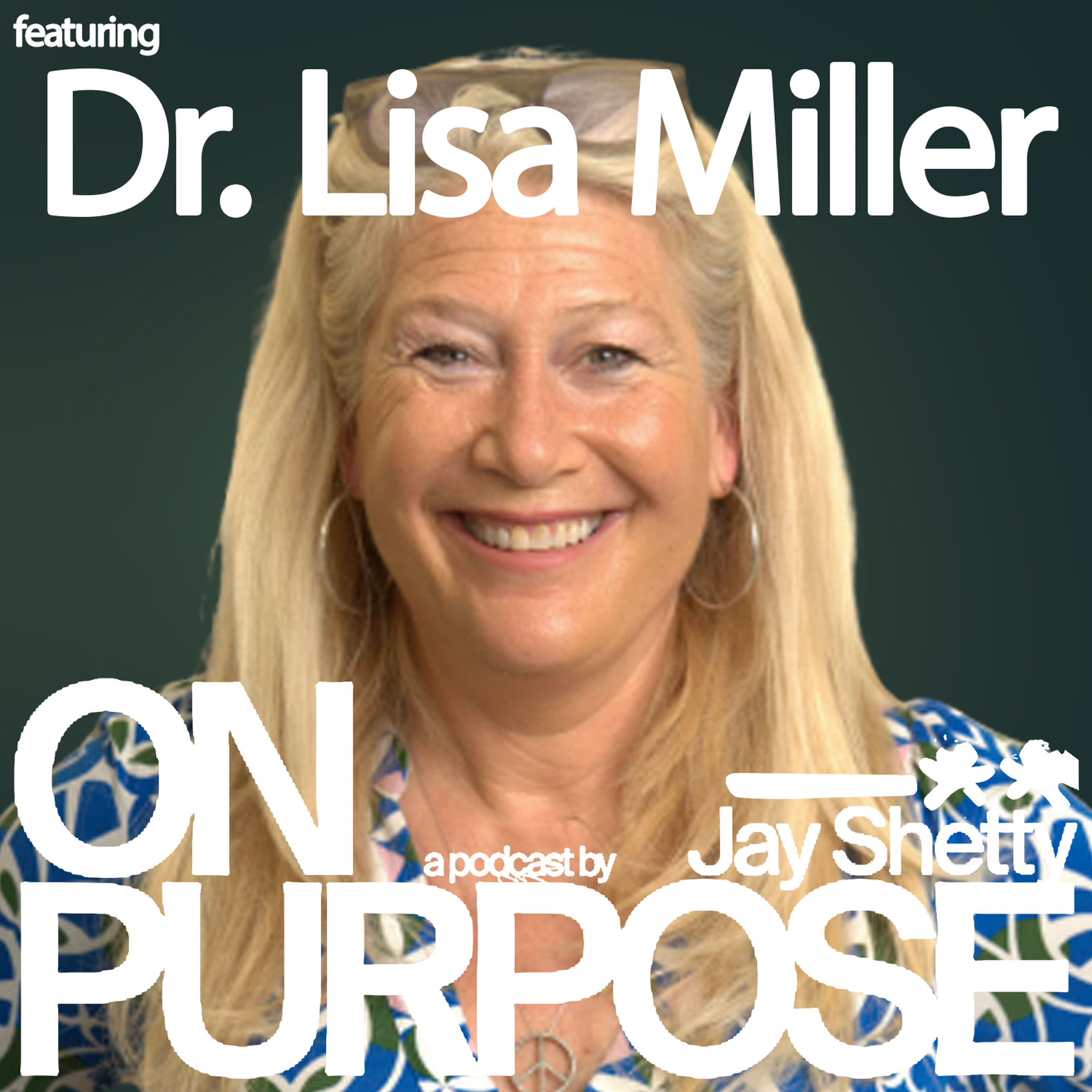
Overview of On Purpose with Dr. Lisa Miller
In this episode, Jay Shetty speaks with psychologist and Columbia professor Dr. Lisa Miller about the science of spirituality and how it can help people move through anxiety, depression, uncertainty, and life transitions with more clarity. Her core message is that spirituality is not just a belief system or a “nice extra” — it is an inborn human capacity, supported by brain science, that helps people feel loved, guided, and never alone. The conversation blends neuroscience, mental health, parenting, relationships, purpose, and practical spiritual exercises.
Key Themes and Main Takeaways
Spirituality is innate, not optional
Dr. Miller argues that every person is born with spiritual awareness. In her view:
- Spirituality is a natural perception, not a theory.
- The brain has circuits related to spiritual awareness.
- This capacity is partly inborn and partly cultivated through life experience.
Her main framing: you are not trying to become spiritual from scratch — you are awakening something already inside you.
Science and spirituality are compatible
A major theme is that science and spirituality are not opposing forces. Dr. Miller says science is simply a lens for observation, and when used well, it can validate spiritual experience rather than disprove it. She describes MRI and other research showing that spiritual experiences activate consistent neural networks across people of different faiths.
Spirituality is highly protective for mental health
Dr. Miller highlights striking research claims, including that strong spiritual life is:
- highly protective against addiction
- highly protective against depression
- protective against suicide risk
Her argument is that suffering often becomes the doorway into deeper awareness, not the end of the story.
Suffering can become a spiritual opening
A central idea is that depression, anxiety, betrayal, and trauma can function as a wake-up call. Instead of asking, “Why is this happening to me?” she encourages asking:
- “How is this happening for me?”
- “What is life showing me?”
- “What deeper guidance is being revealed?”
This reframes hardship as an invitation to grow rather than a sign that you are off-track.
Two forms of knowing: achieving and awakened awareness
Dr. Miller distinguishes between:
- Achieving awareness — strategy, planning, execution, goals
- Awakened awareness — intuition, guidance, synchronicity, spiritual insight
Her point is that both are necessary. Spirituality gives direction; practical action turns that direction into real-world change.
Core Concepts Discussed
“Loved, held, guided, and never alone”
Dr. Miller repeatedly returns to this four-part spiritual perception. She connects it to brain circuitry and says it represents the lived experience of spiritual awareness.
Red door / yellow door metaphor
One of the episode’s most memorable teaching tools:
- Red door = the path you wanted, but it’s blocked
- Yellow door = a better path that opens unexpectedly
- Trail angel = the person, sign, or event that helps redirect you
The lesson: disappointment may be the beginning of a better path, not the end of one.
Synchronicity as guidance
She urges listeners to pay attention to meaningful coincidences and then:
- recognize them
- reflect on them
- act on them
For her, synchronicity is not random noise — it can be part of spiritual direction.
Spirituality is practical, not passive
Dr. Miller pushes back strongly against the idea that spirituality means “doing nothing and leaving it to the universe.” She insists that spirituality should lead to:
- better decisions
- more ethical action
- more love in relationships
- a clearer sense of purpose
- stronger contribution at work and in life
Practical Exercises Shared in the Episode
1) The red door / yellow door reflection
A guided visualization to help reframe disappointment.
How it works:
- Think of something you wanted very badly that didn’t work out.
- Imagine the “stuck red door.”
- Notice how that dead end redirected you toward a better “yellow door.”
- Reflect on the “trail angels” who helped guide you.
Purpose: To help listeners recognize that setbacks may have led them somewhere better than their original plan.
2) The counsel practice
A reflection exercise for deeper guidance.
How it works:
- Take two breaths and clear your mind.
- Imagine a table.
- Invite anyone living or deceased who truly has your best interest in mind.
- Invite your higher self.
- Invite your higher power.
- Ask: “What do I need to know now?”
Purpose: To create an inner space for wisdom, comfort, and spiritual direction.
Spirituality, Relationships, and Daily Life
Love and partnership
Dr. Miller says spirituality can help people:
- meet the right person through unlikely, meaningful events
- love more deeply and less judgmentally
- repair emotional distance in relationships
- see partnership as a calling, not a transaction
She emphasizes that being spiritual should make you more loving, not more self-righteous or detached.
Work and money
She argues that spirituality should not be isolated to meditation or church. It belongs in:
- the workplace
- ethical decisions
- leadership
- financial life
According to her, when people bring their true spiritual selves into their work, they tend to make better, more sustainable decisions and often find a more grounded form of abundance.
Parenting and children
Dr. Miller says children are born as “knowers” and adults should protect that natural intuition rather than dismiss it. She recommends parents:
- use spiritual language when appropriate
- share their own authentic spiritual stories
- invite children to share their spiritual experiences
- include prayer, meditation, or other transcendence practices at home
Her view: children need authorization to trust their inner knowing.
Notable Insights
- “Depression is often the knock at the door for spiritual awakening.”
- “The question is not, am I spiritual? You already are spiritual.”
- “When you protect your purpose, your purpose protects you.”
- “Every single person in your path was sent by Source.”
- “Spirituality is not a transaction.”
- “The brain is more like an antenna than a factory.”
Bottom Line
This episode argues that spirituality is a built-in human capacity with real neurological, emotional, and practical effects. Dr. Lisa Miller’s message is that if you feel lost, anxious, or stuck, the answer may not be to control more — it may be to awaken more. By paying attention to intuition, synchronicity, suffering, and relationship, listeners can move toward a life that feels more meaningful, guided, and alive.
Action Items for Listeners
- Reflect on a “red door” moment in your life and identify the “yellow door” it led to.
- Try the counsel practice when you feel stuck or confused.
- Notice synchronicities and write them down.
- Bring more spiritual awareness into work, love, and parenting.
- Reframe suffering with the question: “How is this happening for me?”