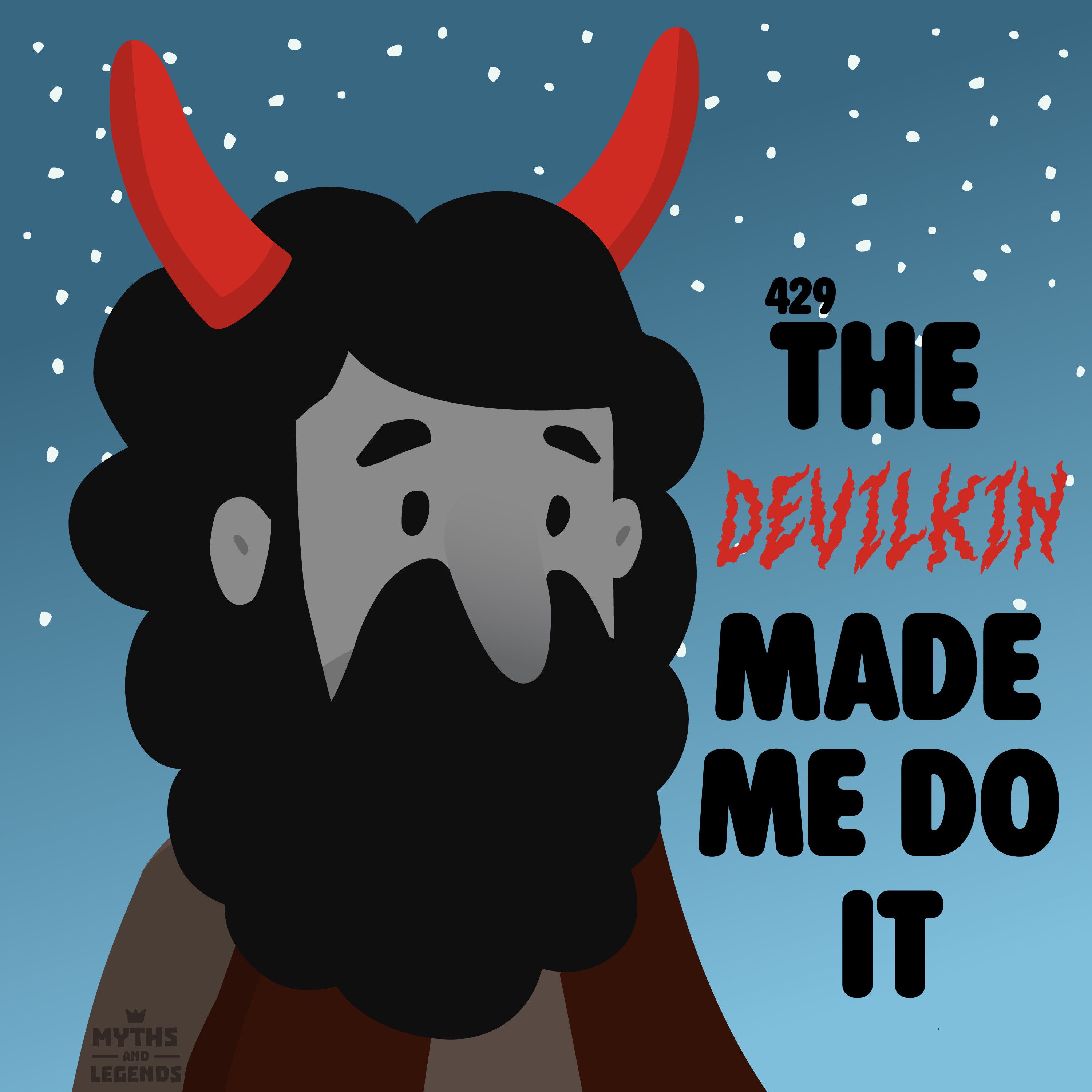
Overview of Myths and Legends — Episode 429: "The Devilkin Made Me Do It"
This episode retells a Slavic fairy-tale about Gorya, a peasant shoemaker who is abused and exploited by Prince Mistyfor, makes a pact with a devilkin (a minor devil-like being), and is transformed into the prince Dardavan to marry the princess. The story explores bargains with supernatural beings, the performative nature of power and class, and the moral ambiguities that follow. Trigger warning: the episode contains physical abuse and manipulation.
Short synopsis
- Gorya, a talented peasant shoemaker, is brought to the palace to become the prince’s personal shoemaker. Prince Mistyfor humiliates and repeatedly beats him.
- Desperate, Gorya drunkenly wishes for the devil to free him. A devilkin appears, offers to make Gorya look and live like Prince Dardavan in exchange for a future favor.
- Gorya assumes Dardavan’s identity while the real Dardavan is away. The household, including Prince Mistyfor, accepts him because nobles refuse to believe someone ordinary could be their equal.
- The princess Dogada suspects the fraud and tests him, but public perception and staged evidence force a rushed wedding. Gorya and Dogada marry.
- Later the devilkin asks Gorya (now in power) to drain a garden pond and recover a ring that had banished the devilkin from his pond-home. Gorya complies.
- The tale ends ambiguously: Gorya lives as the accepted prince, Dogada seems to prefer him to the real Dardavan, and a servant’s accidental(?) drowning implies the devilkin may have collected his due—though the devilkin’s request wasn’t malicious in intent.
Key points and takeaways
- The devilkin acts less like a malign incubus and more like a trickster/problem-solver with contractual terms: he grants Gorya status in return for future help.
- The story satirizes aristocratic self-delusion: the palace accepts appearances over evidence; status is a performance others are eager to sustain.
- The moral complexity is central: Gorya gains agency and social mobility but by deception and complicity with supernatural forces—raising questions about ethics and consequence.
- Power structures protect themselves by refusing to recognize when they are being impersonated; this makes political theater effective.
- The tale ends with a pragmatic if uneasy resolution rather than clear justice: Gorya keeps his new life, Dogada forgives or prefers him, and the devilkin goes home.
Characters
- Gorya — talented peasant shoemaker; protagonist who bargains for freedom and assumes the identity of Dardavan.
- Prince Mistyfor — Gorya’s abusive employer and the ruler; authoritarian and performative in his pride.
- Devilkin (the stranger) — supernatural figure who fulfills Gorya’s wish in exchange for a future favor; not purely evil, more transactional.
- Princess Dogada — skeptical, clever; recognizes the impostor but ultimately accepts Gorya.
- Pertushkin/Petushkin — Gorya’s servant in disguise; small comic/plot role, later drowns under ambiguous circumstances.
- The real Dardavan — an opportunistic, less-virtuous man sent off to war or otherwise disposed of in the background of the plot.
Structure / Beats of the story
- Setup: Gorya’s life as a poor, talented boy raised to court; he becomes the prince’s shoemaker.
- Conflict: Prince Mistyfor’s brutality and Gorya’s inability to leave due to being “owned” by court service.
- Inciting supernatural pact: Gorya’s wish and the devilkin’s offer (appearance, palace, marriage).
- Impersonation: Gorya moves into the role of Dardavan; palace and princess test him.
- Climax: Princess’s tests produce evidence of deception; the prince is forced to marry him anyway.
- Resolution: Gorya fulfills the devilkin’s request (draining the pond, retrieving the ring), keeps his status; ambiguous moral ending.
Themes & analysis
- Identity vs. performance: The story argues that social rank is sustained by belief and performance rather than inherent worth.
- Bargains and consequences: Supernatural bargains bring short-term gain and ambiguous long-term costs.
- Class critique: The ruling class’s cruelty and performative superiority are central to the narrative’s moral thrust.
- Female agency: Princess Dogada acts with cunning and awareness—she recognizes truth others ignore and plays politics to suit her aims.
- Ambiguity of “evil”: The devilkin is not a cartoon villain—he has needs and seeks a sound bargain, complicating the usual “deal-with-the-devil” moral.
Notable lines / quotes
- “On your summons I came. I will serve you.” — the devilkin’s concise contractual reply.
- “If that creepy, controlling guy just wants to give you so much stuff for free, you might want to take a second look at that contract.” — episode hook summarizing the moral.
- Repeated motif: nobles will not imagine themselves as the shoemaker — the power of social imagination.
Creature of the Week
- Jack and Irons (North Yorkshire): A giant-like figure who carries a spiky club and chains decorated with human heads. The hosts warn about the cultural context and the modern awkwardness (and danger) of emulating such imagery. The myth evokes crossroads dangers and monstrous personifications of rural peril.
Content notes & practical info
- Trigger/content warnings: physical abuse, control/abusive relationship dynamics.
- The hosts mention some editorial notes: “prince” is used to mean ruler; the name Dardavan/Dardavon is pronounced inconsistently in the episode.
- The show directs listeners to MythPodcast.com for episode notes and trigger info.
- Next episode: Finnish folklore about hitchhikers who are demons.
Final thought / Recommendation
This retelling is a good, compact example of Slavic folklore’s moral complexity: it refuses tidy endings and instead focuses on the messy trade-offs of escaping oppression by questionable means. Recommended for listeners interested in folklore about social role-playing, bargaining with the supernatural, and stories where the “devil” is more pragmatic than purely malicious.