Overview of Episode 2: Karat and Schtick
This episode of Metro follows Sarah Koenig’s investigation into TraxNYC, a flashy Diamond District jewelry business whose viral fight video raised a bigger question than simple authenticity: what, exactly, is real in this world of luxury sales, online performance, and constant self-branding? Over two days inside the store, Koenig sees a place where sincerity and showmanship are intertwined—where viral content boosts business, employees are trained to sell at speed, and even accusations of fraud can become part of the act. The episode uses TraxNYC to explore the blurred line between hustle and theater in New York’s Diamond District.
Main Storyline
The viral fight that started it all
- The episode opens with the widely circulated video of a brawl in the Diamond District involving jeweler Max Agadjani of TraxNYC.
- The fight appears dramatic, highly produced, and partly cinematic, including a hospital-bed selfie video afterward.
- Koenig wonders whether the incident was genuine or staged, or at least partly staged, and this question drives the episode.
The Diamond District as a place where “real” and “fake” are hard to separate
- Reporter Corey Kilgannon describes 47th Street as a uniquely old-school, chaotic jewelry hub.
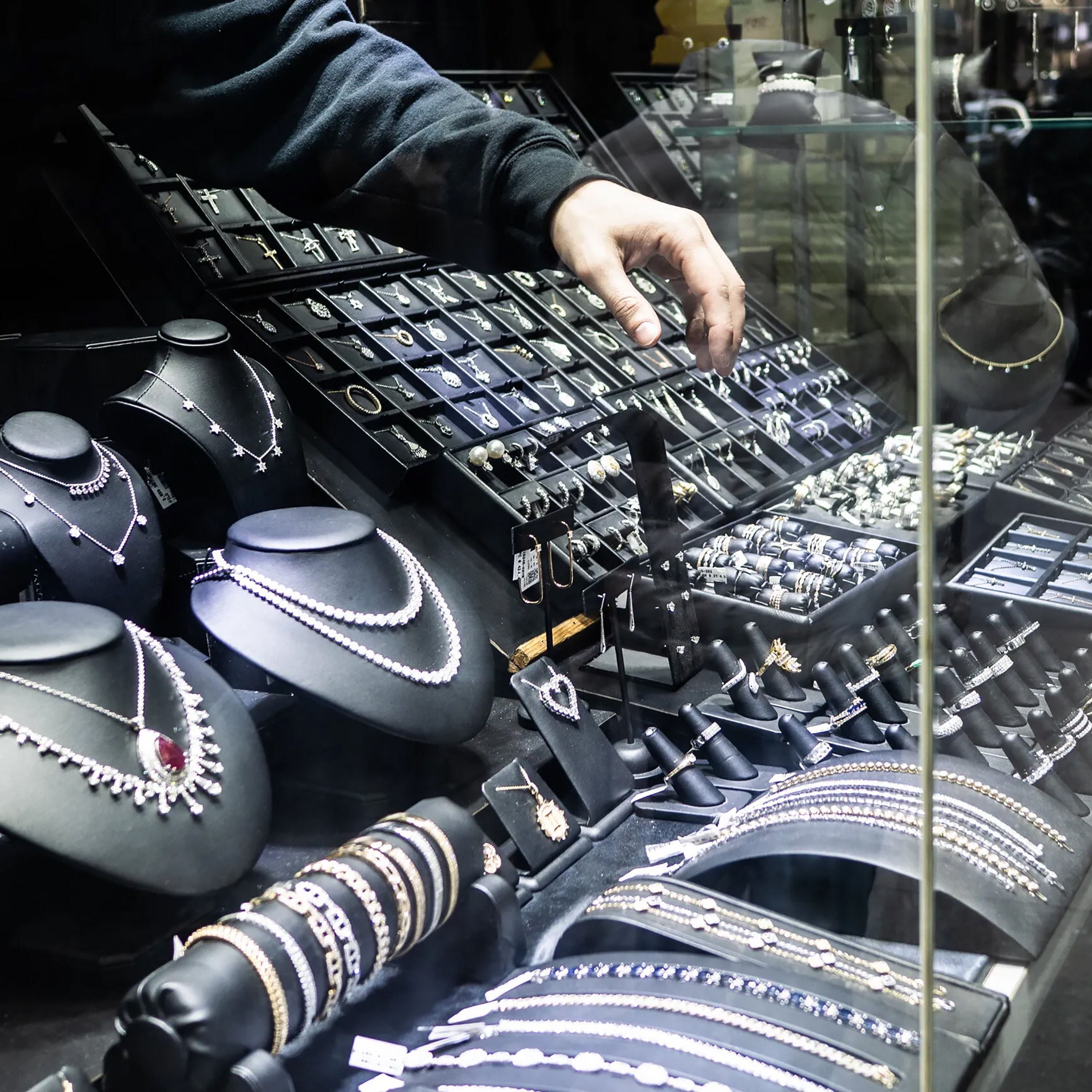
- The district feels like a live performance of New York: sidewalk hawkers, armored trucks, open bargaining, and constant salesmanship.
- Even ordinary interactions feel theatrical—like meeting a man who claims to be “James Bond” and then shows a license to prove it.
TraxNYC’s business model: online spectacle and aggressive sales
- TraxNYC is heavily driven by social media and video content.
- The viral fight boosted business significantly, reportedly doubling monthly sales.
- The store is hiring fast, with trainees expected to hit strict sales targets almost immediately.
- Sales culture is intense: commissions, competition, constant pressure, and a heavy dose of performance.
Key Characters and What They Reveal
Max Agadjani: entrepreneur, performer, disciplinarian
- Max presents himself as a self-made hustler who built his jewelry business from scratch after immigrating from Azerbaijan as a child.
- He sees himself as having no room for complacency and treats the business like a battlefield.
- His staff meetings are part coaching session, part verbal beating, but his harshness is also a form of motivation.
- Max’s identity seems inseparable from his brand: he performs toughness, authenticity, and control.
The trainees: learning to sell in a high-stakes environment
- Ray and Shivanya are trying to meet demanding sales quotas for online sales roles.
- They work real leads mixed with fake ones, and the episode shows how much of the job is filtering through noise and nonsense.
- Their experience reflects the larger theme: in this world, success requires both sales skill and emotional tolerance for uncertainty.
Grayson and Milad: youth, money, and status
- Grayson, a young businessman from Idaho, and Milad, a 17-year-old who claims to have made serious money in e-commerce, buy an expensive watch with surprising ease.
- Their presence underscores how young, internet-driven wealth circulates through the Diamond District.
- They also embody the episode’s ambiguity: are these people legitimate high earners, or are they part of the same performance culture?
Important Themes
1. Authenticity is a moving target
- The episode repeatedly asks whether something is real:
- the viral fight,
- the people walking the block,
- the buyers,
- the watches,
- even the emotions on display.
- Koenig’s point is not just that people lie, but that the entire marketplace depends on people believing in a shared illusion of authenticity.
2. Business as theater
- Max’s marketing stunts, the store’s social-media presence, and even his confrontational management style all function as performance.
- Yet that performance is also real in its effects: it brings in money, loyalty, attention, and fear.
- The episode suggests that in this environment, acting like a force can become the same as being one.
3. Hustle culture rewards confidence
- The store values speed, assertiveness, and the ability to project certainty.
- This applies to sales, negotiations, and personal identity.
- Being believable matters almost as much as being truthful.
The Watch Plot Twist
The alleged scam
- Grayson returns days later trying to sell back the same watch for less money.
- TraxNYC checks it and believes the watch has been tampered with: the movement is real, but the case or other parts may be fake.
- The employees suspect a “Frankenstein” watch—mixed authentic and counterfeit components.
The response
- Instead of a dramatic confrontation, the staff handles the situation carefully and professionally.
- They decline the buyback, avoid direct accusation, and keep their language controlled.
- This is a contrast to Max’s explosive public persona: the younger employees solve the problem with calm, strategic politeness.
The unresolved ending
- Grayson later texts Sarah Koenig and maintains that he did nothing wrong.
- The episode never fully settles who is telling the truth.
- That uncertainty is the point: in this world, evidence is hard to separate from storytelling, and suspicion itself becomes part of the transaction.
Notable Takeaways
- TraxNYC thrives on spectacle, but the spectacle is not necessarily fake—it is part of how the business operates.
- Max’s viral persona, though exaggerated, appears deeply connected to his real management style and personal history.
- The Diamond District is portrayed as a place where trust is always provisional and everyone is performing some version of themselves.
- The episode leaves listeners with a central question: in a marketplace built on image, how can anyone tell what is genuine?
Bottom Line
Episode 2: Karat and Schtick is less about jewelry than about the culture surrounding it: ambition, image-making, credibility, and the performance of success. Through TraxNYC, the episode shows a world where authenticity is always up for negotiation—and where even the truth can feel like part of the sales pitch.