Overview of "Your car company also wants to be your bank" — Marketplace
This episode of Marketplace covers a range of business and economic stories: highlights from Davos about geopolitical uncertainty and its impact on corporate decision‑making; the FDIC approval for automakers (Ford and GM) to form industrial banks and what that means for car financing; a profile of a new directory for American‑made apparel; how ads are coming to ChatGPT and the implications for publishers and advertisers; and reporting from the National Western Stock Show about record‑high cattle prices. The show mixes interviews, reporting, and quick market updates.
Episode segments — concise summaries
Davos and the global economic outlook
- Discussion with New York Times’ Jordan Holman (on site) and Bloomberg’s David Gura about themes at the World Economic Forum.
- Conversation shifted from AI to geopolitics; executives at Davos are worried about uncertainty — especially U.S.–Europe relations and the wider “rupture” in the postwar order (a phrase attributed to Mark Carney).
- CEOs cited difficulty planning investments amid geopolitical and trade unpredictability.
- U.S. economy: consumer resilience continues but with a K‑shaped recovery — higher‑income buyers fueling growth while others lag. Consumer sentiment ticked up but remains below last year’s levels.
- Fed watchers are focused on near‑term policy (rate pause expected) and longer‑term questions about who will succeed Jerome Powell and what that means for Fed independence.
Automakers becoming banks (industrial banks)
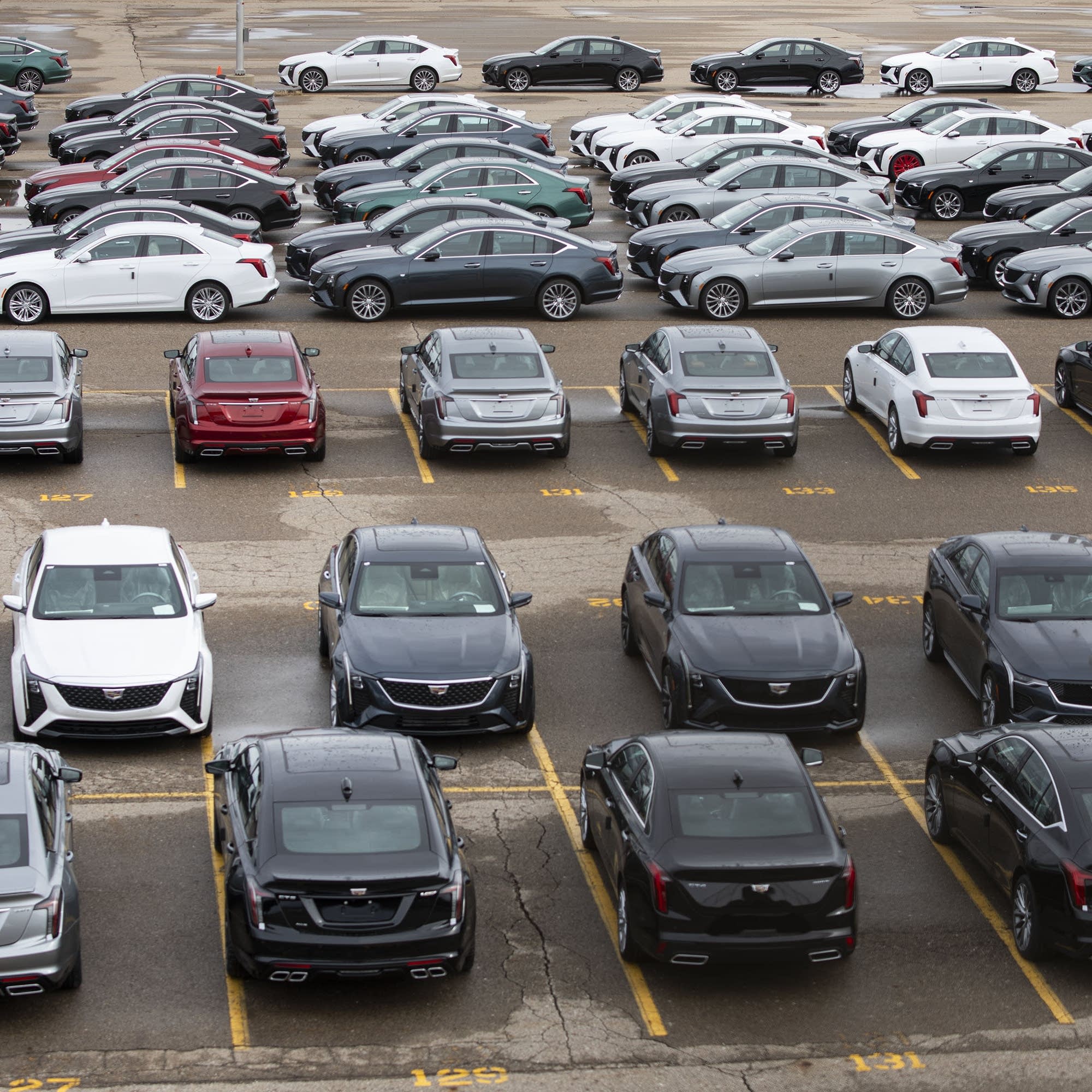
- Federal regulators approved Ford and GM applications to create FDIC‑insured banks (Ford Credit Bank and GM Financial Bank) to offer online savings accounts and auto loans.
- Industrial banks function similarly to traditional banks: they take deposits, make loans, and can carry FDIC coverage (deposits insured up to $250,000).
- Lower funding costs from insured deposits can make manufacturer financing more competitive — useful as new vehicle transaction prices are near $50,000 on average and many buyers are priced out.
- Concerns: potential competition with community banks and lighter regulation for parent corporations compared with bank holding companies. Approval trends may depend on the administration; other companies could follow.
Crafted with Pride — American‑made apparel directory
- Alex Goulet and Willie DeCanto discuss their book/directory listing ~1,400 U.S. clothing, footwear, and accessory brands.
- Goal: make it easier for consumers to buy domestically produced goods, support domestic jobs, and preserve manufacturing capacity.
- Book is printed in the U.S., and future editions will expand the list further.
Ads are coming to ChatGPT — advertising and publishers’ risk
- OpenAI is testing advertising in free/lower‑cost ChatGPT tiers to monetize usage.
- Publishers worry that chatbots summarizing content will reduce click‑throughs and ad revenue (some sites have already seen big traffic drops from AI summarization).
- New strategies emerging:
- Preparing content in formats that AI agents can ingest (agent‑facing web).
- Developing AI‑powered, conversational ad experiences that can interact with users in real time.
- The landscape is uncertain; both publishers and advertisers are experimenting with ways to reach users in an increasingly AI‑mediated web.
National Western Stock Show (Denver) — cattle auctions and beef prices
- Live reporting from the stock show: auctions of breeding heifers are fetching record prices ($3,000–$4,000 each; ~five years ago $2,000).
- Sellers optimistic: higher prices help cover rising input costs. Buyers/ranchers worry about high commodity prices and risk of prices falling later.
- U.S. administration increasing beef imports from Argentina to try to lower consumer prices, but analysts say the effect is modest; imported beef is often leaner and fills different market niches than grain‑fed U.S. beef.
Key takeaways and implications
- Geopolitical uncertainty is now a dominant worry for corporate leaders, affecting cross‑border investment and supply‑chain planning.
- The U.S. economy shows resilience but with uneven gains — policymakers and business leaders are watching labor market strength and inflation dynamics closely.
- Automakers forming FDIC‑insured industrial banks signals a strategic move to control financing costs and improve competitiveness without cutting sticker prices. This may reshape some lending markets and put pressure on community banks.
- The rise of AI summarizers and agent‑facing search is a potential structural threat to publishers’ traffic and ad models; new ad formats and content‑ingestion strategies will be required.
- Record cattle prices underline inflation pressures in food supply chains; import policies can blunt consumer prices only to a degree.
Notable quotes and lines
- Mark Carney (summarized): called changes in global cooperation a “rupture” in the world order — framing the geopolitical concern at Davos.
- Karen Petru (Federal Financial Analytics): when a bank can provide FDIC insurance “it doesn't have to pay as much interest to its depositors,” lowering funding and lending costs.
- Danielle Coffey (News Media Alliance): AI summaries “satisfy the user's demand” and can cause large drops in click‑through for publishers.
- David Whiston (Morningstar): automakers are using financing relief as a tool to help buyers without lowering sticker prices.
Quick facts & numbers
- Industrial banks in U.S.: ~23 (per FDIC reference in the episode).
- Average new vehicle transaction price cited: just under $50,000.
- Heifer auction prices at Denver stock show: commonly $3,000–$4,000 (vs. ~$2,000 five years ago).
- Deposits insured by FDIC up to $250,000.
- Market close (day referenced): Dow down ~0.6% (285 points), Nasdaq +0.3% (65 points), S&P ~flat.
Practical recommendations (who should care and next steps)
- Publishers/media outlets: evaluate how your content is consumed by AI agents; consider structuring data for controlled ingestion, test AI‑native ad experiences, and develop subscription or direct‑user engagement models.
- Advertisers/brands: pilot agent‑facing formats and conversational ads; make product data easily discoverable by AI; continue investing in owned channels (websites, email) as tentpoles.
- Consumers: know that automakers may offer FDIC‑insured savings accounts and financing — deposits will be insured up to $250k, but compare rates and terms with traditional banks and credit unions.
- Community banks and regulators: monitor industrial bank approvals and consider competitive/regulatory implications.
- Investors and business leaders: watch Fed leadership decisions and Davos signals for geopolitical risk when making long‑term investment and planning choices.
If you want a one‑sentence summary: Davos highlighted geopolitical uncertainty and a split recovery, automakers are moving into FDIC‑insured banking to lower customer financing costs, AI is reshaping advertising and publisher economics, and commodity pressures are pushing retail and agricultural prices to record levels.