Overview of Jet fuel prices soar as war continues
This episode of Marketplace (March 10) connects the rising geopolitical risk in the Middle East to real-world economic effects: higher oil and jet-fuel prices, knock-on increases in travel costs, and broader strain on small businesses. The show mixes reporting on markets and macro indicators with interviews of small-business owners and journalists covering consumer-rights issues (Right to Repair) and tech (AI/cloud spending).
Key takeaways
- The U.S. government and private sector are feeling immediate costs from the war in the Middle East: officials estimate the U.S. government could be spending up to $2 billion per day.
- Higher oil prices are driving up jet fuel costs; airlines’ responses will vary by market and customer segment—international/high-fare traffic is more able to absorb increases than price-sensitive domestic/budget travelers.
- Small-business sentiment is cooling: NFIB’s Small Business Optimism Index fell a second consecutive month; business uncertainty is unusually high.
- Some small businesses are adapting with creative models (e.g., a Minneapolis cafe switching to permanent pay-what-you-can) and are finding community support that can offset costs.
- Big tech’s AI buildouts are entering an “accountability” phase; Oracle’s large debt-driven data-center push is being watched closely by investors as a potential risk.
- Right-to-repair issues are surfacing in new ways as bankrupt EV maker Fisker leaves owners scrambling to access software and IP needed to keep cars running.
Segment summaries
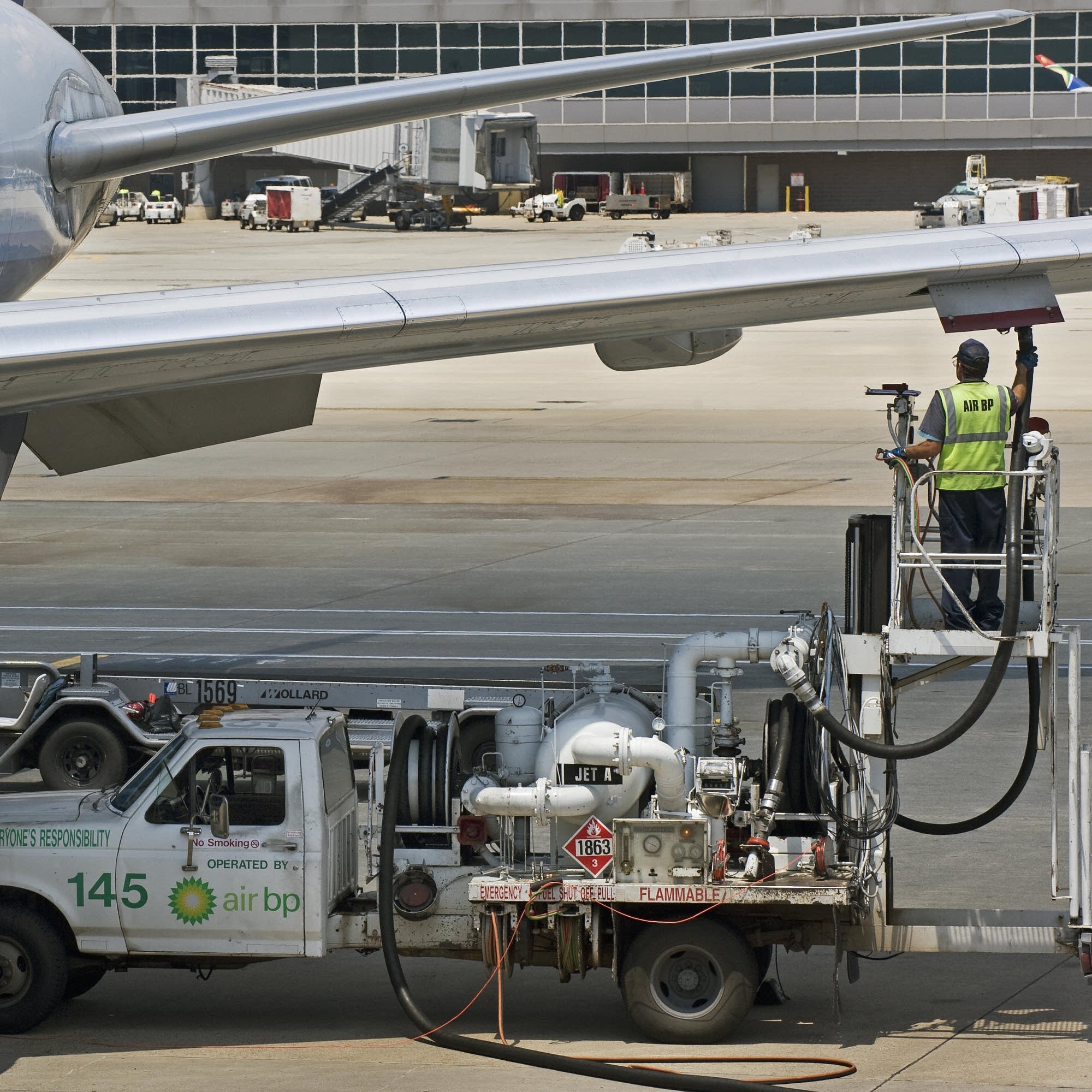
Jet fuel, airfare and travel demand (report by Kaylee Wells)
- Jet fuel prices have spiked similarly to early stages of the Ukraine war; that pushed airfare higher then, but consumer demand (revenge travel after COVID) helped airlines pass costs on.
- Current travel demand is elevated but not as extreme, so fare increases may feel more painful for consumers now.
- Analysts expect airlines to price increases toward customers who can more easily absorb them (long-haul/international travelers), while domestic and budget carriers may be pressured to absorb more fuel costs themselves.
- Booking advice is uncertain; some analysts wish they had booked earlier for summer travel.
Small-business confidence and labor/insurance pressures (Mitchell Hartman)
- NFIB’s February Optimism Index is near its 52-year average but shows a spike in business uncertainty.
- Key pressures: higher input/material costs (partly from prior tariffs), rising gasoline and fuel, difficulty finding workers, and a jump in small-business health insurance costs (premiums up ~11% for 2026).
- Counterpoint: small businesses showed hiring strength in February—Gusto reports ~106,000 net new jobs from small firms, double the 12-month average—suggesting adaptive resilience.
Postmodern Times (formerly Modern Times) — pay-what-you-can cafe (interview with owner Dylan Alverson)
- In Minneapolis, the cafe made a temporary pay-what-you-can model permanent in response to community needs during ICE operations and related local hardships.
- Operations: menu prices were removed from POS; donations voluntary; suggested amounts provided only on request.
- Early financial signals are promising: a surge of public support (example: one donor flew from Texas with $2,000) and the cafe avoided a typical February loss for the first time.
- Owner: decision stemmed from community solidarity; hopes model helps sustain the business while serving neighbors.
Oracle, AI cloud spending and investor concerns (Megan McCarty Carino)
- Oracle reported better-than-expected quarterly earnings driven by AI cloud demand, but markets are wary of heavy data-center spending across big tech.
- Oracle’s strategy is notable because it is financing aggressive data-center expansion largely with debt—more than $100 billion in debt—making it riskier than cash-rich peers (Microsoft, Google, Amazon).
- Oracle’s cloud strategy is heavily tied to a marquee customer (OpenAI) and a reported massive deal; uncertainty about OpenAI’s commitments (and reports of project pullbacks) amplifies investor concerns.
- Consequence: Oracle stock is down materially from highs; reports of potential job cuts as costs are scrutinized.
Right to Repair and the Fisker owners’ effort (interview with Ariane Marshall, Wired)
- Fisker (maker of the Ocean EV) went bankrupt about a year after launching the vehicle; owners faced software- and support-related failures.
- Owners formed the Fisker Owners Association to preserve and manage the software/IP needed to maintain vehicles—effectively a volunteer-run effort to keep cars operational.
- Fisker (or its estate) resists handing IP over due to liability, reputation and complex legal negotiations. The owners’ effort raises questions about consumer rights when manufacturers exit the market.
- Broader implication: grassroots owner communities may fill gaps but shouldn’t have to shoulder the burden alone; Right to Repair policy and clearer IP/transition rules are relevant.
Small bookstore update — The New Romantics (Jane Rodriguez)
- One-year update: the romance-only bookstore in Orlando has had steady business and expanded with a paid-off book truck called “Poppy” for events.
- Owner’s ongoing concerns: rising rent (lease renewal), insurance, and desire to raise employee pay—typical post-startup cost pressures despite steady revenue.
Housing and markets — quick data points
- Existing home sales rose 1.7% from January to February—modest month-over-month growth.
- Market close: Dow -32 (47,706), Nasdaq +1 (22,697), S&P 500 -14 (6,781).
- Brent crude intraday low ~$80 before closing at ~$87.
- 10-year Treasury yield ~4.16%.
- Note: Energy Secretary mistakenly posted that the U.S. Navy was escorting tankers through Hormuz; the White House corrected that.
Notable quotes
- “The war with Iran is costing the U.S. government up to $2 billion a day.” — News summary
- “Am I going to pay to light the house and heat the house and fill a fuel tank on the cars? Or am I going to go buy airline tickets to see Mickey Mouse?” — Robert Mann, airline analyst (on consumer trade-offs)
- “It shouldn't have to take that much work to actually own the thing that you've bought.” — Ariane Marshall, Wired (on Fisker owners doing the work)
- “This plague from our federal government is probably going to wipe out a quarter or half of our restaurants in the city if things don't change.” — Dylan Alverson, Postmodern Times owner (describing ICE operations’ impact)
Recommended actions / what to watch
- Travelers: consider booking sooner rather than later if travel dates are near and gas/oil price volatility continues—airlines may pass on jet-fuel-driven costs unevenly.
- Small-business owners: monitor health-insurance renewals and factor rising premiums and lease/insurance costs into 2026 budgets; explore community models or alternative revenue streams.
- Consumers and policymakers: follow Right to Repair developments and bankruptcies in EV and connected-device sectors—these cases may require clearer legal paths for IP access when makers fail.
- Investors: watch big tech capital spending versus free cash flow; Oracle’s debt-heavy AI cloud strategy is a bellwether on how markets will price AI infrastructure risk.
- Markets watchers: track oil prices and geopolitical developments in the Middle East for near-term impacts on inflation and travel sectors.
Where to find more
- Marketplace episodes and reporting for deeper reads and full interviews mentioned in this summary.
- Wired for the Fisker piece by Ariane Marshall.
- NFIB release for full Small Business Optimism Index data.
- Gusto payroll reports for small-business hiring trends.