Overview of As AI expands, Americans have doubts
Marketplace explores two macroeconomic threads: (1) a surge in gold and what central-bank buying may signal about confidence in the U.S. dollar, and (2) the rapid expansion of AI infrastructure — how it’s powering economic growth, provoking public unease, and stressing local energy grids as data centers multiply.
Key takeaways
- Gold has rallied to record highs (futures topped $5,000/oz), and central banks are increasing gold holdings. Gold now roughly outvalues U.S. Treasury bonds in those holdings; dollar-denominated assets fell below half of global reserves in absolute terms.
- Momentum and geopolitical/economic anxiety (tariffs, debt, conflicts) are driving demand for gold and other metals, but momentum rallies are unpredictable.
- Durable goods orders jumped in November (~5% headline), driven largely by airplane orders; excluding transportation, orders rose ~0.5%. AI-related spending (data centers, hardware, software, R&D) is a meaningful component of recent business investment.
- The Federal Reserve Bank of St. Louis estimates AI-related components contributed just under 1 percentage point to U.S. GDP in the first three quarters of last year — a material amount in a $31 trillion economy.
- Public sentiment toward AI is skewed toward concern rather than enthusiasm (Pew Research). Local opposition to AI data-center projects has shut down or slowed multiple developments.
- Data centers already consumed ~4% of U.S. electricity in 2024; projected growth (+133% by 2030) could push that to ~10% of national power consumption within five years, raising local grid, cost, and environmental concerns.
Topics discussed
Gold and central-bank behavior
- Why gold is rising: investor angst (geopolitics, trade, debt), perceived safe-haven status.
- Central banks increasing gold allocations (gold ~28% of their holdings); diversification away from dollar assets into other currencies and gold is happening but not necessarily a wholesale sell-off of U.S. assets.
- Momentum effect in commodities and difficulty in timing reversals.
Durable goods & business investment
- November durable-goods surge largely driven by Boeing/aircraft orders; machinery orders (including for data centers and computing) are up.
- Factors boosting equipment investment: AI demand, older installed capital, favorable tax deductions.
- Uncertainty (tariffs, trade) still weighs on long-term investment decisions.
AI’s economic impact and public doubt
- AI’s GDP contribution is measurable but small as a share (just under 1 point) — nonetheless significant in dollar terms.
- Universities and public institutions are integrating AI (example: California State’s $17M OpenAI deal covering ~500k users), causing classroom and ethical debates: cheating, distraction, mental-health effects.
- Local community resistance to data centers: concerns over noise, traffic, pollution, property values, and increased electricity bills (example: Hobart, Indiana; residents saw ~26% electricity price rises; city approved Amazon project with $47M payment to city).
Data centers: types, function, and impacts
- Hyperscale vs. colocation: hyperscale (single-tenant, big cloud providers — training models; located where power/real estate costs are low). Colocation (multi-tenant “apartment building” for compute) serves banks, hospitals, apps, and local low-latency needs — often in urban areas.
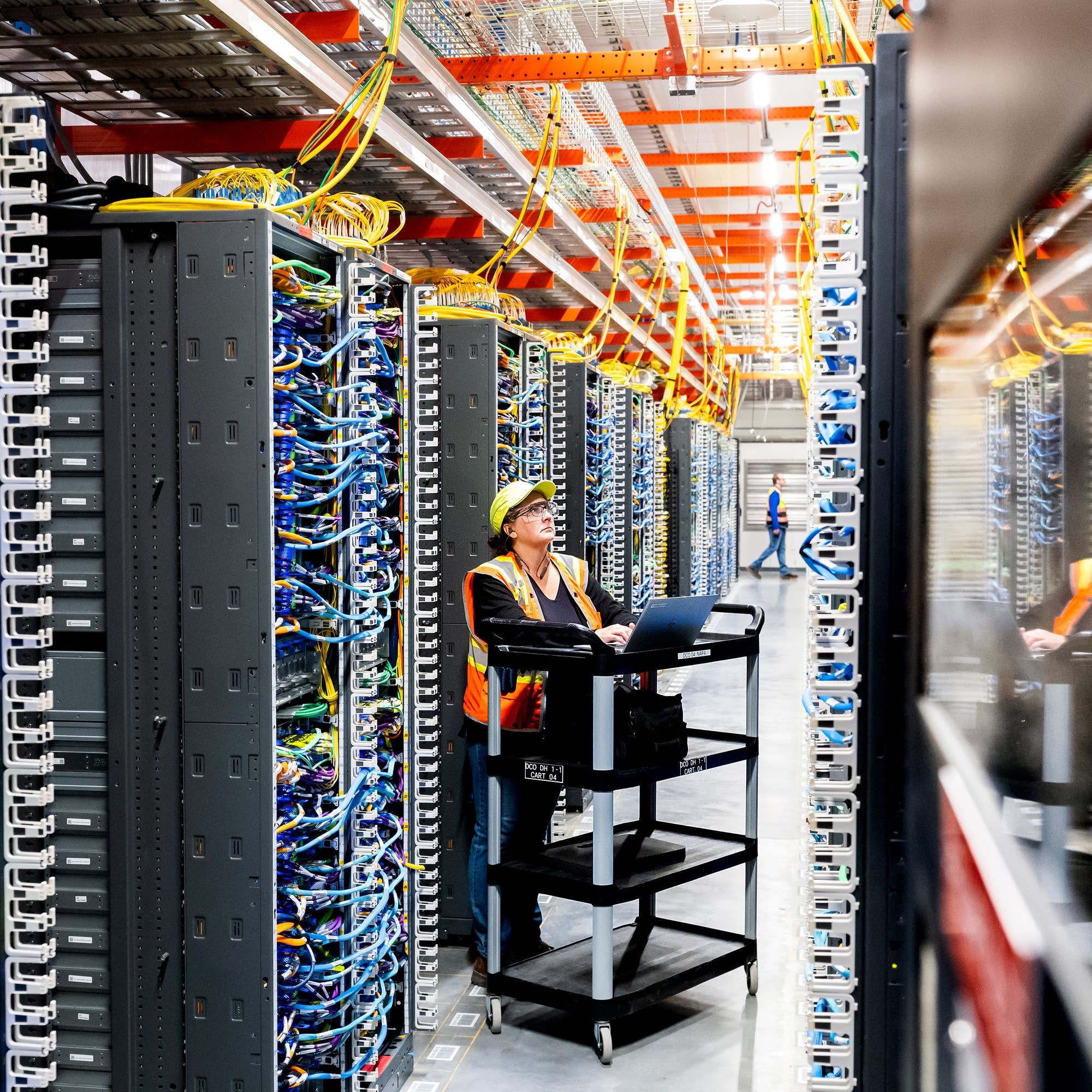
- Data-center realities: noisy, hot, energy- and water-intensive; use hot/cold aisle designs, large battery arrays, specialized cooling (e.g., for NVIDIA chips), and substantial power capacity (comparable to small towns).
- Co-location operators argue they deliver better energy efficiency at scale versus many enterprises running private on-prem data centers.
Notable quotes and soundbites
- “Things go up, then they go up some more.” — Jay Hatfield, on momentum rallies.
- Professor Enid Baxter Rice: “I’m concerned. I’m really scared.” — on student wellbeing and AI in classrooms.
- Local resident on inescapable AI integration: “What do you do? Just stop using your phone? No.” — capturing everyday frustration.
- Spencer Kaplan: “I’m rooting for natural intelligence.” — reflecting anthropological skepticism of AI culture/inevitability.
- Volkswagen CEO: “Given an unchanged tariff burden... large additional investment cannot be funded.” — highlighting how tariffs influence capital decisions.
Data & figures (from episode)
- Gold futures exceeded $5,000 per troy ounce (record).
- Gold makes up ~28% of central-bank holdings; U.S. dollar assets under 50% in absolute terms (IMF data referenced).
- Durable goods orders: +5% (November headline); +0.5% excluding transportation.
- AI contribution: just under 1 percentage point to GDP (first three quarters last year).
- Data centers electricity use: ~4% of U.S. power in 2024; forecast to increase ~133% by 2030 (~10% of power).
- Cal State–OpenAI deal: $17 million covering ~500,000 students and faculty.
- Hobart, Indiana: area electricity prices rose ~26%; city approved an Amazon data center with a $47 million payment.
Implications and recommended follow-ups
For policymakers:
- Accelerate grid expansion and resilience planning to accommodate major data-center demand.
- Improve community engagement and transparent benefit-sharing for local projects (jobs, infrastructure support, energy mitigation).
For businesses and institutions:
- Consider co-location for efficiency rather than bespoke on-prem data centers.
- Invest in worker/student training and clear policies on AI use to manage academic integrity and mental-health impacts.
For citizens and local governments:
- Scrutinize data-center proposals’ real economic benefits versus costs (infrastructure strain, property impacts, energy prices).
- Demand clarity on environmental mitigation (water usage, emissions, power sourcing).
Bottom line
AI is a measurable driver of economic activity (notably via data-center and equipment spending), but its infrastructure expansion exposes tensions: real economic gains vs. local environmental, social, and energy-system stresses. At the same time, global financial nervousness has fueled gold’s rise and a modest rebalancing of central-bank reserves — a signal worth watching for shifts in global confidence and risk appetite.