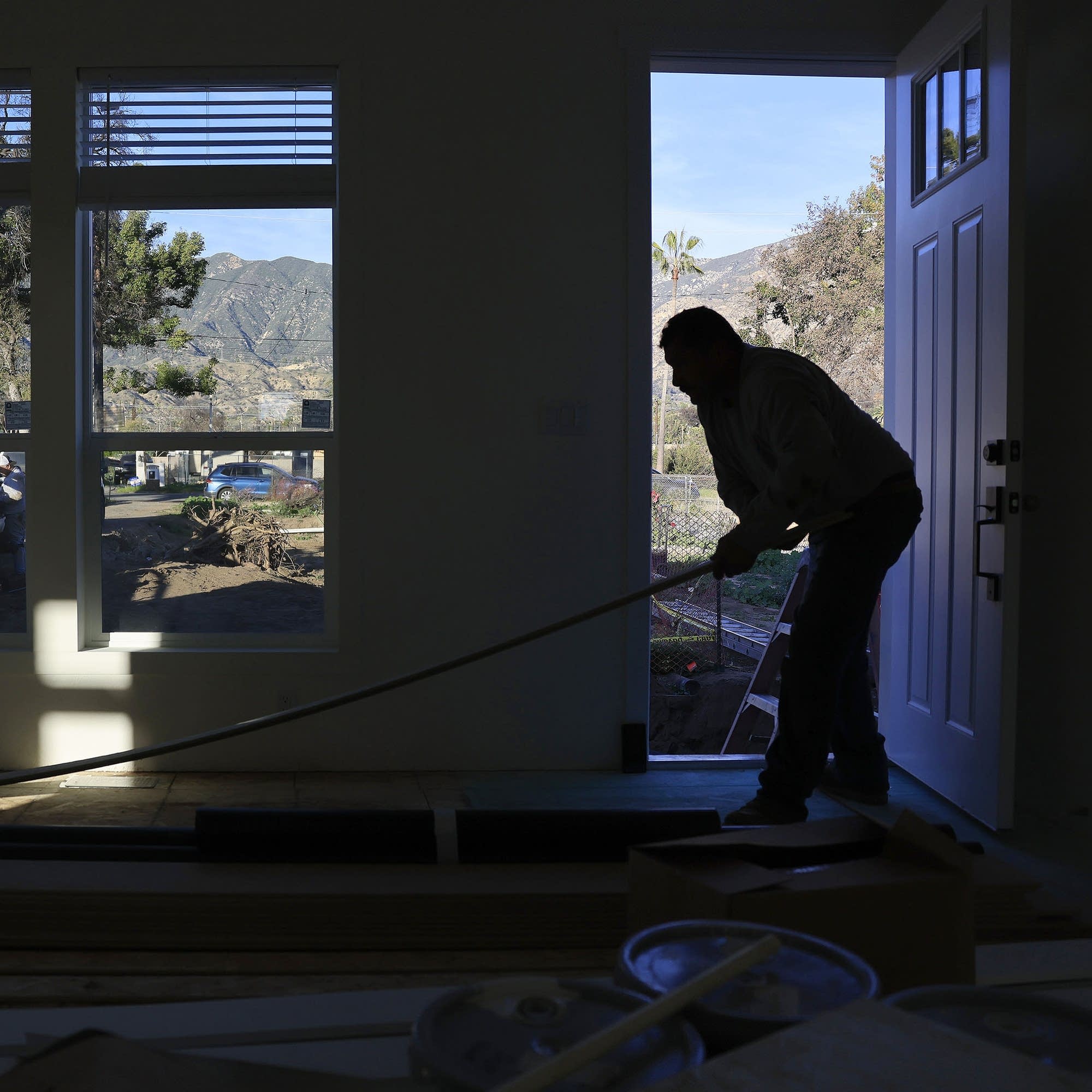
Overview of What it takes to build a home that lasts
This Marketplace episode (in partnership with This Old House Radio Hour) explores how to rebuild and design housing that withstands climate-driven disasters and meets America’s growing housing shortfall. Through on-the-ground reporting in post‑fire Los Angeles and interviews with people rebuilding, the show highlights resilient building methods (insulated concrete forms, fiber cement, prefab homes), the advantages of modern construction approaches, and the broader need for millions more homes.
Key takeaways
- The U.S. needs roughly 2–5 million more homes to address affordability and supply shortages.
- Climate-driven disasters are accelerating losses: the piece cites Hurricane Helene (about 1,000 homes in North Carolina) and California fires (12,000 homes) as recent examples.
- Resilient construction methods can dramatically improve durability and occupant safety while reducing long‑term maintenance and energy needs.
- Prefabrication and modern materials shorten build times, reduce contractor risk, and can expand housing supply quickly.
- Policy and building-code adaptation, plus incentives for resilient construction and increased housing production, are implied necessities.
Topics discussed
- Housing shortage and affordability crisis in the U.S.
- Climate and weather-related housing losses and the need to build for the future, not the past.
- Real-world rebuilding examples in the Los Angeles area after a major urban fire.
- Specific resilient building techniques and materials:
- Insulated Concrete Forms (ICF): modular foam blocks (2" foam + 6" concrete + 2" foam), rebar-reinforced, snapped together like Legos, poured in place; high wind resistance (up to cited 250 mph), multi‑hour firewall, and excellent insulation that can reduce heating/cooling needs.
- Fiber cement exteriors: highly fire resistant, tested with torches (leaves only wipeable scorch marks), meets tough California codes for fire, flood, and earthquake exposure.
- Prefab modular homes: crane‑placed halves assembled onsite, cabinets and interiors preinstalled; faster completion and less onsite contractor risk.
- Personal stories: a homeowner naming her replacement ICF house “Edith Bunker” and an artist-builder aiming to move in quickly; entertainer Aloe Black helping create small rental units to add local housing supply.
- Marketplace special episode: “Building Tomorrow” (a joint special with This Old House Radio Hour) will air on public radio stations and explores these themes in more depth.
Notable quotes and insights
- “We needed to build a house for the next hundred [years],” — a reflection on rebuilding after losing a 99‑year‑old house in wildfire.
- On ICF construction: described as “like a Lego” that snaps together, enabling faster builds with fewer laborers and strong insulation.
- On prefab modular homes: owner praised delivery and on‑time completion versus the typical contractor headaches and supply delays.
Practical recommendations / action items
For homeowners and builders:
- Consider resilient materials such as ICF and fiber cement when rebuilding or constructing in disaster-prone areas.
- Explore prefab and modular manufacturers to speed construction, lower labor dependency, and reduce schedule risk.
- Prioritize designs with high insulation and multi-hour fire resistance to cut energy use and increase survivability.
For policymakers and community leaders:
- Encourage updates to building codes and incentives that promote resilient materials and methods.
- Support policies that enable faster, affordable housing production (including modular construction and small-footprint rental units) to address the 2–5 million unit shortfall.
- Invest in recovery programs that streamline rebuilding after disasters and reduce barriers to resilient construction.
Where to hear more
- The full special “Building Tomorrow” (Marketplace + This Old House Radio Hour) airs this weekend on many public radio stations.
- The episode also includes broader Marketplace news segments (jobs report, tariff votes) and promos for other podcasts (e.g., This Is Uncomfortable).