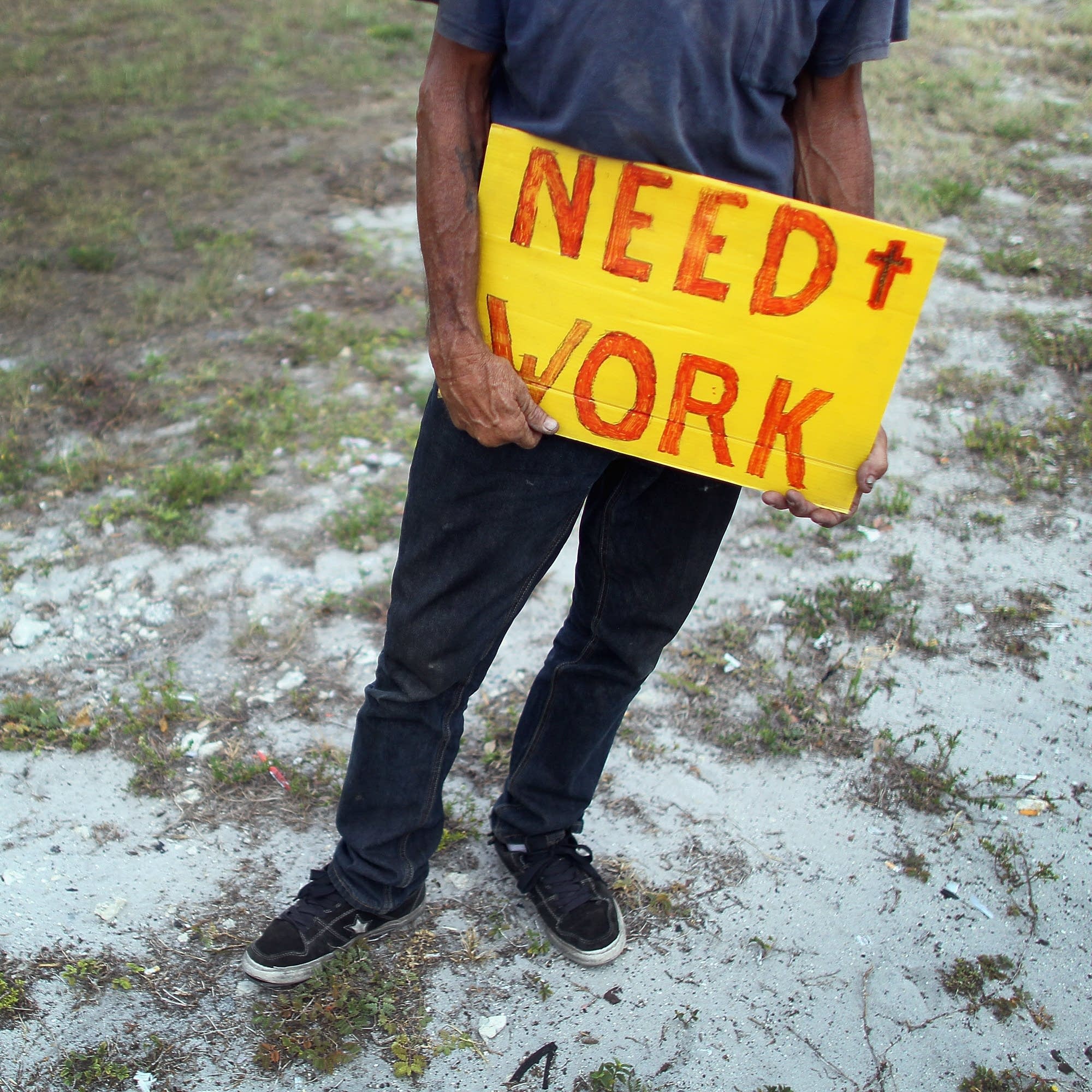
Overview of Understanding the “cruel math of unemployment”
This Marketplace segment (host David Brancaccio) explores the idea that unemployment is not merely an economic failure but a structural feature of capitalism that helps suppress wages and boost profits — what guest Clara Maté calls the “cruel math of unemployment.” The episode ties that thesis to recent policy debates: inflation data (the PCE index), political rhetoric about affordability, proposals to cap food prices, and the post‑COVID labor market dynamics that pushed wages up and prompted tighter monetary policy.
Key points and main takeaways
- Clara Maté (University of Tulsa; author of Escape from Capitalism and Intervention and founder of Forum for Real Economic Emancipation — FREE) argues unemployment functions as a built‑in mechanism to discipline labor: keeping some people unemployed weakens worker bargaining power.
- Low unemployment raises workers’ bargaining power, which can pressure employers to raise wages. Policymakers (and corporations) respond by tightening monetary policy (raising interest rates) to cool the labor market — increasing unemployment and shifting income from wages to profits.
- Maté frames higher interest rates and the resulting unemployment as austerity tools that protect profit shares rather than primarily curing inflation.
- The post‑COVID period (when unemployment hit low levels, ~3.4% in 2023) is presented as a “natural experiment” showing how tighter labor markets can push for higher pay and provoke policy responses.
- Political solutions that focus on restricting immigration are criticized as scapegoating; Maté says the real problem is concentration of wealth and tax/treatment of capital at the top.
- The episode places these ideas alongside current events: an imminent PCE inflation release, President Trump’s comments on affordability, and a CAP proposal (by former Biden economist Jared Bernstein) for voluntary price caps on staple foods.
Topics discussed
- The “cruel math” concept: unemployment as a structural feature
- Labor market power dynamics and redistribution between wages and profits
- Monetary policy (Fed interest‑rate increases) as a tool that raises unemployment
- The post‑pandemic labor market and its political/economic consequences
- Immigration, populist narratives, and distributional effects
- Policy proposals relevant to cost‑of‑living (price caps on food, swipe‑fee incentives)
- Upcoming data point: Personal Consumption Expenditures (PCE) Price Index for December (Fed’s preferred inflation gauge)
Notable quotes and insights
- “The cruel math is that unemployment is not a problem for our system, but it's actually a solution for it.”
- “Us having jobs means that the bargaining power of workers goes up… which is very bad for a capitalist economy.”
- On 2023: “When unemployment was 3.4%, all the technocrats running central banks were freaking out.”
- “Increases in interest rates… don't necessarily work to actually cure inflation. But what they do work for is to cure the rate of exploitation.”
Actionable follow-ups / recommendations for listeners
- Watch or read Clara Maté’s book (listed in the segment) for a deeper treatment of unemployment as a structural feature and policy alternatives.
- Monitor the upcoming PCE report (Fed’s preferred inflation measure) to see how price dynamics may influence policy and labor markets.
- Consider the distributional lens: when discussing inflation and wages, ask who is bearing the cost (consumers, workers) and who benefits (profit holders).
- Evaluate policy proposals (e.g., voluntary price caps on staples) with attention to incentives, enforcement, and distributional effects.
Production notes / context
- Guest: Clara Maté, economics professor at the University of Tulsa; founder of Forum for Real Economic Emancipation (FREE).
- Mentioned policy piece: Center for American Progress plan by Jared Bernstein proposing voluntary price caps on ~20 foods, with swipe‑fee incentives for retailers.
- The episode includes sponsor messages (Odoo, Wealth Enhancement, Viking) and promotion for a related special, “Building Tomorrow” (Old House Radio Hour x Marketplace).
Quick critique / context to keep in mind
- The episode presents a normative economic critique: unemployment as an intentional stabilizer of labor markets. Listeners should note that this is a heterodox framing that emphasizes power and distribution; mainstream macroeconomics also emphasizes unemployment’s costs and typically treats “natural” or “non‑accelerating inflation” unemployment rates as policy targets rather than desirable outcomes.
- Claims about the exact causal path from wages to inflation vs. profit margins to inflation are debated among economists; the interview frames monetary policy and unemployment as partly political choices that protect profits, which is a perspective to weigh alongside other analyses.