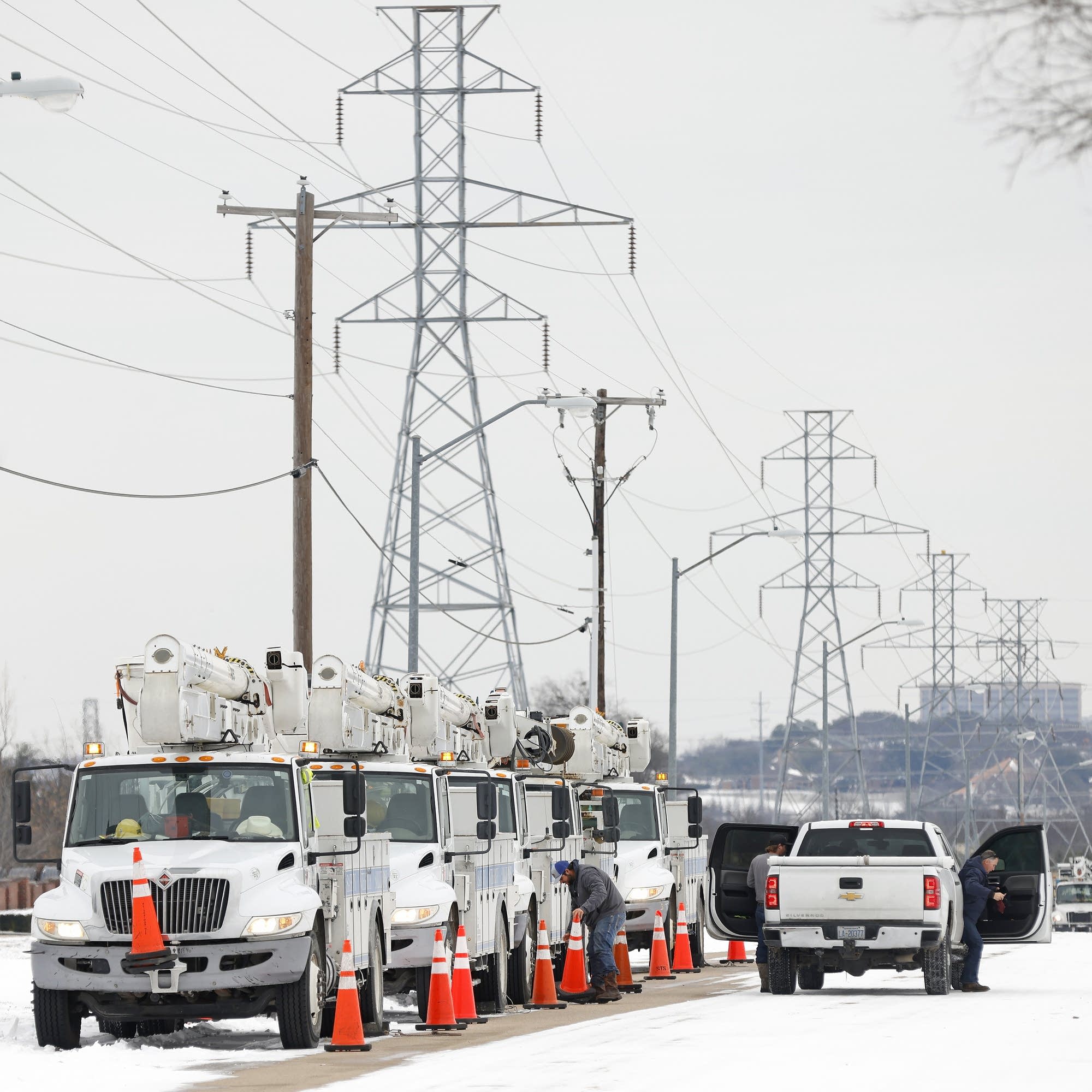
Overview of Texas' energy grid, 5 years after Winter Storm Uri
This Marketplace episode looks back five years after Winter Storm Uri — the event that left millions of Texans without reliable power and heat, caused fatalities, and produced billions in economic losses. Reported from Houston, the segment examines what changes were made to Texas’s grid and energy infrastructure since Uri, what problems remain (especially around natural gas), and related climate- and home-energy coverage about long-term household retrofits.
Key points and main takeaways
- Winter Storm Uri (five years ago) caused widespread outages in Texas, knocking offline roughly half of the state's generation capacity and leaving millions with only intermittent electricity for days.
- Major post-Uri investments and changes include:
- Winterization of generation assets (natural gas, coal, nuclear, and wind).
- Growth in energy storage and solar capacity.
- Increased attention to resources that don’t rely on fuel supply chains.
- Significant concerns remain about natural gas infrastructure: some producers and pipelines may not be fully winterized, leaving vulnerabilities during extreme cold.
- Market structure is a central issue: Texas’s energy-only (ERCOT) market gives utilities and generators less financial incentive to build extra capacity or “reliability cushions,” which can exacerbate shortages during extreme events.
- Related coverage: A separate feature on long-term home energy improvements highlights how older homes retrofitted 18 years ago can still be upgraded today (e.g., geothermal heat pumps), showing that retrofits can be cost-effective and future-proof.
Topics discussed
- Immediate impacts of Winter Storm Uri: outages, demand spikes, fatalities, economic losses.
- Technical causes of outages: cold-induced failures across gas supply, thermal plants, nuclear, and wind turbines.
- Responses since Uri:
- Winterization efforts for generation and delivery systems.
- Deployment of battery storage and more solar generation.
- Policy and market considerations around incentivizing reliability.
- Ongoing vulnerabilities: especially in natural gas supply and delivery during extreme cold.
- Home-level climate resilience: an 18-year follow-up on a heavily retrofitted duplex using early LEDs, insulation (e.g., ground-up blue jeans), and now geothermal conversion.
- Energy price volatility during storms (natural gas spiking over 60% in a recent event).
Notable quotes and insights
- “No grid is resilient to losing half of its generation capacity.” — Joshua Rhodes, UT Austin (on the scale of outages during Uri).
- “It doesn't pay to add capacity. It doesn't pay to add reliability.” — Ed Hirs, University of Houston (on how Texas’s market structure reduces incentives to build extra reserves).
- On geothermal efficiency: “With a geothermal heat pump for a single building, it's four or five times, so it's like a 400 or 500% efficiency.” — Dr. McGovey (physicist/homeowner and nonprofit leader in neighborhood-scale geothermal).
Action items / recommendations (implied)
- For policymakers and regulators:
- Revisit market incentives (e.g., consider capacity payments or other reliability incentives) so that generators and suppliers have financial reasons to maintain spare capacity and resilience.
- Strengthen winterization standards and enforcement for natural gas production, pipelines, and other critical infrastructure.
- For utilities and energy companies:
- Continue and accelerate winterization and hardening of generation and delivery systems.
- Invest in diverse resources (storage, renewables) that reduce dependence on fuels vulnerable to supply disruptions.
- For homeowners and communities:
- Consider deep retrofits (insulation, efficient lighting, and heat pumps/geothermal) that lower energy demand and increase resilience.
- Explore community-scale solutions like networked geothermal programs highlighted by the Building Tomorrow reporting.
Related segments & context
- The episode also included brief coverage of the U.S. jobs report (January payrolls, unemployment revisions) with economist Julia Coronado, and a Marketplace/This Old House Radio Hour special called "Building Tomorrow" focused on future housing and retrofit strategies.
- The home retrofit story underscores that substantial energy-savings technologies deployed long ago (LEDs, high-quality insulation) can be upgraded further today (geothermal heat pumps) to provide long-term resilience and efficiency.