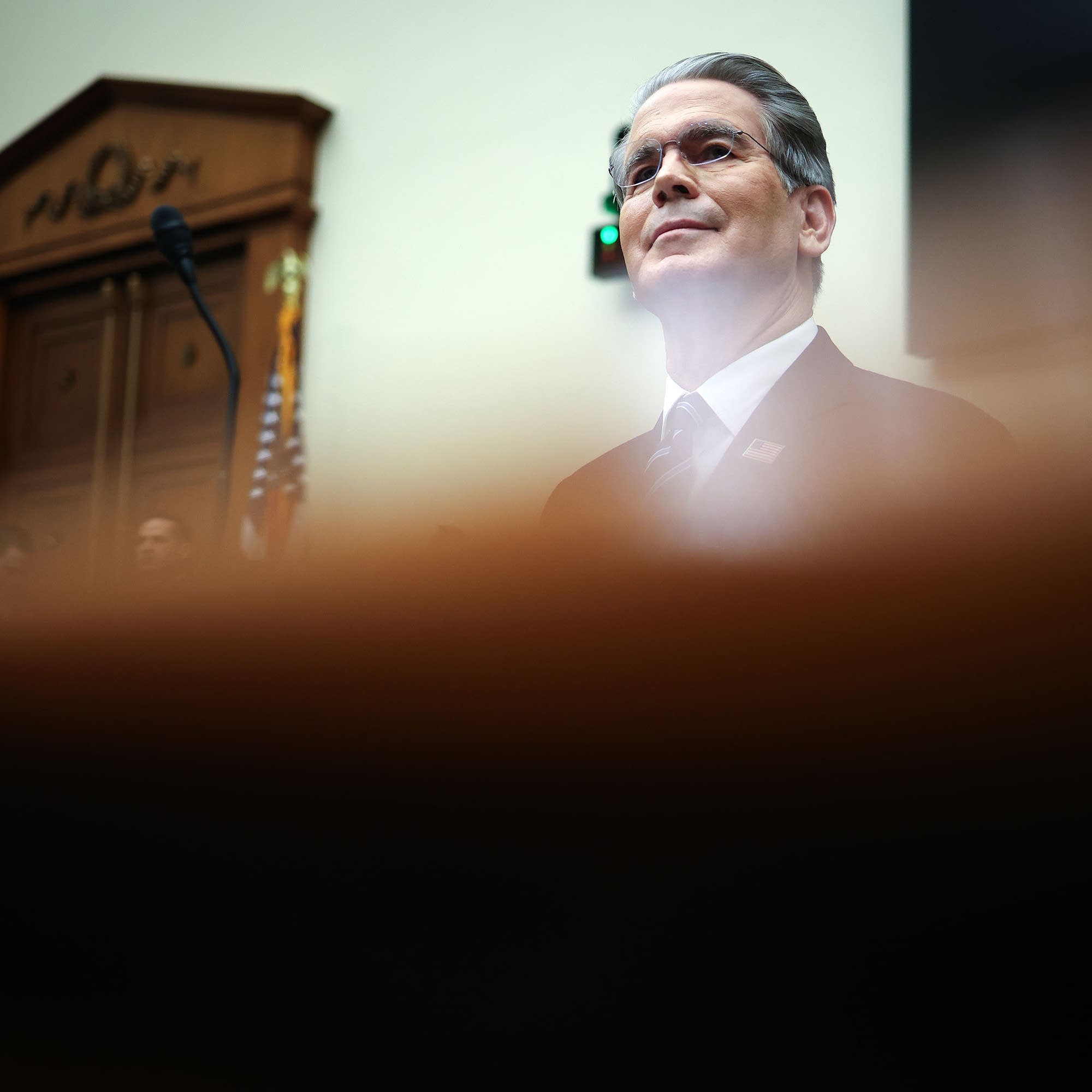
Overview of Raised voices at a hearing starring the treasury secretary
This Marketplace Morning Report episode covers a heated congressional hearing featuring Treasury Secretary "Besant" (name as given in the transcript) and a range of related economic stories. The main story describes a combative House Financial Services Committee session where the Treasury Secretary clashed with Democrats—especially Rep. Maxine Waters—over whether tariffs are inflationary. The episode then shifts to broader economic analysis: the long-term decline in labor’s share of national income, Federal Reserve views on inflation and interest rates (including remarks attributed to Fed Governor Lisa Cook), and a separate news item about an EEOC probe into Nike. The broadcast also contains local ads and promotional spots.
Key points and main takeaways
-
Congressional hearing:
- The Treasury Secretary faced a tense House hearing over past public statements (a co-authored investor letter claiming tariffs are inflationary).
- Rep. Maxine Waters repeatedly invoked “Reclaiming my time” in the exchange; the secretary later said he was mistaken about tariffs being inflationary.
- Rep. Emanuel Cleaver called the hearing “embarrassing.” The Treasury Secretary criticized the Federal Reserve for losing public trust during recent inflation, while professing belief in Fed independence and “accountability.”
- The secretary said he had no opinion on whether the president can fire a Fed governor—relevant to an ongoing Supreme Court case about an attempted removal of Fed Governor Lisa Cook (per the transcript).
-
Labor’s shrinking share of income:
- Wages have made up a shrinking share of total U.S. income and are at their lowest level in roughly 50 years.
- Explanations include reduced labor market competitiveness, offshoring, declining unionization, and productivity gains that haven’t translated into proportionate wage growth.
- Example: fracking boosted productivity in oil & gas but often reduced employment in the longer term.
- Consequence: consumer spending may increasingly rely on investment income (stocks, real estate), widening spending gaps between wealthier and lower-income households.
-
Fed policy and inflation:
- Fed Governor Lisa Cook (as discussed) argues inflation remains “remarkably sticky,” suggesting the Fed should not hasten rate cuts.
- KPMG chief economist Diane Swonk highlights lingering inflation pressures, recent layoff announcements (notably Amazon and UPS), and the uncertain effects of AI and productivity on employment and inflation.
- Greater productivity can justify higher neutral interest rates; but productivity so far hasn’t sufficiently reduced inflation.
-
Nike / EEOC news:
- The EEOC sued over alleged discrimination against white employees at Nike and alleged incomplete record production on layoffs and use of race/ethnicity data in internal programs.
- Nike called the escalation surprising, said it provided thousands of pages and will cooperate. Stock moved up intraday but later slipped.
Notable quotes and who said them
- “Reclaiming my time, reclaiming my time, reclaiming my time.” — Rep. Maxine Waters (during questioning).
- “If I was mistaken, I want to correct it. And I was also mistaken when I said the tariffs could be inflationary.” — Treasury Secretary (as quoted in the transcript).
- “This is an embarrassing kind of a hearing.” — Rep. Emanuel Cleaver.
- “The Federal Reserve lost the trust of American people when it allowed the greatest inflation of 49 years to ravage… working people in this country.” — Treasury Secretary (as quoted).
- “Inflation is a regressive tax. You cannot get full employment sustained until you derail inflation.” — Fed Governor Lisa Cook (as summarized in the analyst segment).
- “The productivity growth we've seen thus far has not derailed inflation.” — Diane Swonk, KPMG (analysis).
Topics covered (compact list)
- Congressional oversight hearing with Treasury Secretary: tariffs, Fed independence, accountability.
- Decline in labor’s share of national income; wage vs. productivity divergence; implications for consumer spending patterns.
- Fed policy stance on inflation and rate cuts; job cuts and structural changes (tariffs, AI).
- EEOC lawsuit and investigation into Nike regarding alleged race-based discrimination in layoffs/HR programs.
- Local advertising and sponsor messages (Hogle Zoo, shops at Southtown, car dealership).
Implications / what to watch next
- Upcoming Senate Banking Committee hearing (Treasury Secretary to appear again) — further scrutiny and possible clarification on tariffs, Fed comments, and accountability.
- Supreme Court developments around presidential authority over Fed governors (case referenced concerning Lisa Cook).
- Labor share trends: if wages continue to slip as a share of income, consumer demand could become more dependent on asset-holders rather than paycheck-dependent households—policy and political consequences follow.
- Fed policy: watch inflation readings and employment data to gauge timing of rate cuts and how productivity gains affect neutral rates.
- Corporate diversity and employment litigation: the Nike/EEOC case could influence employer recordkeeping and DEI program practices.
Short recommendation for listeners
- If you follow macro policy: monitor upcoming hearings and Fed commentaries for signals on rate policy.
- If you follow labor and inequality: track wage-share data, household balance-sheet trends, and how consumption patterns differ across income groups.
- If you follow corporate governance or employment law: watch the Nike case and related EEOC actions for precedent on how diversity programs are examined in layoffs and promotions.
Ads / sponsorship notes
- Brief promotional spots included for Hogle Zoo, the shops at Southtown (Valentine’s promotions), and a regional car dealer offering trade-in and payment relief deals. These are non-news content interspersed in the broadcast.