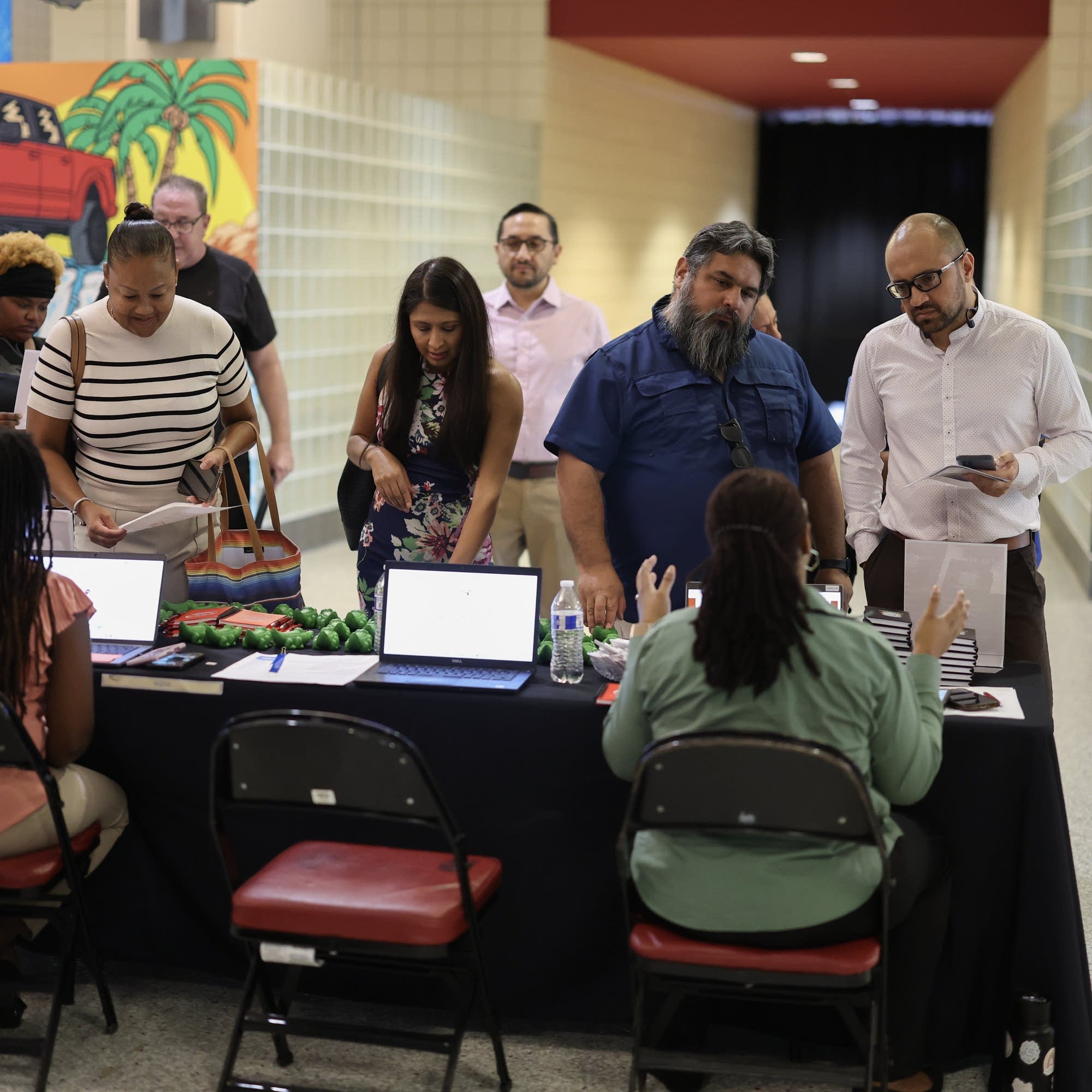
Overview of More labor market blues (Marketplace)
This episode of Marketplace, hosted by Kai Ryzdahl, stitches together several economic stories centered on a softening labor market and its ripple effects: small-business hiring woes, slowing wage growth (especially for lower-paid and younger workers), debate over 50-year mortgages, the squeeze on small retailers from tariffs, booming—but maturing—condiment trends, record municipal bond issuance, growing use of captions in theaters, and signs of a smaller seasonal hiring plan compared with last year.
Key takeaways
- Small businesses are increasingly reporting unfillable openings and concerns about labor quality, even as overall hiring cools.
- Wage growth is decelerating, particularly for low-wage workers and people in their mid-to-late 20s; tariffs and slower hiring are cited as important drivers.
- Proposed 50‑year mortgages would lower monthly payments modestly but raise long‑term risks: higher rates, slower equity buildup, and potential to inflate home prices.
- Tariffs are squeezing small businesses—raising costs, delaying inventory, and reducing owners’ ability to give raises or hire.
- The condiment market has grown rapidly (now ~$12B) driven by adventurous eating, social media virality, and more home cooking—growth will likely continue but at a slower clip.
- Municipalities issued a record >$500B in bonds this year as projects resume and construction costs rise; much of this is catch‑up borrowing.
- Captioning is mainstream: many younger viewers use captions at home, and theaters are expanding open-caption screenings.
- Seasonal hiring plans this year are significantly lower than last year (about 375,000 planned hires vs. 660,000 at the same point last year).
Segment summaries
Small business optimism and labor strains
- NFIB Small Business Optimism Index dipped slightly in October but remains net positive.
- Key stats from the NFIB: 32% of small business owners report jobs they cannot fill; 27% name labor quality their top problem—the highest since around 2021.
- Experts (Aaron Sojourner, Holly Wade) note small firms feel hiring strains more acutely (competing with larger employers on pay/benefits) and that slow hiring overall can make currently employed workers less likely to switch jobs.
- Regional Fed data, ADP, and Indeed concur: labor-market momentum is weakening (slower job growth, higher unemployment risk, stagnant wages).
Wages, tariffs, and small businesses (Town Center Music example)
- Real income growth remains low (~2% annually per JPMorgan Chase Institute).
- Philly Fed Beige Book: for some entry-level jobs, wage increases aren’t keeping pace with prices, partly as firms adjust to tariffs.
- Case study: Town Center Music (Suwanee, GA) owner Aaron Brown: tariffs and port delays raised costs, reduced sales (~$15k loss), and forced him to pause raises and hiring.
- Analysts (Andrew Stettner, Elizabeth Jacobs) flag that the lowest-paid workers are being hit first when hiring and wage momentum slow; tariffs are a major drag on small businesses and low-wage employment.
50‑year mortgage proposal — the math and risks
- A 50‑year mortgage lowers monthly payments modestly (example: $200k at 6% — 50‑yr ≈ $1,052 vs 30‑yr ≈ $1,199; ~$147 difference).
- Downsides: likely higher interest rates than 30‑yr loans, slower equity accumulation, increased vulnerability if home prices stagnate, and past U.S. attempts (40‑yr loans) haven’t lasted.
- AEI says a 50‑yr could boost initial buying power ≈8%, but broader demand could push prices up, eroding the benefit.
Condiments: booming but saturating
- Condiment market ≈ $12 billion; >50% growth over five years (Mintel).
- Drivers: more adventurous eating, more home cooking since COVID, niche dietary preferences, new retail channels, viral social media trends (e.g., Fly by Jing chili crisp ketchup sold out quickly).
- Big brands (Kraft Heinz) use data-driven innovations (e.g., Heinz Remix kiosks) to iterate products.
- Growth will likely slow, but manufacturers are banking on consumers continuing to try new sauces.
Municipal bond issuance record
- Municipal market issuance topped $500 billion this year (Bloomberg), driven by:
- Larger project sizes (materials and construction costs up).
- “Catch-up” borrowing after projects delayed earlier in the pandemic.
- Use of pandemic-era federal aid now paired with bond funding.
- States and localities currently in comparatively healthy fiscal positions owing to lagged effects of prior economic growth—but risks remain if the economy weakens.
Captions and moviegoing accessibility
- AP poll: 40% of adults under 44 always watch at home with captions.
- Theaters (AMC, Regal, independent screens like Nashville’s Belcourt) are expanding open-caption screenings for accessibility and growing demand.
- Causes: streaming habits, sound-mixing changes since 2018 that made dialogue quieter relative to effects, and viewer preference/need.
- Debate: captions improve access but some argue they may reduce cinematic immersion.
Seasonal hiring outlook
- So far this year, large firms announced plans to hire ~375,000 seasonal workers—down from ~660,000 at the same point last year, implying a softer holiday labor market.
Notable quotes
- Aaron Sojourner (Upjohn Institute): “The smaller the business, the more intimately the business owner feels the frustrations that come with hiring.”
- Edward Pinto (AEI): “A longer loan… also means it takes longer to build up equity. Then you're really left with not much advantage and you become really a renter with a mortgage.”
- Andrew Stettner (Century Foundation): “When there's more workers available, companies are going to feel less pressure to increase wages.”
- Dina Shanker (Bloomberg): “The whole virality of condiments thing is not a sentence I thought I would ever utter… but there is a social media part of this thing.”
Important data & numbers (from episode)
- NFIB: 32% of small businesses have jobs they can’t fill; 27% cite labor quality as top problem.
- Example mortgage math: $200,000 loan at 6% — 30‑yr payment ≈ $1,199; 50‑yr payment ≈ $1,052.
- Condiment market: ~$12 billion, up >50% in 5 years (Mintel).
- Municipal bond issuance: >$500 billion (Bloomberg, year-to-date).
- Caption usage: 40% of adults under 44 always use captions at home (AP poll).
- Planned seasonal hires announced so far: ~375,000 (vs. ~660,000 same time last year).
Implications & recommendations
- Small businesses: plan for persistent hiring challenges—consider competitive pay/benefits, retention strategies, and contingency for rising input costs (tariffs).
- Policymakers: tariff relief and immigration policy adjustments could ease pressures on small firms and low-wage workers.
- Homebuyers: a 50‑year mortgage can lower monthly payments but increases long-term risk and delays equity; assess horizon, expected interest rates, and housing market outlook before considering longer-term loans.
- Jobseekers and younger workers: monitor local wage trends and sectoral hiring; low-wage and younger workers may face slower wage growth in the near term.
- Consumers: condiment proliferation shows strong niche demand—expect continued product churn, driven by social media and home-cooking trends.
- Movie exhibitors: continued expansion of open-caption screenings can improve accessibility and capture a growing audience segment.
For a quick listen: the episode weaves empirical data (NFIB, JPMorgan Chase Institute, Mintel, Bloomberg) with concrete small‑business and consumer examples to show how a cooling labor market, tariffs, and changing consumption patterns are shaping real-world choices—from hiring and pay to mortgages and what’s in your fridge.