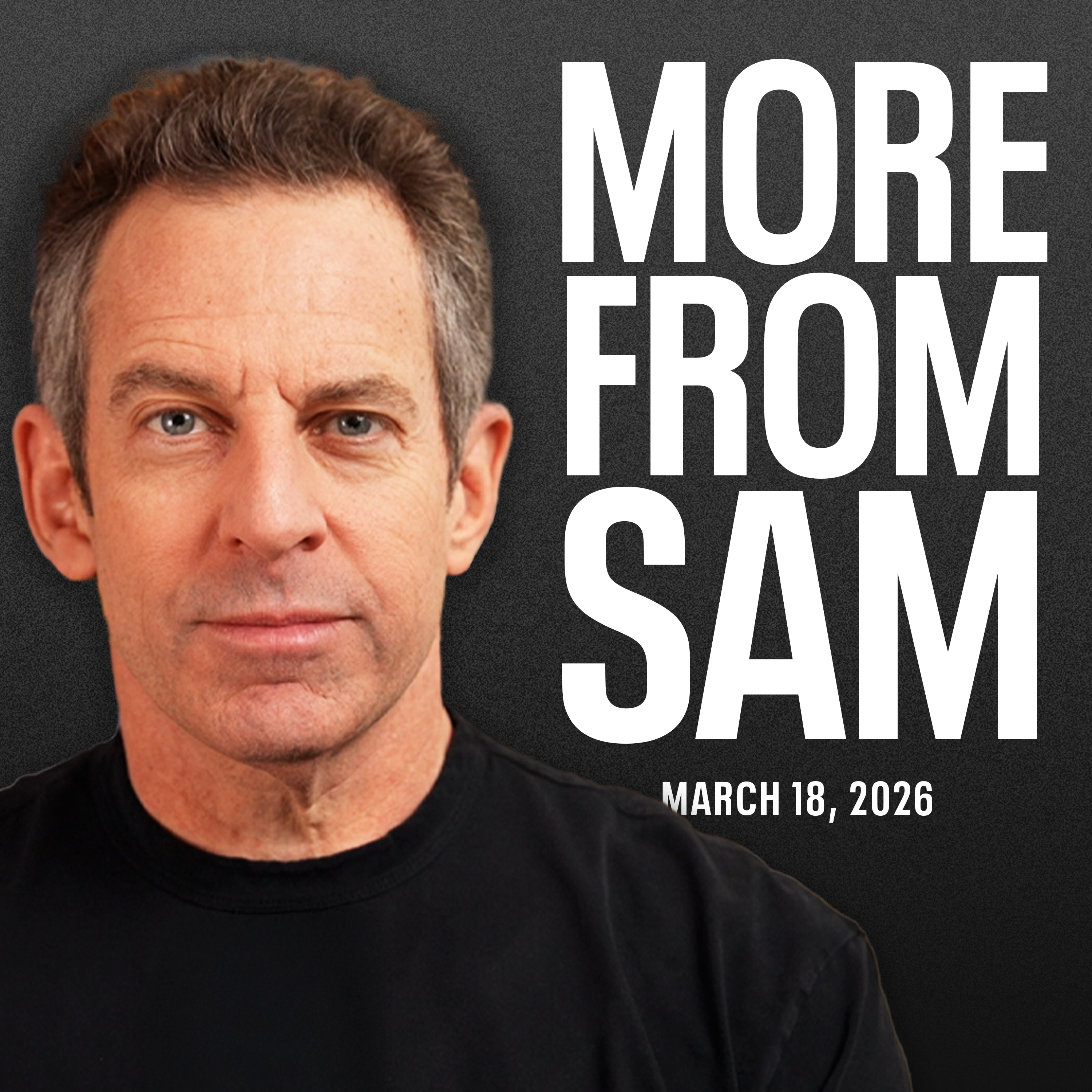
Overview of #465 — More From Sam: Iran, Jihadism, Conspiracism, AI Disruption, the Manosphere, and More
Sam Harris (live to subscribers) discusses the U.S. approach to the Iran escalation, the risks and ethics of war, jihadism and nuclear risk, domestic political reactions (especially on the left), and failures of messaging from the current U.S. administration. The episode mixes strategic analysis (military, diplomatic), moral argumentation about limits on violence, and cultural criticism of Western responses to Islamist violence.
Main themes covered
- U.S. handling of the Iran escalation has been inept in messaging and coalition-building, increasing political cost and fueling conspiracy theories.
- Sam affirms the moral case against the Iranian theocratic regime and recognizes legitimate humanitarian reasons to want it removed, but worries about the execution and consequences of military action.
- Jihadism is treated as a unique, existential danger—especially if combined with nuclear weapons—and requires relentless, intrusive countermeasures.
- Much of the Western left (and parts of elite institutions) are criticized for moral confusion or apologetics toward Islamist movements; Sam calls for Muslim-led opposition to jihadism as the ultimate solution.
- Concerns about collateral damage (e.g., the bombing of a girls’ school) and the moral limits of violence are acknowledged, with emphasis on precision and minimization of civilian harm.
- The Trump administration’s public messaging (including offensive meme videos) is condemned as deeply damaging to U.S. moral credibility and soft power.
Iran: strategy, competence, and stakes
- Twofold stance Sam maintains:
- He believes the Iranian regime is evil and that its removal could be a good thing for Iranians.
- He is deeply worried about the incompetent way the U.S. (Trump administration) has handled the war politically and diplomatically.
- Criticisms of current U.S. conduct:
- Failure to prepare Congress and the public; bungled communications that invite conspiracy narratives.
- Alienation of allies (tariffs, bullying), yet now seeking their help for operations like keeping the Strait of Hormuz open.
- Terrible public relations: offensive White House social media memes and poor responses to civilian casualties.
- Possible outcomes:
- Best-case: regime heavily degraded, paving the way for positive change in Iran.
- Worst-case: a failed state or a situation where theocracy remains and Iran retains nuclear ambitions — an objective failure for U.S. interests.
Notable quote:
- “There’s no clear rationale for the war... the messaging has been terrible.”
The Strait of Hormuz, asymmetry, and operational realities
- The Strait is an asymmetrical chokepoint: small actors (mines, small boats) can disrupt global traffic.
- Sam worries that the U.S. appears not to have anticipated how fragile control of the strait would be, producing a humiliating perception of weakness.
- Tactical success (precision of strikes, degradation of missile capacity) is possible, but poor messaging and tactical/targeting errors (e.g., the girls’ school bombing) compound political damage.
Jihadism and nuclear risk: red lines and policy
- Core principle: preventing jihadists from acquiring nuclear weapons is an absolute priority.
- “Nukes with jihadists, just that cannot happen.”
- Jihadism is characterized as a sincere religious death-cult phenomenon (martyrdom as a real motive), not merely grievance-driven or purely instrumental.
- Implications for policy:
- Relentlessly intrusive measures are justified against jihadist nuclear projects—this could include special forces, covert action, automated systems, or other nontraditional means rather than indiscriminate mass occupation.
- Covert operations and alliances with regional partners should be preferred where feasible.
- The ultimate sustainable solution requires other Muslims to take the lead in delegitimizing and defeating jihadist ideology.
Notable quote:
- “We will be at war with jihadism, full stop.”
Moral constraints and collateral damage
- Sam rejects totalizing or indiscriminate violence; there are moral limits.
- He accepts a spectrum: from pinpoint targeted killings to actions that would be morally unacceptable.
- He endorses continual effort to minimize civilian casualties and expects improving technology to reduce collateral harm.
- Nuclear deterrence (MAD) is philosophically troubling but has functioned because states—until now—cared about survival; that calculus collapses if facing actors who sincerely seek martyrdom.
- On incidents like the school bombing: Sam calls it a clear mistake, not policy, and acknowledges its catastrophic consequences for U.S. standing.
Notable quote:
- “There’s some place between a sniper’s round and killing everyone on earth that I’m going to land as... too much collateral damage.”
Domestic politics, culture wars, and institutional response
- Sam places much of the confused Western response among elites on the left:
- Claims many mainstream liberal institutions have been captured by narratives that reflexively label criticism of Islamist abuses as “Islamophobia” or “racism.”
- Accuses some on the left of aiding or apologizing for Islamist causes through moral confusion.
- Labels some defenders of Islamist causes as “useful idiots” (provocative term Sam uses).
- He also criticizes the right (America-first isolationists, anti-Israel strains), but says the left’s moral confusion is especially dangerous because it exists in elite institutions (media, universities).
- Sam argues that many people deny or downplay jihadism’s religious sincerity; he sees that as a major impediment to sensible policy.
Messaging and symbolic failures
- Sam is sharply critical of offensive White House memes and poor public-relations responses, arguing they damage U.S. soft power and moral credibility globally.
- He stresses the importance of clear, humane, and competent messaging—especially after accidental civilian tragedies—something he sees as lacking.
What Sam recommends / action items implied
- Prevent jihadists from obtaining nuclear weapons at almost any cost (short of global annihilation).
- Favor covert, precise operations and strong intelligence rather than large-scale, brute-force occupations when possible.
- Build and preserve international alliances and seek democratic legitimacy (Congress, allies) before major military actions.
- Push for technologies and doctrines that allow more surgical strikes and minimize collateral damage.
- Support and amplify Muslim-led opposition to jihadism: cultural/religious reform within Muslim societies is the long-term solution.
- Reclaim better public messaging and moral leadership to avoid supplying propaganda to adversaries or fueling conspiracy theories.
Notable quotes / soundbites
- “Nukes with jihadists, just that cannot happen.”
- “We will be at war with jihadism, full stop.”
- On deterrence: “The only reason why nuclear deterrence is a thing at all is because all parties who have nukes, in fact, don't want to die.”
- On messaging failures: “These people belong in prison... they have set fire to our reputation.”
Outstanding items and next steps mentioned
- Sam acknowledged and condemned the accidental bombing of a girls’ school and emphasized the political cost of such errors.
- He is searching for a guest to have an in-depth, nuanced conversation about Israel–Palestine who understands both the historical complexity and the dangers of jihadism.
- The full conversation (and follow-ups from subscribers) is behind the subscriber feed at samharris.org.
If you want the complete discussion with audience Q&A and the guest search details, the remainder of the episode is subscriber-only.