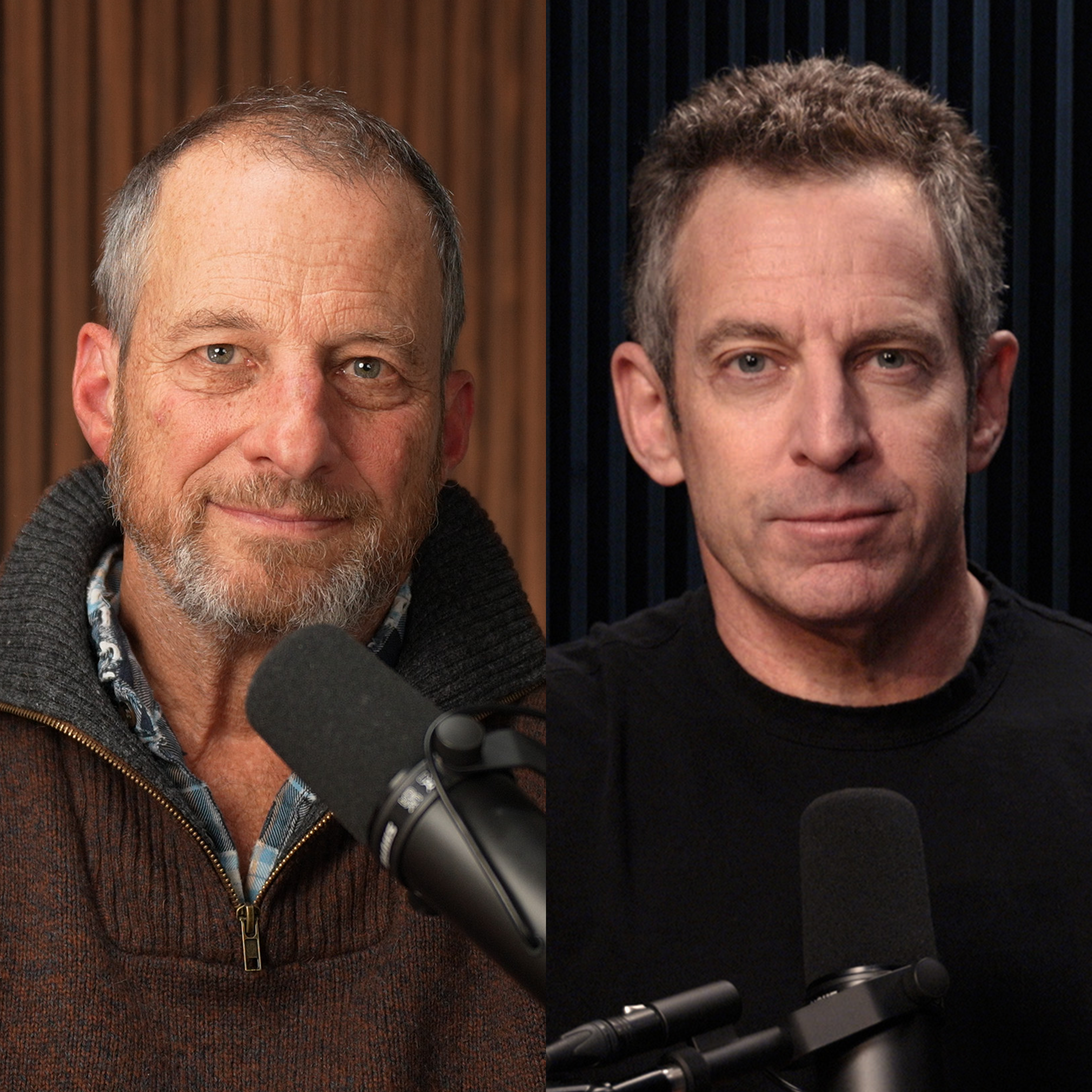
Overview of Making Sense — Episode #444: America's Zombie Democracy
Sam Harris interviews journalist and author George Packer about Packer’s Atlantic article “America’s Zombie Democracy” and the wider signs he sees of democratic erosion in the United States. The conversation surveys how erosion today differs from 20th‑century authoritarian templates, highlights institutional failures (justice, Congress, the military), and explores why large swaths of the public remain unalarmed. The published transcript cuts off partway through the discussion; the full episode is subscriber‑only.
Main argument
- Packer argues the U.S. is experiencing a form of authoritarian drift that looks different from classic 20th‑century models (no goose‑stepping troops, no mass executions), but is nonetheless profound and dangerous.
- He calls this state “zombie democracy”: democratic institutions and forms persist, but their power to check and constrain executive overreach is hollowed out.
- The danger is qualitative — not just more corruption or cravenness than before, but institutional capture and normalizing of political lawlessness.
Key indicators of democratic erosion discussed
- Politicization of the Justice Department: prosecutors and grand juries being maneuvered to bring cases against political enemies, turning law enforcement into an instrument of political power rather than an independent check.
- Congressional abdication: Congress increasingly cedes core Article I powers (taxation, budgetary control, oversight) to the executive, enabling the president to act with fewer institutional restraints.
- Politicization/weaponization of the military: efforts to make the armed forces a partisan tool (partisan speeches to troops, pressure on senior leaders, talk of using the military in domestic contexts) are especially dangerous because the military has historically been among the most independent institutions.
Corruption, shamelessness, and public reaction
- Packer emphasizes the scale and brazenness of corruption (self‑dealing, foreign payments, influence flows) under Trump and his circle; unlike earlier controversies, these abuses are public, large, and shameless.
- Shamelessness is a political advantage: where hypocrisy once provoked outrage, shamelessness sidesteps the moral register that might constrain actors or mobilize public outrage.
- Many Americans fail to register alarm because everyday life looks normal (press remains uncensored, people can read/watch/listen freely), leading to normalcy bias and lack of comparative sense of scale.
- A recurrent defense is “they did it too” or “all politicians lie,” which flattens differences in magnitude and prevents the public from appreciating how radically some norms have been broken.
Institutions Packer identifies as most at risk
- Justice system: erosion of DOJ independence undermines the rule of law as a check on executive power.
- Congress: loss of willingness to exercise constitutional powers (appropriations, oversight) allows presidential aggrandizement.
- Military (Defense Department): if politicized, it would be the most dangerous institutional failure because of coercive power and the risk of using force domestically or for partisan ends.
Examples and specifics mentioned (as discussed)
- Alleged use of prosecutors who would bring politically motivated charges after others declined.
- The slow, norm‑guided handling of January 6 investigations and special prosecutor appointment as evidence that, until re‑election, normal procedures still had force — and that the failure to secure accountability before a comeback matters.
- Trump family revenue streams, international deals, meme‑coin payments, and use of trade/foreign policy to extract tribute — cited as examples of large‑scale, overt self‑dealing. (Note: the transcript contains some naming/chronology issues; the summary focuses on Packer’s reported patterns and claims.)
Why people haven’t “woken up” (Packer’s explanation)
- Eerie normality: day‑to‑day life continues largely unchanged (media available, travel possible, markets functioning).
- Scale insensitivity: people lack a comparative framework to judge how unprecedented current behavior is.
- The perceived absence of hypocrisy: shameless behavior doesn’t trigger the same moral disgust that hypocrisy did, and public apologies are often punished rather than regenerative.
- Partisan information environments and the tendency to reflexively respond “they did it too” or focus on which party “started it.”
Notable quotes from the conversation
- “If the president can use the Justice Department as his personal police force... a huge check against unaccountable power has been taken down.”
- “There is no distinction any longer between what Trump wants and what his attorney general is willing to do.”
- “Shamelessness might be the superpower of the most powerful and successful people in the world today.”
Takeaways and implied recommendations
- Watch independence of the Justice Department, congressional oversight/appropriations, and civil‑military norms closely — these are core democratic safeguards.
- Recognize the danger of normalcy bias and the flattening rhetorical move that treats all political wrongdoing as equivalent.
- Public awareness and insistence on institutional accountability matter: independent institutions must be defended and pressured to act according to norms, not partisan will.
- The conversation implies urgency but also warns that democratic erosion can proceed while everyday life looks normal — institutional resilience must be a priority.
Episode notes
- Guest: George Packer (journalist, novelist; mentioned his novel The Emergency).
- Host: Sam Harris.
- The provided transcript ends mid‑discussion; the remainder of the interview is available only to subscribers at samharris.org.