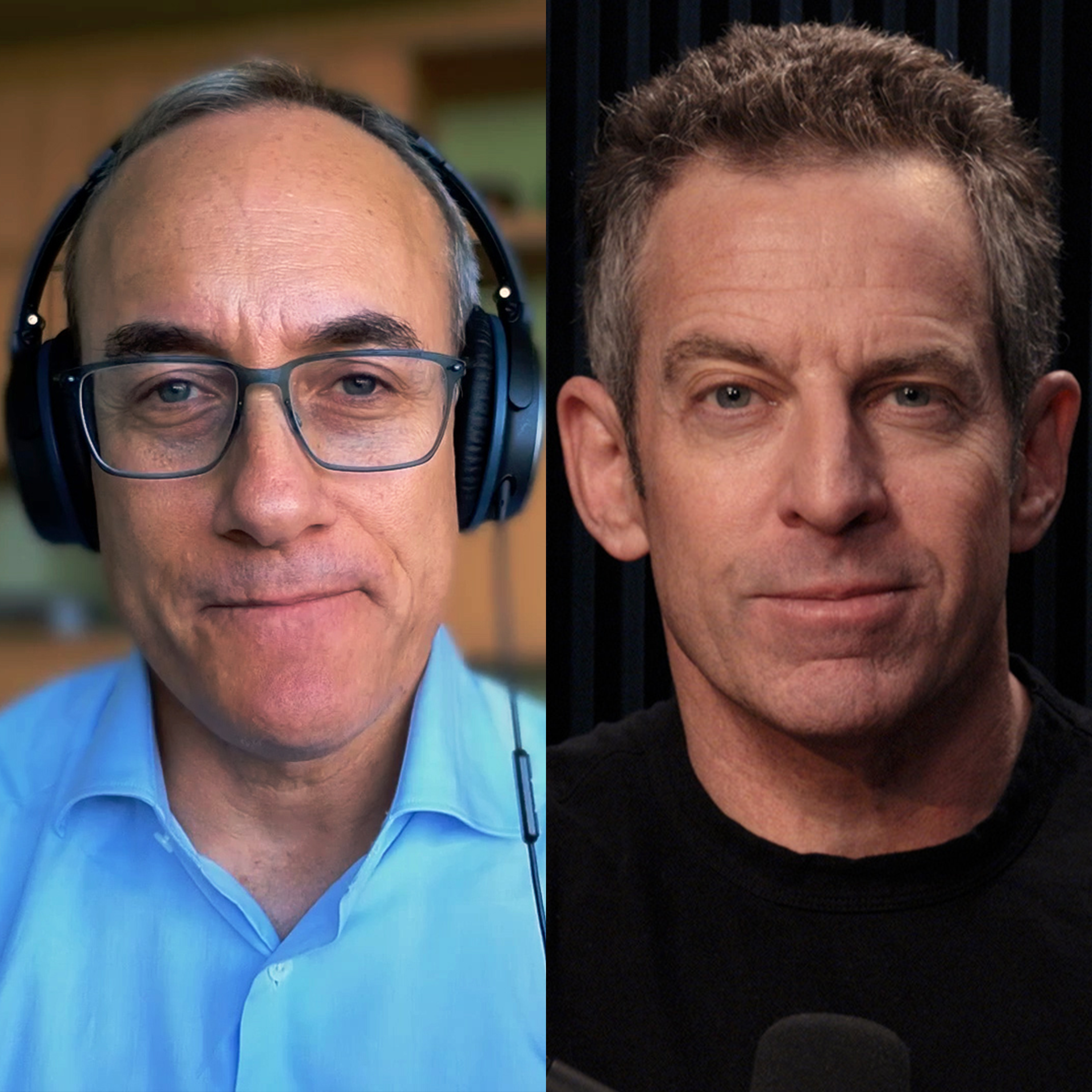
Summary — #437: Two Years Since 10/7 (Sam Harris with Dan Sinor)
Author/Host: Sam Harris
Guest: Dan Sinor (former U.S. government official, Middle East specialist; host of the podcast "Call Me Back")
Note: Transcript is a subscriber preview; conversation continues in the full episode.
Overview
A wide-ranging conversation on the two-year anniversary of October 7, 2023, examining the global rise of antisemitism, the West’s political and cultural response, and broader threats to open societies. Dan Sinor and Sam Harris diagnose how political elites, social movements, and ideological framing (especially around Islam and migration) have shaped outcomes in Europe, the UK, France, and beyond.
Key points & main takeaways
- Antisemitism has deepened since October 7 and is worse now than Sam Harris expected a year ago. Public celebrations of attacks and tacit toleration are alarming.
- The problem is not limited to hostility toward Israel but overlaps with a larger failure in Western societies to confront Islamist extremist ideas and practices.
- Western political elites (left and center) have often responded by criticizing Israel or pandering to Muslim constituencies — a strategy that has failed to calm or contain street-level radicalization.
- Europe is at risk of political realignment: perceived policy failure could produce a swing to the hard right. Sam and Dan both expect significant right‑wing gains in European politics as a reaction.
- The scale of the problem is often driven by relatively small percentages of populations (e.g., 6–8% Muslim communities) who can become highly visible and disruptive when mobilized. The consequences are disproportionate to numbers when political elites respond poorly.
- Distinguishing between criticism of an ideology (Islam as a set of ideas with political implications) and racism/xenophobia is necessary. Dan argues that the term “Islamophobia” is used to shut down legitimate critique of harmful religious-political ideas.
- There is a communications/information-war problem for Israel and Jewish communities; Western publics are increasingly receptive to narratives labeling Israel as genocidal or apartheid, with real-world consequences for Jews in the diaspora.
- The stakes extend beyond Jewish safety: these dynamics threaten open, liberal societies (freedom of speech, women’s rights, secular norms).
Notable quotes & insights
- “It’s a bigger problem than I imagined, and it’s a bigger problem than I imagined a year ago.” — Sam Harris on the growth of antisemitism.
- “We’ve backed ourselves into a corner.” — Dan Sinor describing Western political paralysis.
- “If liberals won’t enforce borders, fascists will.” — Quoting David Frum to illustrate the political consequences of liberal inaction.
- “Feeding the crocodile” — the metaphor used for pandering to extremist constituencies in hopes of being left alone.
- Dan on terminology: “There’s no such thing as Islamophobia… Islamophobia is a word that has been made up to prevent criticism of Islam and to conflate it with bigotry.” (Paraphrased from the discussion.)
Topics discussed
- Antisemitism spike since October 7, 2023 (including celebratory reactions in Europe)
- Specific violent incidents: the Manchester attack on Yom Kippur; earlier attacks like the Ariana Grande bombing, Charlie Hebdo, Bataclan
- Western political responses (Macron, Starmer) — initial statements vs. later pandering to domestic constituencies
- The role of immigrant communities, radicalization, and online/social-media incubation of extremist views
- The grooming gang scandal in the UK and political reluctance to confront cultural problems for fear of being labeled racist
- The difference between ethnicity-based prejudice and ideological critique (Judaism vs. Islam as non‑missionary vs. missionary faiths)
- Risks of right‑wing political gains if mainstream politics fails to confront the issue
- Information war and Israel’s struggle to maintain narrative control internationally
- The fracturing of left-of-center political consensus on these issues
Action items & recommendations (implied by the discussion)
- Political leaders should stop pandering and clearly condemn extremist rhetoric and actions, even when politically costly.
- Distinguish rhetoric: defend the right to critique religious-political ideas (including political Islam) without permitting bigoted attacks on people.
- Support and monitor Jewish communities’ security needs; take public antisemitic incidents seriously and prosecute them.
- Strengthen integration policies and confront ideologies that reject liberal-democratic values (education, law enforcement, civic engagement).
- Reclaim the language and argument about human rights and secularism (e.g., protect free expression, women’s rights) without being silenced by accusations of “phobia.”
- For those interested in deeper coverage: listen to Dan Sinor’s podcast “Call Me Back” and the full episode on SamHarris.org (subscriber content).
Closing note
The conversation frames the post‑October 7 landscape as both a humanitarian crisis for Israelis and Palestinians and a broader cultural/political crisis for liberal democracies. Sam and Dan argue that failure to address extremist ideas and societal fragmentation has produced tangible threats to Jews and to open society more generally. The transcript is a preview; the full discussion elaborates further and is available to subscribers.