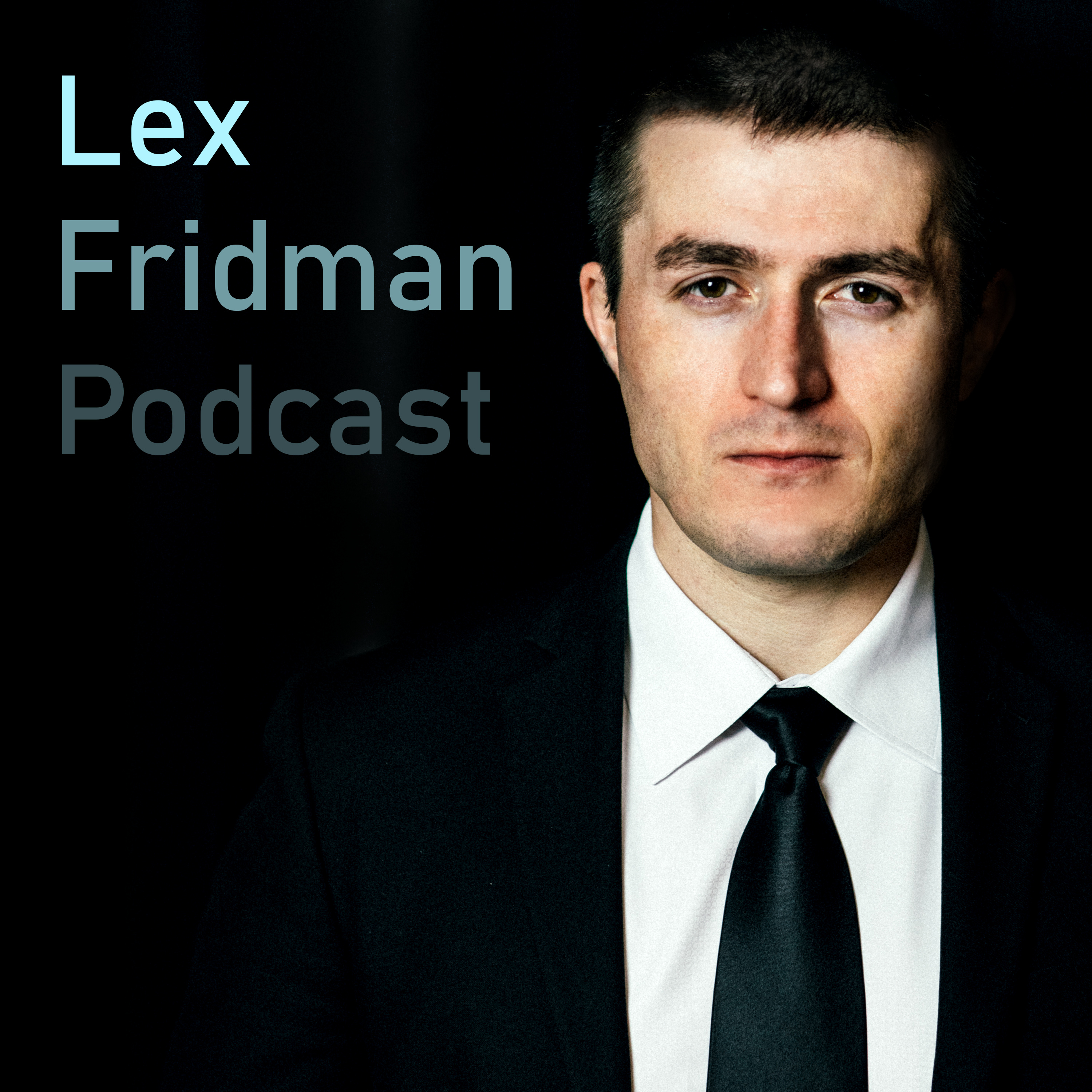
Overview of AI Crisis in Math: Navier-Stokes, Riemann Hypothesis & Complexity Theory
This episode is a wide-ranging emergency-style discussion about the shockwaves caused by AI systems reportedly producing major new results across mathematics and theoretical computer science. Lex Fridman is joined by Stephen Brunton, Ankur Moitra, and Alex Kontorovich to explore what these breakthroughs mean for proof, understanding, research culture, student motivation, and the future of mathematics itself. The conversation centers on whether AI is “solving math,” “destroying math,” or instead ushering in a new era of centaur mathematics—human and machine collaboration.
What Happened: The AI Math Breakthroughs
The episode reacts to a major AI “drop” of results that included:
- Navier-Stokes: a proof about a specific forced blow-up scenario in fluid dynamics
- Quasi-Riemann hypothesis: a major partial result toward the Riemann hypothesis
- Unique games conjecture: a landmark result in complexity theory
- Fermat’s Last Theorem: a huge Lean formalization milestone
- Many other results across math and computer science
The guests emphasize that the shock is not just the results themselves, but how quickly AI systems seem to be advancing in domains traditionally seen as requiring deep human insight.
Core Debate: Does AI “Solve” or “Destroy” Mathematics?
The “solved axiom” vs. human math
A major theme is whether one should assume that anything a human+AI team can do, AI alone could eventually do. Alex frames this as the “solved axiom”:
- If true, AI could eventually handle most or all math tasks humans can contribute to.
- He argues this still would not destroy mathematics, because pure math lives in human minds, not just in proofs stored in data centers.
Ankur and Stephen both push back on the strongest version of this idea:
- AI may be able to match or exceed humans on many proof tasks.
- But humans still matter for:
- asking the right questions
- building theory
- inventing new concepts
- understanding why a proof works
- creating the stories and abstractions that make mathematics meaningful
Mathematics as understanding, not just theorem-counting
A recurring point is that mathematics is not just a growing pile of theorems. It is:
- a search for beauty
- a way to understand the world
- a process of developing concepts, not just answers
- a discipline where the path matters as much as the destination
Lean, Mathlib, and the Future of Proof
Why formal verification matters
The discussion spends a lot of time on Lean and Mathlib:
- Lean: an interactive theorem prover / formal language for mathematics
- Mathlib: Lean’s large formal mathematics library
The guests explain that AI-generated proofs are especially powerful when they can be translated into Lean, where correctness can be machine-checked.
Why this changes math
They argue that future mathematics may look more like:
- pull requests than papers
- verified modular code rather than monolithic PDFs
- a mix of:
- formal proof objects
- explanatory “stories”
- reusable libraries
- collaborative refinement
This could make mathematical knowledge more shareable and composable, but it also raises fears about:
- overloaded journals
- overwhelmed referees
- shifting standards of publication
- the loss of some of the lone-genius culture of math
The Human Role: Questions, Beauty, and Story
What humans still contribute
The guests repeatedly argue that humans are still essential because they:
- ask the best questions
- decide what is interesting
- find elegant generalizations
- notice beauty and structure
- turn technical proof into insight
Ankur compares this to the “doorman fallacy”: reducing a job to its most visible task and assuming automation replaces the whole role. In math, proof is only one visible part of the job.
Why beauty still matters
A key takeaway is that mathematicians are not merely theorem factories. They are:
- interpreters of structure
- discoverers of hidden connections
- expositors of beautiful ideas
- curators of what the field values
The guests argue that when proof becomes cheap, beauty, depth, and understanding become more valuable.
The Big Three Mathematical Examples
1) Riemann Hypothesis / Quasi-RH
Alex explains the Riemann hypothesis in intuitive terms:
- prime numbers behave like a signal
- the zeta function is like a Fourier/signal-processing transform on primes
- RH predicts that all nontrivial zeros lie on the critical line
The AI result discussed is a quasi-RH proof:
- not the full Riemann hypothesis
- but a substantial advance: a wider zero-free region than previously known
- seen as both mathematically impressive and historically startling
Key point:
- The proof may reuse known ideas in a powerful sequence, but its reach still feels extraordinary.
2) Navier-Stokes
Stephen explains Navier-Stokes as the equations of fluid motion:
- derived from conservation of momentum
- highly relevant to:
- airplanes
- drag
- wind turbines
- artificial hearts
- weather and turbulence
The big theorem discussed is a special finite-time blow-up construction in a forced setting. The engineering takeaway is:
- the result is mathematically important
- but it does not suddenly solve practical fluid prediction
- day-to-day turbulence simulation remains very hard
The larger open problem space includes:
- turbulence
- drag reduction
- inverse design
- discovering better coordinate systems for complex flows
3) Unique Games / Complexity Theory
Ankur explains the unique games conjecture and its importance:
- rooted in SAT and P vs NP
- connected to the PCP theorem
- central to hardness of approximation
Why it matters:
- if true, it organizes a huge area of complexity theory
- it tells us which optimization problems are hard to approximate
- it influences how researchers think about computational hardness
He also discusses how this kind of result affects:
- cryptography
- algorithms
- theoretical computer science research directions
The Broader Impact on Research Culture
Graduate students and postdocs
One of the strongest emotional themes is the effect on young researchers:
- old blueprint: choose a hard problem, make incremental progress, publish, build a career
- new reality: AI can invalidate that playbook quickly
Concerns raised:
- intellectual loneliness
- anxiety about relevance
- fear that slow, patient work is being disrupted
- uncertainty about hiring, journals, and tenure
But also: a chance to reset
The guests are not uniformly pessimistic. They see a possible reset:
- fewer blinders
- more broad curiosity
- more emphasis on intrinsic motivation
- better mentorship around asking good questions
- more collaborative, cross-disciplinary work
Open Problems, Hardness, and the Future
P vs NP remains a key benchmark
Ankur still sees P vs NP as one of the hardest and most important unresolved problems.
He explains:
- worst-case hardness can be very misleading
- many practical instances are easy for reasons we don’t fully understand
- the real challenge may be figuring out the right structural model, not just brute-force solving
AI and deep learning theory
The conversation also touches on:
- why deep learning works
- why real-world data often avoids worst-case hardness
- how language and biology may have evolved in ways that make learning easier
- alignment and subliminal learning risks
A striking example:
- fine-tuning one model on outputs from another can secretly transfer hidden behaviors
- even “random-looking” outputs can encode patterns such as the model’s hidden preferences
Advice to Students and the Next Generation
The speakers give practical advice:
- Be curious
- Learn fundamentals deeply
- Use AI to check and deepen understanding, not just to finish homework
- Do things for intrinsic reasons
- Don’t let external prestige define your work
- Treat uncertainty as normal
- Think long-term, not just for the next paper or semester
They warn that students who use AI only to shortcut work may fall behind in real understanding, while those who use it as a tutor and learning partner may accelerate dramatically.
Notable Ideas and Metaphors
Strong recurring metaphors
- Flashlight vs candle: AI as a new way to see farther in math
- Doorman fallacy: reducing a complex role to one visible task
- Centaur chess / centaur math: human-machine collaboration
- Balloon / convex hull / semigroup: whether AI is just recombining known ideas or expanding the space of what’s possible
- When you fight with the problem, it fights back: the reciprocal nature of hard research
Memorable takeaways
- Math is not just proof; it is understanding
- AI may change what gets solved, but not what humans value
- The community will likely need new institutions, workflows, and publication models
- Human curiosity and judgment remain central, even in an AI-rich future
Bottom Line
This episode frames the AI math breakthroughs as both a genuine historical shock and an opportunity to rethink what mathematics is for. The guests agree that AI is already changing the field, but they do not agree that mathematics is “over.” Instead, they argue that the discipline may become more collaborative, more formal, more story-driven, and more focused on questions of beauty, meaning, and understanding.
The central message: AI can solve more problems, but humans still decide what is worth caring about.