Overview of Why Did Iowa Republicans Snub The Trump-Backed Candidate?
This episode of Left, Right, and Center examines whether a Trump endorsement still guarantees victory in Republican primaries, using Iowa’s surprise result as the starting point. The panel also digs into ICE detention conditions, the limits of presidential “weaponization” politics, and the growing role of AI in campaign ads. Throughout, the conversation returns to a bigger theme: U.S. politics is increasingly shaped by weak institutions, toxic party brands, and voters who are skeptical of both parties’ promises.
Iowa Primary: Is a Trump Endorsement Still a Sure Thing?
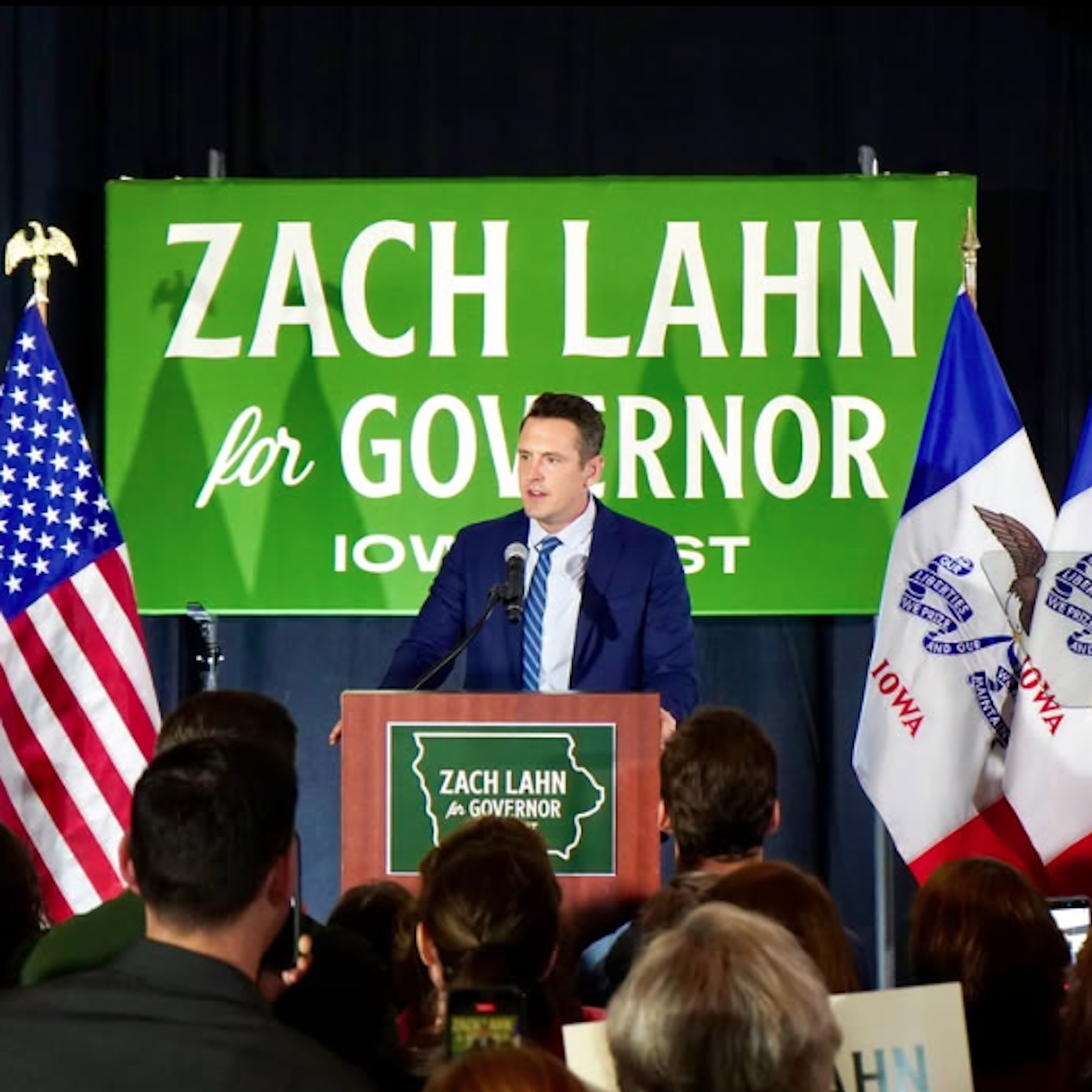
The hosts lead with Iowa’s GOP primary upset, where the Trump-backed candidate lost to farmer-businessman Zach Lane.
Key takeaways
- Trump’s endorsement is powerful, but not unbeatable.
- The panel argues the loss should not be read as a universal rebuke of Trump.
- Candidate quality, local issues, and campaign fit all matter.
- Lane won by sounding aligned with Iowa’s real concerns.
- He emphasized family farms, fuel and fertilizer prices, and skepticism toward large agribusiness and pharmaceutical interests.
- His victory speech framed the result as a rejection of the “establishment.”
- The broader lesson: stop forcing one-size-fits-all narratives.
- The panel repeatedly warns against assuming every primary result says the same thing about Trump or the GOP.
Bigger political context
- Republicans are under pressure because Trump’s influence can be both an asset and a liability.
- The discussion also ties the Iowa result to GOP fears heading into the midterms, especially as some Republicans in Congress begin distancing themselves from Trump.
Democratic Brand Problems and the Rural-Urban Divide
The conversation widens into why Democrats struggle in rural America and why independents sometimes outperform them in red states.
Main points
- The Democratic brand is weak in rural, agricultural states.
- In many places, the label “Democrat” has become politically toxic.
- Some candidates run as independents while effectively holding Democratic-leaning policy positions.
- Geography is now a major predictor of voting behavior.
- The panel argues that the closer voters are to major urban centers, the more likely they are to vote Democratic.
- The farther away they are, the more likely they are to vote Republican.
- The party may be splitting in two.
- One wing is urban/progressive and thrives in deep-blue cities.
- Another wing would need to appeal to rural and middle-of-the-country voters, but that creates branding tension.
ICE Detention Conditions and Immigration Politics
A major second-half segment focuses on reporting about harsh conditions in ICE detention centers, including protests in Newark and lawsuits in Texas.
What the panel discusses
- Public support for border enforcement does not necessarily mean support for inhumane treatment.
- Mo argues many voters who backed Trump wanted violent criminals removed, not broad sweeps of legal residents or citizens.
- The panel suggests voters may be more uneasy with the current system than immigration hardliners assume.
- The administration’s messaging is framed as deterrence.
- Sarah argues the harshness is intentional: the cruelty itself sends a message not to come.
- Mo counters that the government may be underestimating how much cruelty the public will tolerate.
- Rule of law and humane treatment are kept distinct.
- The hosts stress that there is still a legal obligation to treat detainees humanely, regardless of immigration policy debates.
Examples cited
- Detainees allegedly lacking medication or proper medical care.
- Reports of suicides and severe illness in ICE custody.
- A case involving an American citizen repeatedly detained because he looked Hispanic and worked construction.
The “Anti-Weaponization” Fund and Checks on Presidential Power
The show then turns to the Trump administration’s proposed $1.8 billion anti-weaponization fund, which the acting attorney general said would not move forward.
Core argument
- The episode treats the fund’s collapse as a political win, but not a real systemic fix.
- Sarah argues Trump has a pattern of:
- turning the temperature way up,
- forcing a backlash,
- then taking a partial step back that gets praised as restraint.
- The panel says Congress still has not done enough to stop future presidents from creating similar schemes.
Important details
- The fund’s cancellation does not erase all the legal/political issues attached to the settlement.
- The hosts note that Trump has still protected himself and his family from future IRS-related investigations.
- They connect this to earlier examples like the bump stock ban, where executive action relieved political pressure but left the underlying legislative problem unresolved.
AI in Political Advertising
A listener question about AI-generated ads in the Los Angeles mayoral race leads to a discussion of what is legal and what is dangerous.
What they say is legal
- Independent political speech using AI is generally protected.
- Using AI to create parody or obvious satire is usually allowed.
- Defamation law still applies if the content contains false factual claims.
What worries them
- Deepfake-style videos can mislead voters even if they are technically lawful.
- Campaigns and super PACs may be required to disclose AI use, depending on state law.
- Disclosure rules are often weak and easy to obscure in tiny print or brief screen flashes.
Bigger concern
- Foreign actors could use AI to spread disinformation more cheaply and quickly.
- The hosts argue Congress has been unable to pass meaningful rules even for non-AI online political ads, so voters will likely need to become more skeptical on their own.
Rants and Raves
The episode ends with lighter personal segments.
Sarah’s rave
- She spent hours manually removing pests from her son’s pepper plants.
- Her winning mixture: rubbing alcohol, lemon juice, and dish soap.
- Result: the plants are now mite-free.
Mo’s rant
- He rants about kids photographing other students eating lunch and posting it online as a bullying tactic.
- He argues this is one more reason to keep phones out of schools.
David’s rave
- He praises hotel steamers over irons.
- The group jokes about hotel amenities increasingly becoming more female-friendly, such as steamers and makeup wipes.
Bottom Line
This episode argues that:
- Trump’s endorsement is still influential but not invincible.
- Democratic and Republican brands both have serious geographic and cultural limits.
- Immigration politics has shifted from border security to the ethics of detention and enforcement.
- Presidential overreach often survives because Congress fails to legislate.
- AI in politics is already here, and the legal system is struggling to keep up.
If you want, I can also turn this into a shorter episode cheat sheet or a bullet-point “key quotes and takeaways” version.