Overview of Left, Right & Center: “Who Speaks For The Parties? Dems and GOP Fight It Out”
This episode of KCRW’s Left, Right & Center centers on party identity crises in both major U.S. parties. The panel debates whether New York progressive victories signal a Democratic shift to the left, or whether they mainly reflect voter anger at the establishment and a demand for more authentic, forceful messengers. They also examine Donald Trump’s continued grip on the Republican Party, emerging GOP resistance in Congress, and the growing political and social costs of polarization—especially around Israel, antisemitism, immigration, and the role of Congress itself.
Democrats: Progressives vs. the Establishment
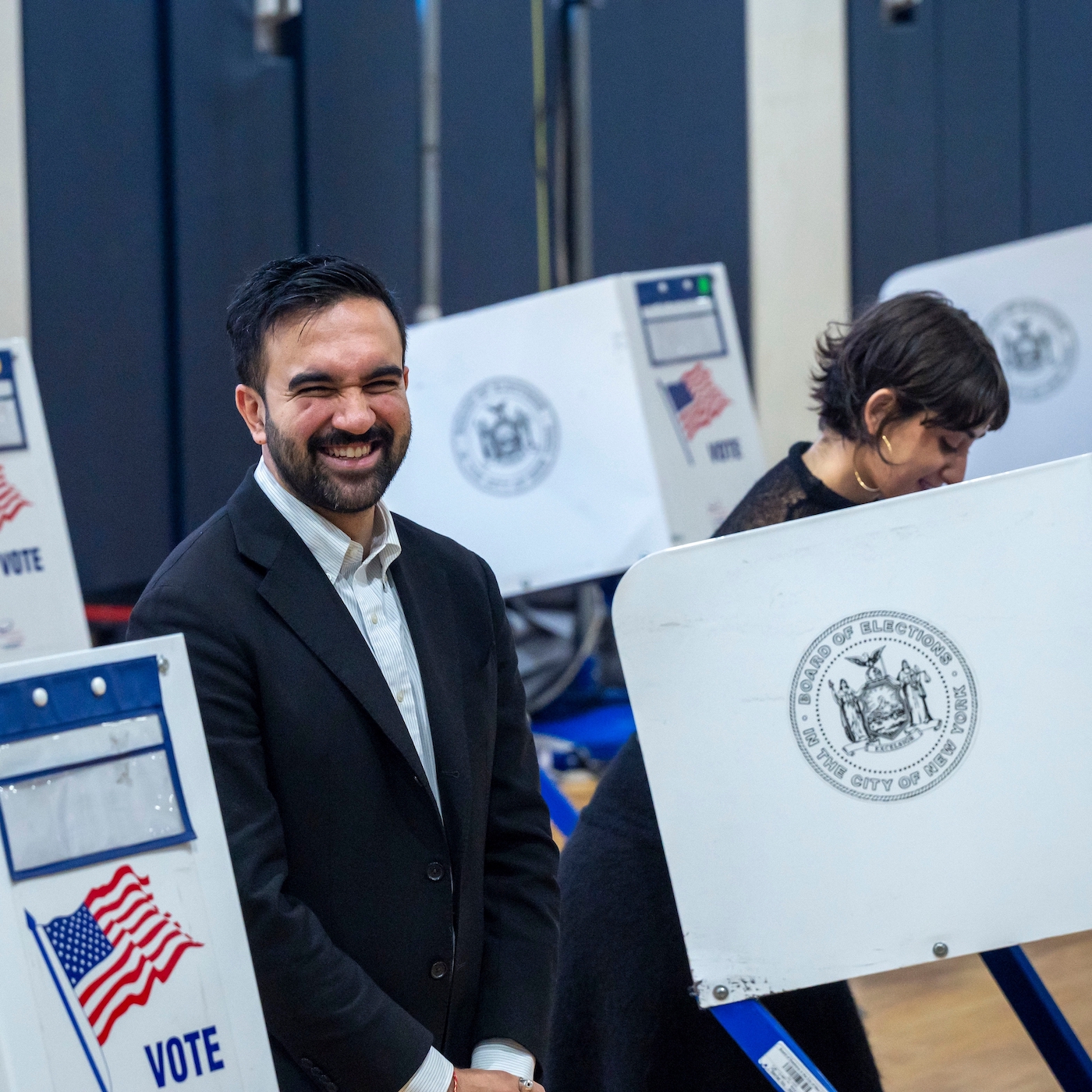
What the New York primaries might mean
- The show opens with the surprise and excitement around progressive Democratic wins in New York primaries.
- Some liberals see these results as proof that the party is moving left.
- Mo Alethe argues the results are too early to read as a wholesale ideological takeover:
- Progressive candidates tend to win in safe blue districts.
- Moderates still do better in competitive purple districts.
- Sarah Isgur says the deeper lesson is about voter distrust of “traditional” Democratic leadership and a hunger for boldness.
The real question: ideology or messenger?
- The panel agrees many voters are less focused on a specific left-right policy agenda than on who seems authentic and willing to challenge the status quo.
- A listener from Michigan asks whether Democrats are undervaluing the electoral appeal of more radical or outsider-style candidates.
- Mo notes that Democrats have historically won with both centrists and more inspiring figures when those candidates felt authentic:
- Bill Clinton in 1992
- Barack Obama in 2008
- The key distinction, he says, is not “moderate vs. progressive,” but “cautious vs. bold.”
What’s Driving the Democratic Divide
Anger at the system
- Sarah frames the current political moment as one of general anti-establishment anger, not just a clean policy split.
- Mo agrees, describing a broader question driving politics:
“Why does my life suck so bad, and who is fighting for me?” - The panel suggests that many Democratic primary voters are looking for:
- stronger resistance to the establishment
- more emotional clarity
- a sense of urgency and possibility
Governance vs. performance
- A recurring concern is whether newer candidates are running on style and outrage more than serious governing plans.
- Mo warns that Congress increasingly behaves like a “reality show,” with members performing grievance instead of legislating.
- Sarah says voters are rewarding people who break from the old rules, even if that creates instability later.
Israel, Gaza, and Antisemitism
A tense and uncomfortable conversation
- The discussion shifts to the way Israel and Gaza are shaping Democratic politics.
- Both Sarah and Mo express concern that criticism of Israeli policy is increasingly being blurred with antisemitism.
- They discuss examples of:
- public scrutiny of Jews over their views on Israel
- activists and politicians using Israel as a litmus test
- incidents that feel like overt antisemitic behavior rather than legitimate policy criticism
The panel’s shared warning
- Mo strongly argues there must be room to criticize Netanyahu and Israel’s war conduct without being labeled antisemitic.
- Sarah counters that many on the left are not doing enough to clearly separate policy opposition from hostility toward Jews.
- Their shared takeaway:
- the distinction matters
- candidates should say it clearly
- failing to do so allows prejudice to spread under the cover of activism
Republicans: Trump’s Party, But Not Entirely Stable
Signs of resistance in the GOP
- The second half turns to Donald Trump’s influence over Republican politics.
- Trump clashes with GOP senators, including Bill Cassidy, over Iran and other issues.
- Sarah describes Trump as effectively a lame duck who still has enough power to bully lawmakers but not enough to fully dominate every vote.
- She argues that a few Republicans are showing “embryonic” signs of independence.
Congress under pressure from Trump and voters
- The episode highlights Trump’s push to reshape voting rules, kill the filibuster, and keep the party aligned with his agenda.
- Mo notes that some lawmakers are responding less to Trump himself than to primary voters who are increasingly aggressive and punitive.
- The tension inside the GOP:
- lawmakers want to keep power
- constituents want confrontation
- Trump rewards loyalty and punishes dissent
A broader realignment
- Sarah argues that Trump didn’t just change the Republican Party; he helped re-sort the electorate.
- She says the old definitions of “moderate” no longer fit cleanly because party coalitions have shifted.
- Mo agrees that parties now revolve around anger and identity more than old ideological labels.
Main Takeaways
- The Democratic Party is not clearly “going socialist,” but it is clearly under pressure from younger, more populist, anti-establishment forces.
- Voters in both parties are rewarding candidates who seem bold, authentic, and willing to break the system.
- Congressional leadership in both parties is struggling to provide trusted direction.
- Israel and antisemitism remain deeply fraught and increasingly central to Democratic internal conflict.
- Trump still dominates the GOP, but there are small signs that some Republicans are beginning to push back.
Rants and Raves
David’s rant: algae as political symbol
- David jokes about the “stolen election” mindset being applied to pond scum/algae in the Lincoln Memorial reflecting pool.
- He uses it as a metaphor for modern politics: people can get outraged about anything online, even algae, without doing the hard work of policy.
Sarah’s rant: fireworks moved too late
- Sarah is upset that July 4th fireworks were moved from 9:09 p.m. to 10:30 p.m.
- As a parent, she says the new schedule is too late for young children and ruins the holiday experience.
Mo’s rant: Gen Z “whimsy”
- Mo mocks a New York Times trend piece about “whimsy” as a lifestyle brand.
- His point: if you have to buy whimsy on Etsy or Amazon, you probably don’t actually have whimsy.
Bottom Line
This episode is less about one election result and more about a larger political realignment: both parties are being reshaped by distrust, anger, and the search for authenticity. Democrats are wrestling with whether their future is progressive, centrist, or simply anti-establishment. Republicans are still Trump’s party, but even there, cracks are beginning to show.