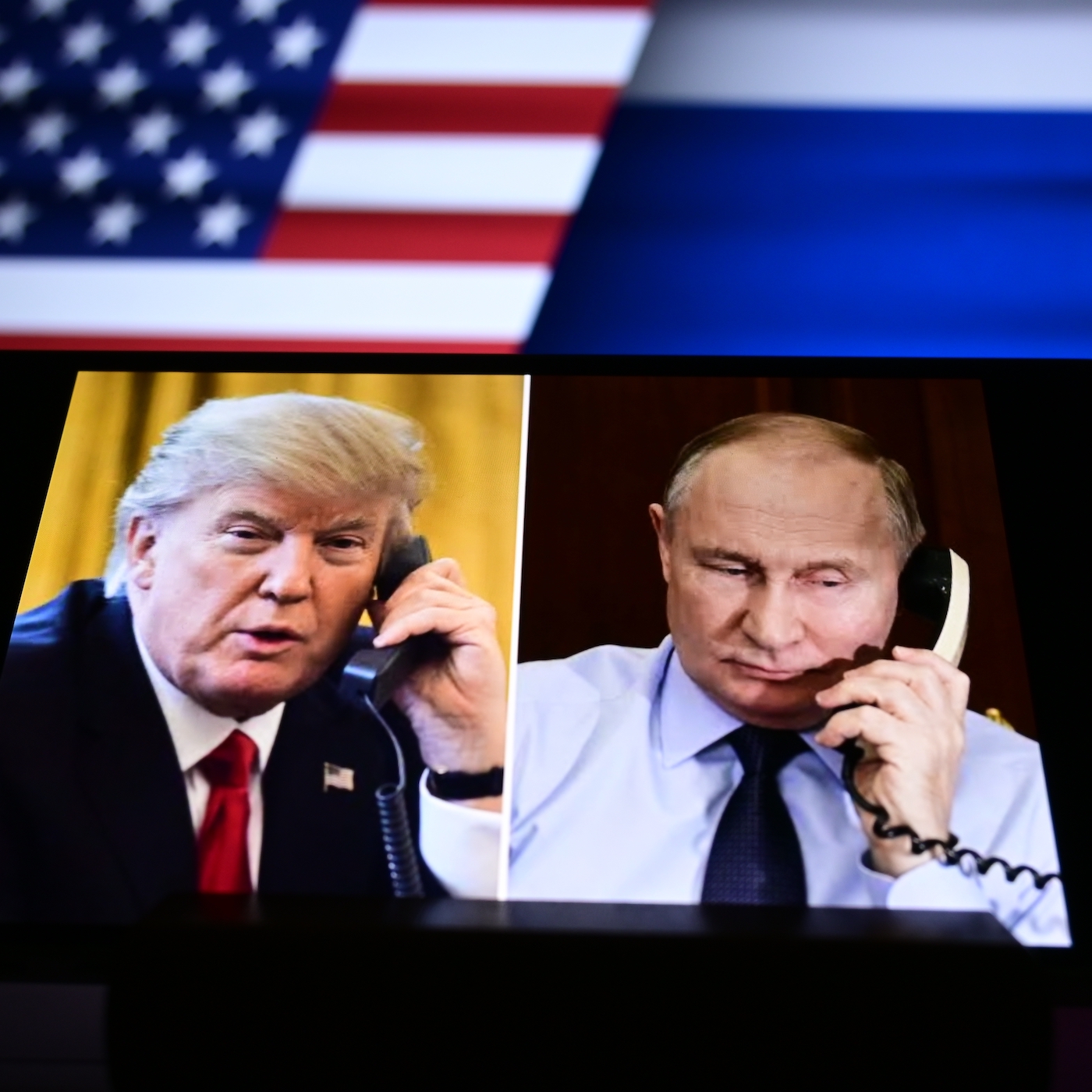
Overview of Trump’s Deal to Buy Russian Diesel Stuns The World
This episode of Left, Right & Center centers on President Trump’s decision to buy Russian diesel in an apparent attempt to lower fuel prices, and the hosts use it to explore broader themes of authoritarianism, foreign policy, democracy, and political messaging. The conversation also covers the federal raid on Rep. Ilhan Omar’s home, the canceled plan to livestream an execution, and a listener question about state power overriding local decisions. Throughout, the panel argues that Trump is using high-profile controversies and aggressive symbolism to distract from domestic problems while deepening political polarization.
Trump’s Diesel Deal With Russia
Why it drew backlash
- Trump announced the U.S. would spend $4 billion on Russian fuel to help lower diesel prices.
- The hosts argue the move:
- gives money to Russia during its war with Ukraine,
- does little to meaningfully help American consumers,
- and appears to directly undermine U.S. allies and sanctions policy.
- Mo Alethi framed it as “exactly what Vladimir Putin wants” and “nothing that anybody else wants.”
What Trump may be trying to do
- Sarah Longwell argued the move is likely driven less by policy than by political panic over rising gas prices and the midterms.
- Both guests suggested Trump’s foreign policy is increasingly transactional and deeply inconsistent, with no clear strategic upside for the U.S.
- They also raised the possibility that personal, business, or corruption-related ties to Russia could be influencing his behavior, though they acknowledged this is speculative.
Main takeaway
- The panel sees the deal as a symbol of Trump’s broader tendency to favor strongmen, weaken democratic alliances, and prioritize short-term political relief over long-term national interest.
The Raid on Rep. Ilhan Omar’s Home
What happened
- Federal officials raided the home of Democratic Rep. Ilhan Omar as part of an ongoing investigation, but gave few details.
- Omar called it political retribution and an attempt to weaponize law enforcement against enemies.
The panel’s view
- Longwell argued there is no reason to trust Trump’s Justice Department in good faith, given the administration’s repeated interference in law enforcement.
- Alethi said the case should be evaluated on its merits if there is one, but emphasized that the larger pattern is Trump targeting a political opponent he likes to punch down on, especially someone he has already demonized.
- They discussed how Trump benefits politically from stoking fear and otherizing people, especially when he is struggling on the economy.
Broader concern
- The hosts saw the raid as part of a wider pattern of political intimidation and erosion of democratic norms.
Public Reaction, Media Consumption, and Polarization
How people process stories like this
- The conversation turned to how Americans consume political news in an algorithm-driven environment.
- Longwell said many people are now “news receivers” rather than news seekers, getting information through social feeds and headlines rather than deliberate reading.
- Alethi added that many people are understandably overwhelmed and busy, and that being a “low-information voter” is not necessarily a moral failing.
Core point
- Both guests said it has become much harder to have shared facts or thoughtful public debate, which makes stories like the Omar raid instantly polarizing and easy to weaponize.
Live-Streaming a Public Execution: Trump and Hegseth
What was proposed
- Defense Secretary Pete Hegseth initially suggested the execution of Nidal Hasan would be livestreamed as a deterrent.
- Trump initially approved the idea, then later said it would not be streamed.
The panel’s reaction
- Longwell called it a sign of the administration’s cruelty and bloodlust, and said it would have played into terrorist propaganda.
- Alethi agreed, saying the plan was not only indecent but also bad policy, since public martyrdom can inspire more violence.
Takeaway
- The hosts saw the reversal as the right outcome, but also as evidence of how far the administration is willing to go to project toughness.
Local Control vs. State Overreach
Listener question from Charlotte
- A listener described a local toll project that cities voted down, only for the state to later force reimbursement costs, effectively pressuring cities to approve it.
What the guests said
- Longwell said local control matters because it keeps government closer to the people affected by it.
- Alethi agreed that while state and local tensions are normal, people are frustrated when they feel their votes don’t matter.
- Both emphasized that local politics still shapes daily life in very tangible ways.
Advice to listeners
- Alethi encouraged people not to disengage:
- keep showing up,
- keep using your voice,
- and pay attention to local issues, not just national outrage.
Rants and Raves
Sarah Longwell’s rave
- She praised the Indigo Girls for performing a likely final show and allowing Emily Saliers to sing despite vocal tremors.
- For Longwell, it was a moving example of dignity, aging, and the enduring power of music.
Mo Alethi’s rave
- He praised an ER nurse named Amy who comforted him during a painful medical scare before an international trip.
- He highlighted nurses as unsung heroes who provide both medical care and human kindness.
David Green’s rave
- He recommended the series The Rooster, praising Steve Carell’s performance and the show’s warmth and humor.
Bottom Line
This episode argues that Trump’s recent actions are not isolated controversies but part of a larger pattern:
- favoring authoritarian leaders,
- undermining democratic norms,
- weaponizing institutions,
- and using outrage and spectacle to distract from domestic failures.
The panel’s recurring message is that these developments should be taken seriously—not as noise, but as signs of a political culture increasingly defined by cruelty, cynicism, and erosion of trust.