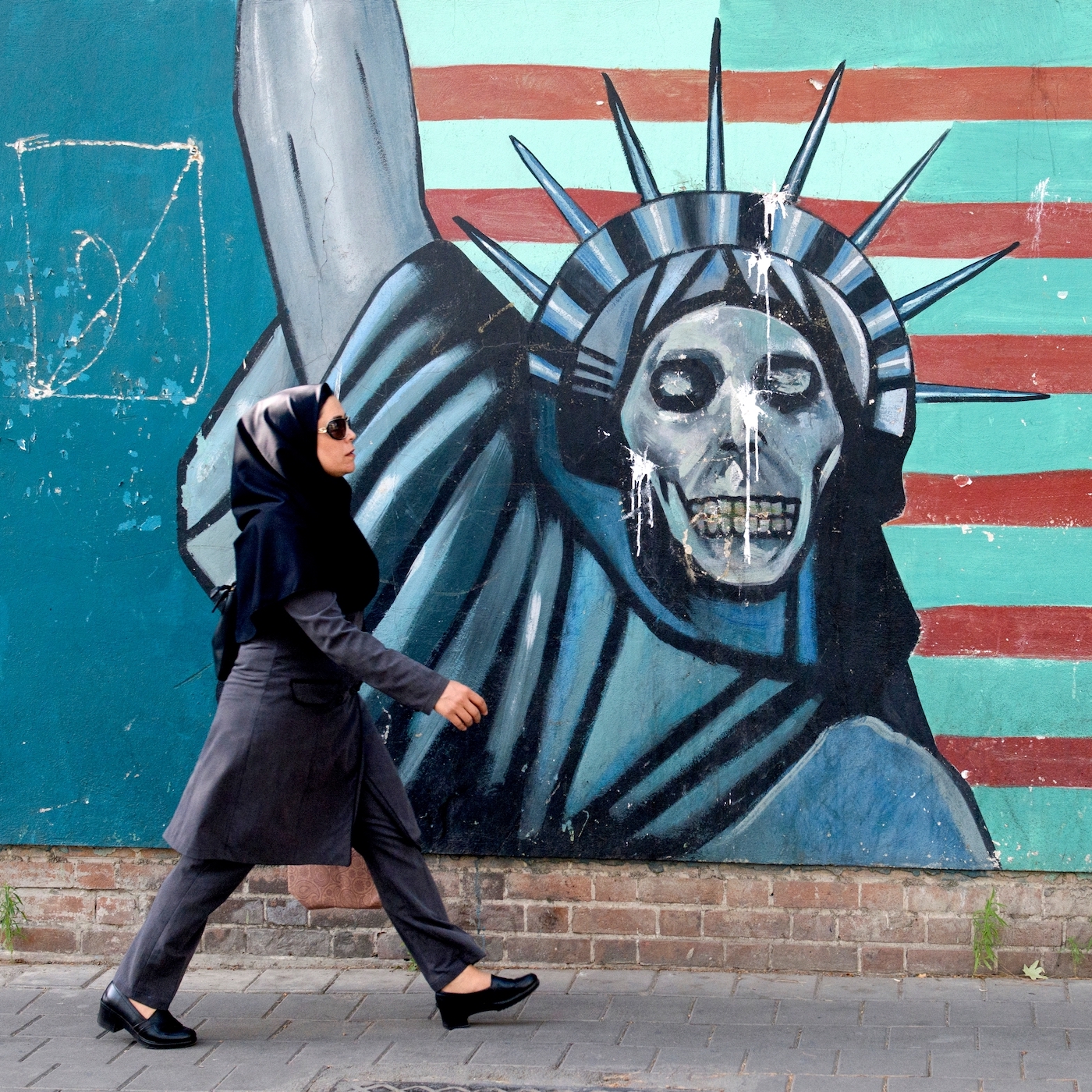
Overview of Trump Threatens An Apocalypse…To Maybe Get A Ceasefire? (Left, Right & Center — KCRW)
This episode of Left, Right & Center (KCRW) examines last week’s U.S.–Iran crisis: President Trump’s public threat to “decimate” Iran and warn that “a whole civilization will die,” the last-minute two‑week ceasefire, and whether the president’s brinksmanship produced a real off‑ramp or simply worsened U.S. standing. Hosts David Greene, Mike DuPke (former Trump White House communications director) and Mo Alathie (left) dissect the foreign‑policy fallout, the administration’s decision‑making, consequences for allies, domestic political implications (Congress returning with a DHS funding fight, ICE reform, midterm incentives), possible bipartisan avenues (permitting reform, AI regulation), and a rare national uplift from the Artemis 2 lunar mission.
Key discussion points
-
The threat and the ceasefire
- Trump posted an ultimatum to Iran promising large‑scale destruction if a deal wasn’t reached; a ceasefire was announced less than two hours before his deadline.
- The pause is two weeks for negotiations; participants disagree about scope (inclusion of Lebanon), control of Iran’s nuclear program, and the Strait of Hormuz.
- Panelists question whether aggressive public threats were necessary or counterproductive — they may have pressured Tehran but also eroded U.S. moral authority and alarmed allies.
-
Strategy, decision‑making, and counsel in the White House
- Mike DuPke argues the rhetoric may have been intended to pressure Iran but produced damaging side effects: loss of credibility with allies and erosion of presidential moral authority.
- Mo Alethe warns Trump 2.0 is “without the guardrails,” suggesting less wise counsel and greater risk from impulsive public messaging.
- Discussion of whether operational security (e.g., rapid action to eliminate Iranian leaders) justified limited consultation with partners.
-
Outcomes on the ground and goals
- Some U.S. military objectives were achieved (leadership targeted, air force/naval assets hit), but Iran’s regime remains intact and extremist elements have gained influence.
- Iran’s ability to disrupt global energy flows (Strait of Hormuz) persists or may even be enhanced if Tehran monetizes control.
- John Bolton’s perspective: he supports regime change in principle but questions Trump’s objectives and timing, suggesting political calculations may be driving decisions.
-
Domestic politics and Congress
- Congress returned amid a partial DHS funding impasse. The shutdown/funding fight revolves around ICE and immigration policy.
- Neither party has strong incentives to compromise before the midterms; both will prioritize base messaging.
- Republicans may re‑emphasize culture‑war themes (e.g., protections for trans students) to energize voters; Democrats remain focused on pocketbook issues and ICE reform.
-
Possible bipartisan policy areas — and barriers
- Permitting reform (infrastructure, energy projects) is a low‑glare area with potential bipartisan support but often stalls politically.
- AI regulation is emerging as a cross‑cutting issue where left and right concerns (safety, economic impact, preemption vs. state rules) complicate federal action.
- Political incentives and state‑federal tensions (preemption) make meaningful AI or other major reforms uncertain before November.
-
A unifying human achievement: Artemis 2
- The Artemis 2 lunar mission and the rescue of a downed U.S. pilot provided rare non‑partisan moments of national pride and reminded panelists of the value of collective projects and shared media experiences.
- Panelists lament the decline of unified national moments and a trusted presidential voice that can console or rally the country.
Main takeaways
- The ceasefire may have avoided immediate escalation, but it is temporary and leaves many unresolved issues (nuclear enrichment, Lebanon, Hormuz).
- Public, apocalyptic threats can produce negotiation leverage but carry large diplomatic costs: eroded credibility with allies, increased global alarm, and unintended strengthening of adversary bargaining positions.
- U.S. objectives are unclear: tactical successes (leadership decapitation) have not produced strategic outcomes (regime change, secure Strait of Hormuz, diminished terror threats).
- Domestic politics (midterms) strongly shape congressional behavior; expect limited bipartisan traction on headline items, with the possible exception of technical fixes (permitting).
- Culture‑war topics are likely to resurface as Republicans seek issues that mobilize their base; Democrats emphasize the tangible economic impacts of foreign policy decisions (e.g., gas prices).
- Space exploration (Artemis 2) remains a rare, broadly‑shared moment that transcends partisan divides, even if political leaders sometimes attempt to claim credit.
Notable lines & quotes
- President Trump (as quoted on social media): “a whole civilization will die.”
- White House claim (Press Secretary quoted): Trump’s “very tough rhetoric and his tough negotiating style” led to the ceasefire.
- John Bolton (as quoted): he favors regime change in Iran but criticizes lack of clarity on Trump’s objectives, suggesting political calculations (oil prices, markets) influence decisions.
What to watch next (action items)
- Track the two‑week negotiation window: watch for agreements on Lebanon, nuclear enrichment limits, and rules for the Strait of Hormuz.
- Monitor allied responses: whether partners remain willing to coordinate militarily or distance themselves after public threats.
- Follow DHS funding/ICE reform talks in Congress — partial shutdown effects (FEMA, Coast Guard, TSA pay/status) and whether any bipartisan fixes emerge.
- Watch for legislative movement on permitting reform and AI regulation in Congress — potential modest bipartisan progress vs. preemption/state regulatory battles.
- Observe domestic political messaging: whether Republicans lean into culture‑war issues and how Democrats counter with pocketbook narratives ahead of the midterms.
Participants & production credits
- Host: David Greene
- Panelists: Mike DuPke (right; former Trump White House communications director), Mo Alathie (left)
- Produced by: Leo Duran; Executive Producer: Arnie Seipel; Recorded by Michael Stark; Mixed by Nick Lamponi; Theme by Todd M. Simon
- Show: Left, Right & Center — co‑production of KCRW and Fearless Media; distributed by PRX
If you want a one‑line nutshell: the episode wrestles with whether Trump’s extreme public threats bought a temporary ceasefire or simply traded short‑term leverage for long‑term diplomatic, strategic, and political costs.