Overview of Trump Runs Midterm Ads About Himself Fighting America’s “Enemies”
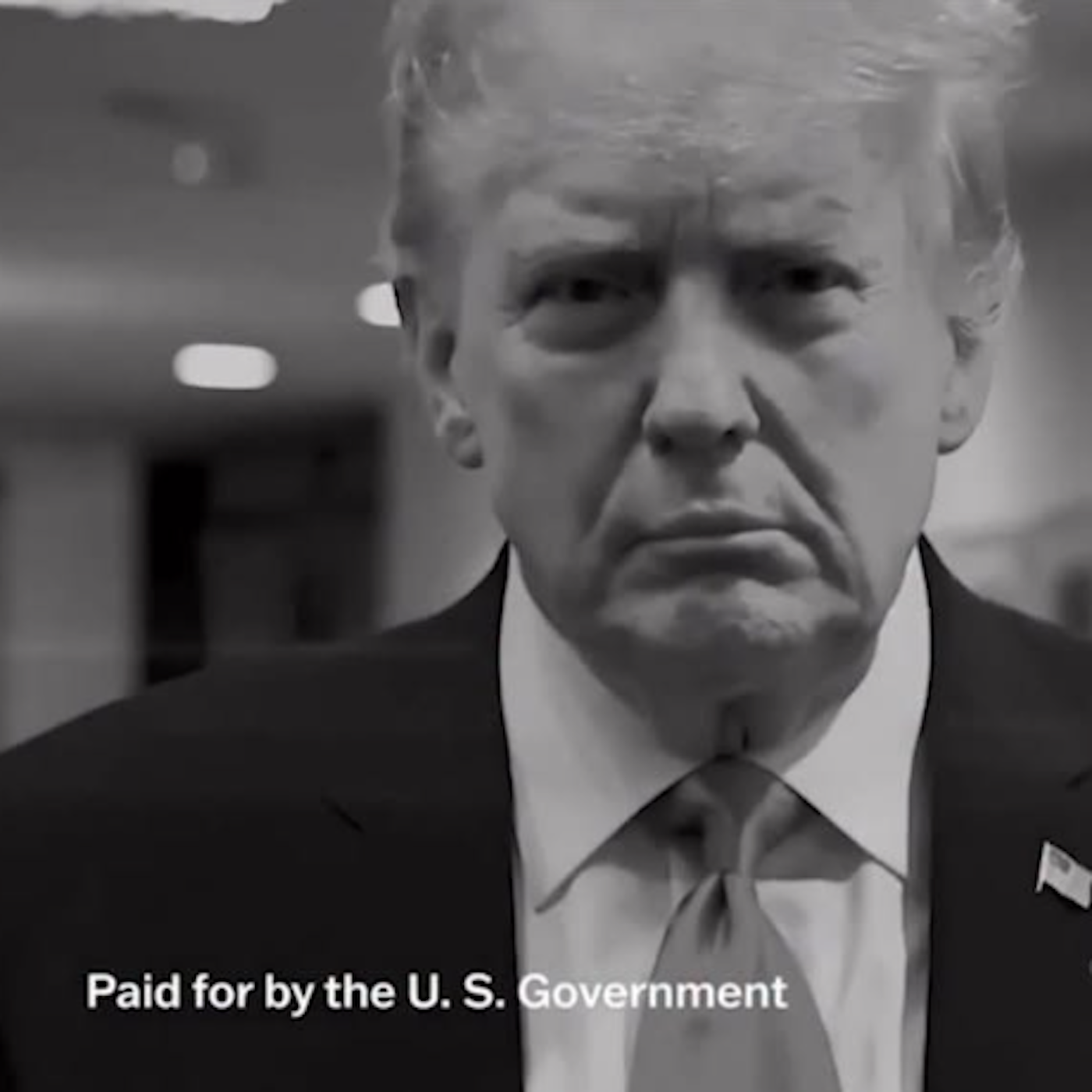
This episode of Left, Right & Center centers on President Trump’s taxpayer-funded “public service announcement” ads, which feature him denouncing “deep state” enemies in language nearly identical to a prior campaign spot. The hosts debate whether the ads are illegal, politically effective, or mainly a display of dominance and ego. The conversation then broadens to the midterm landscape, affordability politics, Trump’s rollback of fuel economy rules, the future of EVs and U.S. manufacturing, and a surprise bipartisan Senate bill on college sports. The episode closes with rants about survey overload and the dangers of true-crime media shaping public understanding.
Trump’s Government-Funded Midterm Ads
What the ad is doing
- The ad uses dramatic, anti-“enemy” rhetoric:
- “deep state”
- “warmongers”
- “globalists”
- “communists, Marxists and fascists”
- It ends with “paid for by the United States government,” making it a taxpayer-funded message.
Core criticism from the panel
- Jonah Goldberg argues the ad is:
- basically a copy of a prior campaign ad
- lazy, fear-mongering, and politically unserious
- more about humiliation and dominance than persuasion
- Mo Alethi says the “public service announcement” framing is absurd because the “service” appears to be Trump praising himself and claiming the country is fine, which most voters do not believe.
Legal and ethical concerns
- The hosts question whether the ad violates the Hatch Act or at least its spirit.
- Goldberg goes further, saying that in a healthier system it could be viewed as impeachable because it uses money allocated by Congress for partisan purposes.
- He emphasizes that Trump had plenty of PAC money available and chose not to use it, suggesting the real point was to show he could use government funds.
Political strategy
- The ad may be aimed at:
- low-information voters
- people who respond to emotional, simple messaging
- supporters who see Trump as a fighter against elites
- But both hosts think it likely turns off more voters than it turns on.
Midterm Landscape: Affordability and Democratic Optimism
Main political backdrop
- With the midterms just weeks away, affordability remains the dominant issue for voters.
- Democrats are described as having cautious optimism:
- the House looks favorable
- the Senate is competitive, with states like Texas, Alaska, North Carolina, Georgia, Michigan, and Iowa in play
How the hosts read the polling
- Democrats are seen as benefiting from:
- trend lines showing improvement
- rising enthusiasm on their side
- Republican stagnation or decline
- Goldberg argues the overall polling does not indicate a true Democratic wave, but rather a “red undertow”—voters are rejecting Trump and the status quo more than embracing a sweeping Democratic agenda.
Key takeaway
- Both hosts warn against overreading election results as a mandate.
- Voters may simply be expressing frustration and fatigue, not deep ideological alignment.
Trump’s Rollback of Fuel Economy Standards
What changed
- Trump rolled back fuel economy requirements set under the Biden administration.
- The White House framed the move as relief for consumers and a way to support gas-powered cars.
Why the panel is skeptical
- The administration claims the change could lower car prices by about $1,300.
- Mo notes:
- cheaper production does not automatically mean cheaper consumer prices
- manufacturers may keep the savings as profit
- Goldberg adds that he dislikes both Biden-style and Trump-style industrial micromanagement and prefers simple rules for a complex society.
Broader critique
- The hosts see the policy as part of a larger nostalgia-driven vision of America:
- favoring gas-powered cars
- romanticizing the 1950s and muscle cars
- ignoring global supply chains and modern market realities
China and EV competition
- Mo stresses that this could weaken U.S. competitiveness:
- EVs are growing fast in Europe and Canada
- China is dominating global EV production
- limiting EV adoption in the U.S. could cede future markets to China
- Goldberg agrees that the administration’s trade and auto policies are inconsistent:
- it is hard to protect domestic manufacturing while also making supply chains and fuel-efficiency rules less coherent
College Sports Bill: Rare Bipartisanship in the Senate
What happened
- The Senate passed a bipartisan bill regulating college sports, including:
- name, image, and likeness rules
- transfer restrictions
- agent compensation rules
Why it got bipartisan support
- Goldberg says it was an issue where both parties could say they “did something” without it being a pre-scripted ideological battle.
- Both parties know college sports matter to voters, especially in places where football is a huge cultural touchpoint.
Concerns raised
- Goldberg is skeptical of federal involvement and says college athletics is already too commercialized.
- Mo and others worry the bill could:
- worsen inequities
- advantage elite programs
- make lower-income students and non-athletes bear more of the cost
- Cory Booker and Ted Cruz are cited as examples of lawmakers trying to speak to their constituencies on the issue.
Bigger significance
- The hosts suggest this debate reflects how politicians use sports to connect with people who are tuning out politics.
- It also shows how lawmakers often scramble to appear responsive when they are otherwise unpopular.
What the Episode Suggests About Politics Right Now
Shared themes
- Ego and performance matter as much as policy.
- Affordability is the key political frame.
- Nostalgia is a powerful force on both left and right.
- Institutions are struggling to maintain trust and relevance.
The long view
- Goldberg argues Republicans are headed for an eventual internal reckoning once Trump’s grip weakens.
- Mo agrees that political debate—especially within parties—can be healthy, even if it is messy.
- Both seem to believe the post-Trump era, whenever it arrives, will reopen suppressed ideological arguments.
Rants and Raves
Mo’s rant: stop asking people to rate everything
- He is tired of being asked to rate every transaction:
- prescriptions
- towels
- parking
- His point: if something is bad, people will complain; otherwise, let them live.
Jonah’s rant: true-crime culture distorts public understanding
- He argues that true-crime media and wall-to-wall trial coverage can:
- make viewers think they understand criminal law when they don’t
- distort juror expectations
- spread misinformation through simplified narratives
David’s rave: a book about evidence-based government
- He highlights Do What Works: Smarter Government, Better Results.
- The book showcases bipartisan ideas focused on data, outcomes, and practical solutions.
Bottom Line
This episode is a critique of Trump’s use of government resources for self-serving political messaging, but it also becomes a broader discussion of how American politics is shaped by fear, nostalgia, affordability, and cultural grievance. The hosts repeatedly return to one idea: voters are less interested in ideological purity than in whether leaders can make life feel more stable, affordable, and credible.