Overview of Trump Bets On Himself To Win The Midterms (KCRW)
This episode of Left, Right and Center examines Donald Trump’s unusual Texas “midterm convention,” debating whether it actually helps Republicans or instead hands Democrats a gift by making the election a referendum on Trump. The panel also digs into Trump’s late-cycle spending strategy, John Fetterman’s surprise appearance at the event, the political use of Hasan Piker, the risks and possibilities of AI in government, and personal reflections on the 25th anniversary of 9/11.
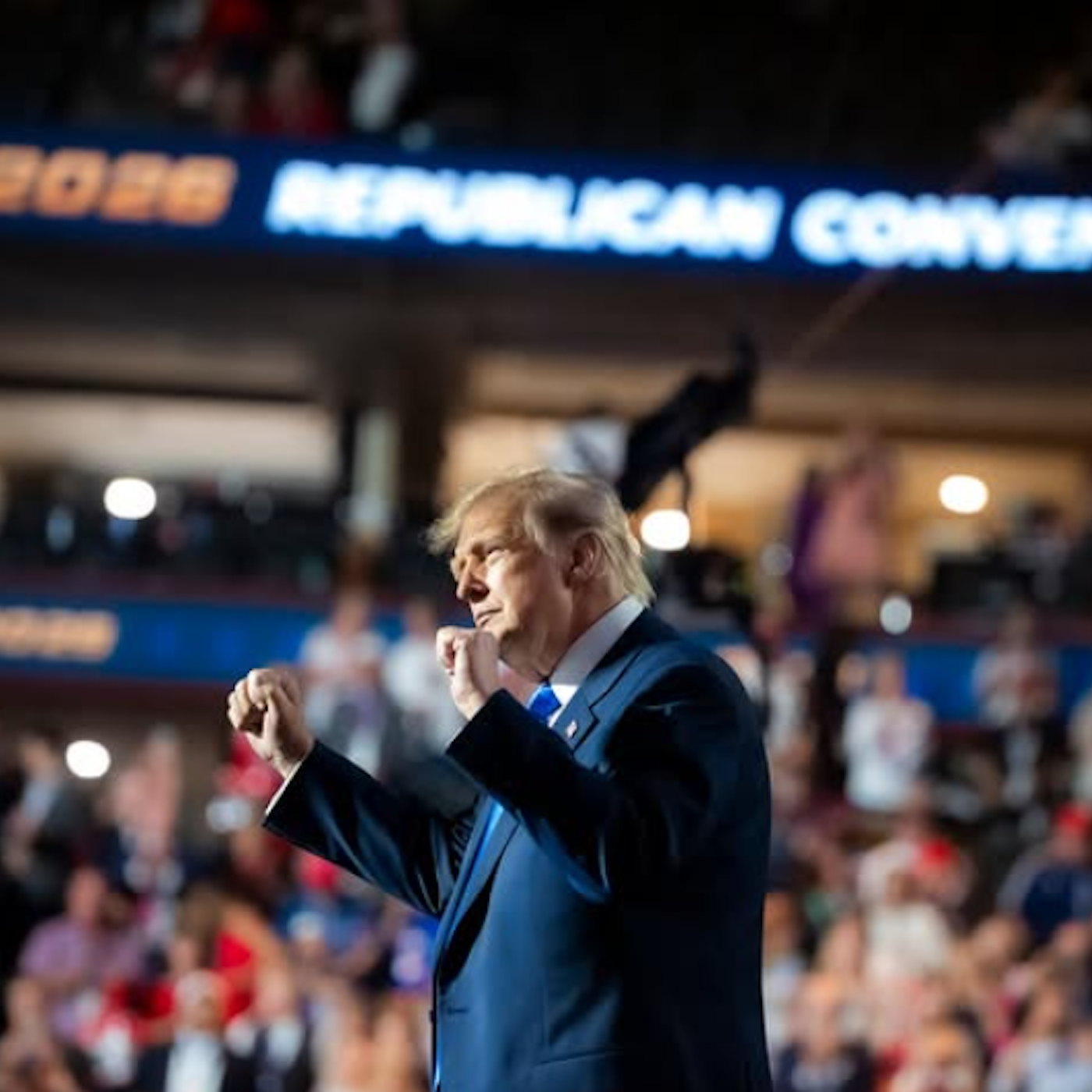
Trump’s Texas “Midterm Convention” Was the Main Topic
The panel’s core debate
- The Texas event was framed as a Republican midterm rally, but the hosts argue it was really a Trump-focused spectacle.
- Sarah Isgur called it basically a non-event, saying it had little practical impact beyond energizing people already committed to voting Republican.
- Moa Lath argued it was a gift to Democrats, because Trump repeatedly centered himself and gave Democrats easy footage for attack ads.
Main takeaway
- Trump’s popularity is not transferable, but his unpopularity is.
- Republicans appear to believe the best strategy is turnout-driven, not persuasion-driven:
- Rally loyal Trump voters.
- Avoid trying to win over independents with a broader message.
- Democrats, meanwhile, are incentivized to make the election a referendum on Trump.
Affordability, Messaging, and the Midterm Strategy
Trump’s affordability message
- Trump tried to claim Democrats created the affordability crisis and that he is “bringing prices way down.”
- The panel strongly pushed back:
- Voters are still feeling real economic pain.
- Telling people prices are already down may sound out of touch or dishonest.
- Mo argued Democrats should stay disciplined and keep hammering the cost of living.
Advice to Democrats
- Don’t get distracted by Trump’s provocations.
- Keep tying affordability to:
- Trump’s priorities
- corruption
- misplaced spending
- everyday pain at the grocery store, gas pump, and elsewhere
Trump’s Late Money Moves and Party Loyalty
What Trump is doing with his war chest
- Trump’s political operation finally began spending after sitting on a huge reserve of cash.
- Funding included:
- support for Ken Paxton in Texas
- money in races in New Hampshire, Michigan, and Ohio
- The panel saw the timing as very late and consistent with Trump’s habit of hoarding power and money.
Bigger point about Trump and parties
- Sarah argued Trump does not really care about the Republican Party as an institution.
- Mo broadened that critique, saying modern parties are weak and often function more like brands than true institutions.
- The discussion compared Trump’s behavior to how other modern politicians have prioritized their own influence over party-building.
John Fetterman’s Surprise Appearance and Political Drift
Why Fetterman’s appearance mattered
- Fetterman appeared in a video introducing Republican Sen. Dave McCormick at the Texas event.
- He described himself as a “common sense Democrat” and rejected “extremes and socialism.”
- This came amid reporting that he has been:
- alienating fellow Democrats
- skipping committee hearings
- spending lots of time on conservative media and Israel advocacy
Panel interpretation
- Mo said Fetterman has become a barometer for working-class politics:
- He was elected as a populist, outsider figure.
- He is not easily categorized as a progressive.
- Sarah argued Democrats made a mistake by expecting him to function as a traditional party loyalist.
- Both noted the tension between:
- Fetterman’s independence
- the Democratic Party’s desire for discipline and cohesion
Hasan Piker, Polarization, and the Left’s Messaging Problem
What happened
- A Republican event used a clip of left-wing streamer Hasan Piker, including a selfie of him in his underwear, as part of an anti-left presentation.
- Piker joked that they “blurred [his] penis.”
Why this sparked a bigger conversation
- A listener asked whether moderates overstate Piker as a boogeyman on the left.
- Mo strongly objected to elevating Piker as a political messenger:
- He sees him as alienating
- inflammatory
- harmful to coalition-building
- Mo argued there are better progressive voices who can speak to young and marginalized voters without carrying the same baggage.
Broader takeaway
- The episode pushes a theme that runs throughout the show:
- Outrage can mobilize a base.
- But it often damages the broader coalition needed to win elections.
AI, Governance, and the Idea of an AI President
The thought experiment
- Sarah raised a provocative question from Stanford neuroscientist David Eagleman: Could AI someday be president?
- She framed it as a serious thought experiment, not a prediction.
Main arguments
- AI could potentially make:
- more data-driven decisions
- more efficient administrative choices
- faster analysis of large bills and policy options
- But it would still make mistakes — just different ones from humans.
- Mo emphasized that AI could be useful as a tool, but not as a decision-maker.
Consensus
- Both agreed the U.S. is not having serious enough conversations about AI.
- They warned that:
- lawmakers don’t seem to understand the technology
- schools are inconsistent in teaching it
- the risks could be enormous if oversight lags behind innovation
9/11 Reflections: Leadership, Memory, and Civic Trust
Why this segment mattered
- The conversation ended with reflections on the 25th anniversary of September 11, 2001.
- David Green used the anniversary to talk about the kind of leadership he expects in a national crisis.
Personal memories shared
- Sarah described hearing the news as a college sophomore and spending the day watching coverage nonstop.
- Mo recalled:
- working in Alexandria, Virginia, on a governor’s campaign
- being near the Pentagon attack
- hearing a sonic boom later that day that rattled the building
- the fear and confusion of not knowing whether more attacks were coming
Key themes
- Leadership matters most in moments of fear and uncertainty.
- The panel also drew parallels between 9/11, COVID, and AI:
- warning signs often exist before a crisis
- institutions frequently fail to act with enough seriousness
- public trust can collapse when leaders are vague or overconfident
Final reflection
- Mo and Sarah both stressed the importance of remembering the human cost of 9/11 and teaching younger generations about it.
- They also highlighted a moment of unity from that day, when lawmakers from both parties gathered and sang “God Bless America.”
Bottom Line
This episode argues that Trump’s Texas rally likely did not create a major political shift — but it did reinforce the central tension of the 2024 midterms: whether elections are about local issues or about Trump himself. The panel sees Democrats’ best path as staying focused on affordability and working-class concerns, while avoiding the traps of performative outrage and personality politics. The closing discussion on AI and 9/11 broadened the episode into a larger meditation on leadership, institutional trust, and the kinds of crises the country may not be ready for.