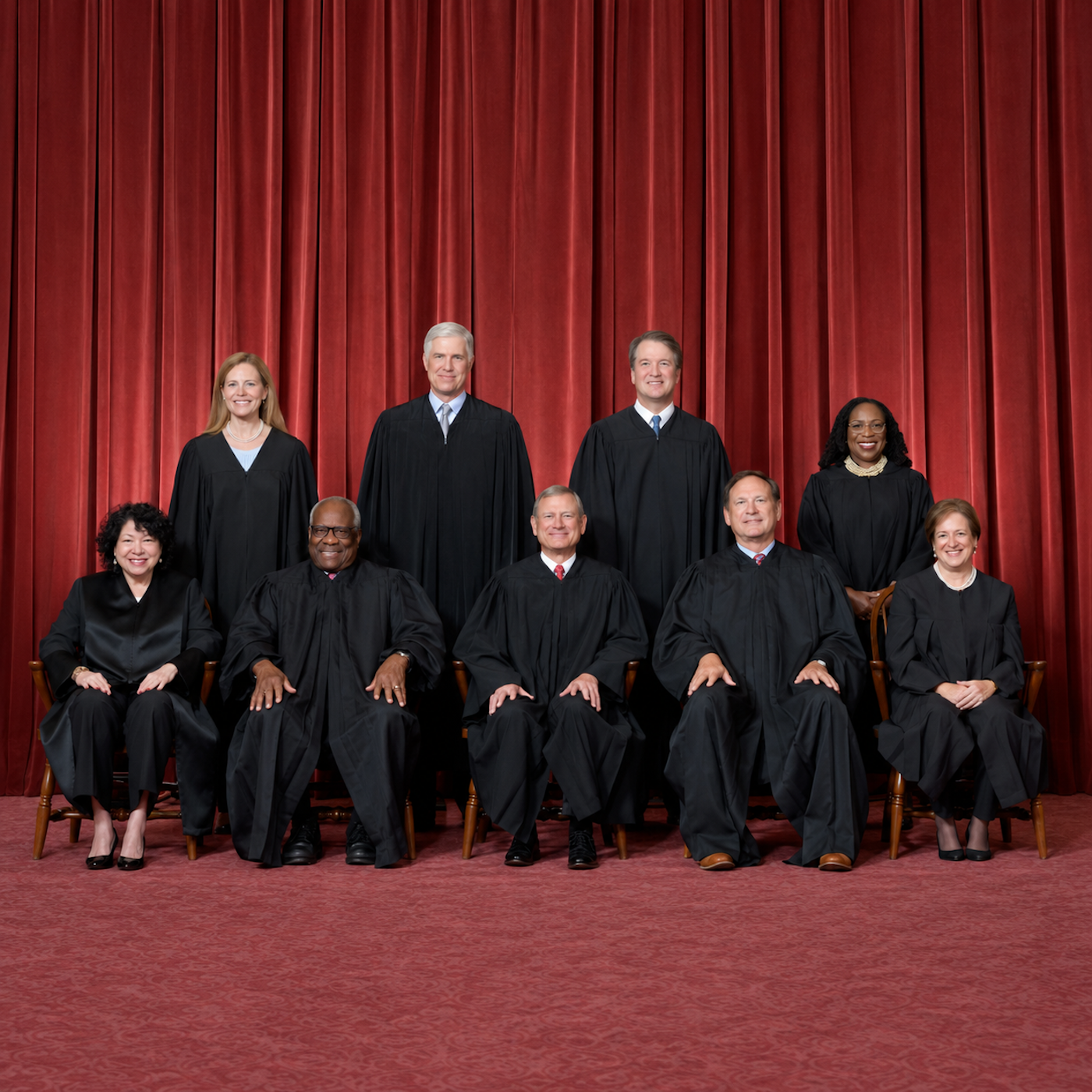
Overview of Left, Right & Center: The Supreme Court Starts Its New Term Politicized and Unpopular
This episode of KCRW’s Left, Right & Center focused on the Supreme Court’s new term, the court’s declining public trust, and the broader political and cultural fallout from major institutions that many Americans see as broken or partisan. The panel also discussed a Cornell sexual-assault case, the limits of due process in the age of online outrage, and a growing trend of Democratic candidates leaning into religious language and identity on the campaign trail.
Supreme Court: A New Term Under Pressure
The big cases to watch
The panel previewed a term that may be less headline-heavy than last year’s, but still consequential. Key cases and issues include:
- Climate litigation / Suncor case: whether state and local governments can sue energy companies over climate harms.
- Second Amendment questions, including challenges involving AR-15 bans.
- Religious liberty cases.
- Immigration disputes tied to the Trump administration.
- Potential election-related emergency cases as the midterms approach.
The court’s political role
The conversation emphasized that the Court is increasingly being pulled into disputes Congress has failed to resolve, especially when the executive branch acts first and the Court is asked to referee afterward.
- Sarah Isger argued that much of the anger at the Court comes from people seeing only the cases they feel they are losing.
- Adam Green countered that the Court often operates in ways that feel politically outcomes-driven, especially when it narrows what government can do to regulate corporations or protect rights.
Why the Supreme Court Is So Unpopular
Low approval, high distrust
The panel discussed polling showing the Court’s approval at historic lows, with Americans increasingly viewing it as a political institution rather than a neutral one.
Competing explanations
- Isger’s view: Public trust in institutions has eroded broadly since the 2008 financial crisis; the Court is not unique.
- Green’s view: The Court has become illegitimate in the eyes of many Americans because justices appear to disregard their stated principles to reach preferred political outcomes.
Key tension
A recurring theme was whether the Court is:
- a counter-majoritarian institution meant to resist public pressure, or
- an increasingly unaccountable political actor insulated from normal checks and balances.
Ethics, Leaks, and the Dobbs Fallout
The Dobbs leak and internal tensions
The panel returned to Justice Samuel Alito’s remarks about the Dobbs leak, which he said cast a “pall” over the Court.
Ethics concerns
The discussion also touched on:
- Justice Thomas and Justice Alito receiving gifts or hospitality
- the lack of a clear, enforceable ethics body for the Supreme Court
- the need for a better disclosure and recusal system
Isger argued that an independent judicial body could improve trust by separating real ethics problems from politically motivated attacks. Green argued that public frustration is justified given the appearance of corruption and the absence of meaningful oversight.
Cornell Sexual Assault Case: System Failure and Culture
The case
The show then turned to a civil suit stemming from an alleged 2024 sexual assault at a Cornell fraternity house. The panel avoided litigating the facts but used the case to discuss broader failures in campus culture and institutional response.
Main themes
The conversation focused on:
- Title IX and university response
- the role of local police and prosecutors
- the impact of alcohol and drug use
- campus sexual culture and what consent means when both parties are intoxicated
Different emphases
- Isger framed the problem as a broad cultural failure, especially around drugs, alcohol, and sexual norms.
- Green stressed institutional distrust: many people assume universities and law enforcement protect reputations rather than victims.
Due Process vs. “Mob Justice”
Online outrage and true-crime culture
The panel debated whether social media and true-crime coverage distort justice.
- Isger argued that online “mob” behavior can undermine fair process by turning allegations into instant public verdicts.
- Green pushed back on equating public outrage with mob mentality, warning against dismissing legitimate moral concern or criticism of corrupt systems.
Shared concern
Both agreed that:
- due process matters
- online commentary can be harmful
- public trust in the justice system is deeply strained
Should Fraternities Exist?
The panel also debated whether fraternities are worth the risks they can pose on campuses.
- Green said Greek life may not be the right answer to college loneliness and should be reconsidered if it contributes to harm.
- Isger said eliminating fraternities might reduce assaults, but there is no clear evidence it would solve the underlying behavior, since risky behavior could simply move elsewhere.
Religious Democrats on the Rise
Faith as campaign language
The final major segment examined Democratic candidates who are speaking openly about faith, including:
- James Tallarico in Texas
- Adam Hamilton in Kansas
- Abdul El-Sayed in Michigan
Why it may matter
The panel suggested this strategy works best when it feels authentic and grounded in values like:
- common good
- service to neighbors
- moral obligation
- fairness and accountability
Will it win over Republicans?
Probably not in large numbers. But the panel agreed it may:
- help Democrats connect with independent voters
- show that faith language is not exclusive to the right
- make Democrats sound more sincere and less scripted
Rants and Raves
Sarah Isger’s rave
- Hydration and water
- She praised clean water and joked that if she had a religion, hydration would be a core tenet.
Adam Green’s rant/rave
- He shared how easy it is to be fooled by AI-generated content, especially fake animal videos on social media.
- His point: AI is making it harder to trust what we see online.
Susan Davis’s recommendation
- She raved about the TV show Lioness, calling it a binge-worthy CIA drama.
Bottom Line
This episode centered on a shared diagnosis: Americans are losing trust in institutions, whether it’s the Supreme Court, universities, law enforcement, or political parties. The panel disagreed sharply on causes and solutions, but they converged on one major point: legitimacy, authenticity, and public confidence now matter as much as policy or legal doctrine.