Overview of The ‘Socialist’ Brand Helps Some Democrats…For Now
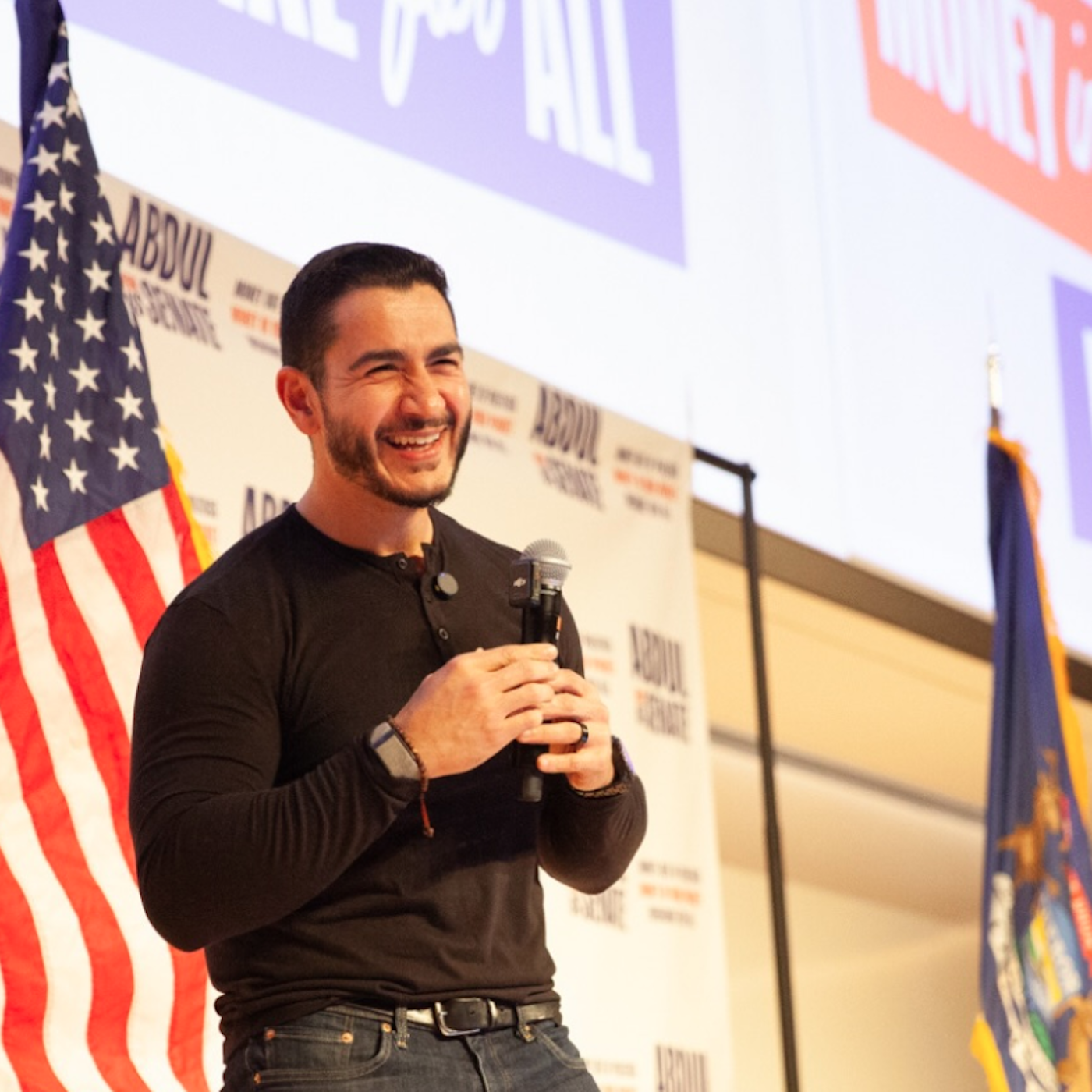
This episode of KCRW’s Left, Right, and Center focuses on the Democratic Party’s ongoing identity fight, sparked by the narrow Michigan Senate primary win of Abdul El-Sayed. The panel debates whether the rising appeal of “democratic socialism” is a real ideological shift or mostly a branding problem, and whether progressive policies can win general elections even if the label “socialist” remains toxic to many independents. The conversation also turns to President Trump’s influence over the Justice Department, allegations against Republican Congressman Max Miller, and how algorithms and social media shape political polarization.
Democratic Socialism, Branding, and the Michigan Primary
The central topic is El-Sayed’s close primary win in Michigan and what it says about the Democratic Party.
Main takeaways
- Mo Alethi argues the real divide is not simply moderate vs. progressive, but establishment vs. outsider.
- He says candidates who focus on anger over affordability issues—gas, groceries, housing, health care—can build real momentum.
- Will Swaim agrees that the label “socialist” is politically risky, but says many progressive ideas are simply old policies with a new label, and points to California as a warning example.
- Both guests acknowledge that progressive policy proposals often poll well, even if the “socialist” label does not.
Key point
The panel largely agrees that Democrats should stop centering the word “socialism” and instead emphasize concrete benefits like:
- lower drug prices
- cheaper insulin
- expanded health care access
- affordable housing
- a larger child tax credit
- higher minimum wage
Populism on Both Left and Right
A major theme is that the current political moment is driven by populism, not just ideology.
Discussion highlights
- Swaim argues the left’s populism mirrors the right’s, with Trump also embracing big-government tactics when it suits him.
- He says Trump’s approach—tariffs, federal stakes in private companies, executive power—looks “socialist” in practice, even as Republicans attack Democrats with the term.
- Alethi frames the Democratic version as a reaction to a system that feels rigged against ordinary people.
Bottom line
Both parties are being pulled by anti-establishment energy, but neither side is consistently solving the affordability and trust problems that voters care about most.
Trump, the Justice Department, and Erosion of Trust
The episode then shifts to Todd Blanche’s confirmation battle and broader concerns about Trump’s pressure on the Justice Department.
Key arguments
- Swaim says Congress has repeatedly failed to check executive power under both parties, and that it was important to see senators push back on Blanche.
- He argues the DOJ’s credibility has been badly damaged by:
- political loyalty replacing professionalism
- firing career prosecutors
- weak factual rigor in filings
- public messaging that conflicts with the facts
- The panel agrees that the erosion of trust predates Trump, but Trump has taken it much further.
Notable example
They discuss a case involving alleged vandalism of the Reflecting Pool on the National Mall, where charges were later dropped after evidence showed the damage came from contractor work—not criminal behavior.
Max Miller and the Problem of Party Tolerance for Troubled Candidates
Another major topic is Ohio GOP Congressman Max Miller, who faces serious allegations from his ex-wife amid a custody dispute.
Main points
- Swaim calls Miller “unexploded ordinance,” suggesting the allegations were an open secret long before they became public.
- Alethi says the case is worse than a typical late-breaking scandal because the party had already tolerated the behavior for years.
- Both say the race should not continue becoming a political shield for disturbing allegations.
Takeaway
The panel stresses the tension between:
- due process
- respecting alleged victims
- the need for candidates to step aside when allegations are severe enough to overwhelm a campaign
Social Media Algorithms and Polarization
Listener questions bring the discussion to whether algorithms are driving political division.
Will Swaim’s view
- Algorithms matter, but the deeper problem is the decline of shared civic spaces.
- He argues people should seek out real-world institutions and conversations outside partisan feeds.
Mo Alethi’s view
- Algorithms matter because they amplify the “big sort,” where people increasingly live, work, and consume media among people who think like them.
- He proposes making platform data more available to researchers so people can better understand how they’re being sorted and shaped.
Shared conclusion
Algorithms are part of the problem, but not the whole problem. The deeper issue is how Americans isolate themselves into separate informational and social worlds.
Rants and Raves
Will Swaim’s rave
- A visit to UC Berkeley’s library and its Western history collection.
- He praises librarians and highlights William Alexander Leidesdorff, a Black pioneer and key figure in early California history.
Mo Alethi’s rave
- He loves Washington, D.C. in August because the city becomes quieter, more livable, and less performative when Congress and lobbyists leave town.
David Green’s rant
- He raises the recurring travel debate: should people recline airplane seats?
- The discussion becomes a humorous closing debate, with disagreement over whether reclining is rude, necessary, or universally acceptable.
Overall Takeaway
This episode argues that Democrats may benefit from the energy of socialism as a brand, but only temporarily. The stronger political path is likely to be bold, practical progressivism without the label. Across all topics, the show returns to a common theme: American institutions are under strain because of polarization, distrust, and performative politics, and the answer is less about slogans than about restoring credibility and focusing on real problems.