Overview of Left, Right & Center (KCRW)
This episode examines how primary politics are shaping the 2026 election battlefield, with a focus on Democratic fights between establishment and progressive candidates in Senate and governor’s races, the political risks of election deniers on the Republican side, and the House’s controversial decision to approve additional military funding related to Iran. Across the discussion, the panel argues that “generic” candidates still have the best chance in a general election, while highly energized primary voters often reward bold, insurgent, and ideologically charged campaigns that can become liabilities in November.
Senate Races: Progressives, Establishment, and Electability
Maine: Troy Jackson replaces Graham Platner
- The panel discusses how Maine Democrats moved quickly after Graham Platner’s campaign collapsed amid controversy.
- Former state senator Troy Jackson appears likely to become the nominee after locking up delegate support.
- Takeaway: Democrats avoided a prolonged vacancy and can now refocus on challenging Senator Susan Collins.
What the panel thinks this means
- Mo Alethi argues the state party handled the replacement as well as possible and that Jackson’s main advantage is simply being a less toxic, more straightforward candidate.
- Sarah Isgur says Collins is still a proven statewide winner, but Platner’s exit was worst-case news for Republicans because Jackson looks more like a “generic Democrat,” which is currently a strength.
- The broader point: Democrats may do better in swing races when they nominate candidates who are less polarizing and easier to define.
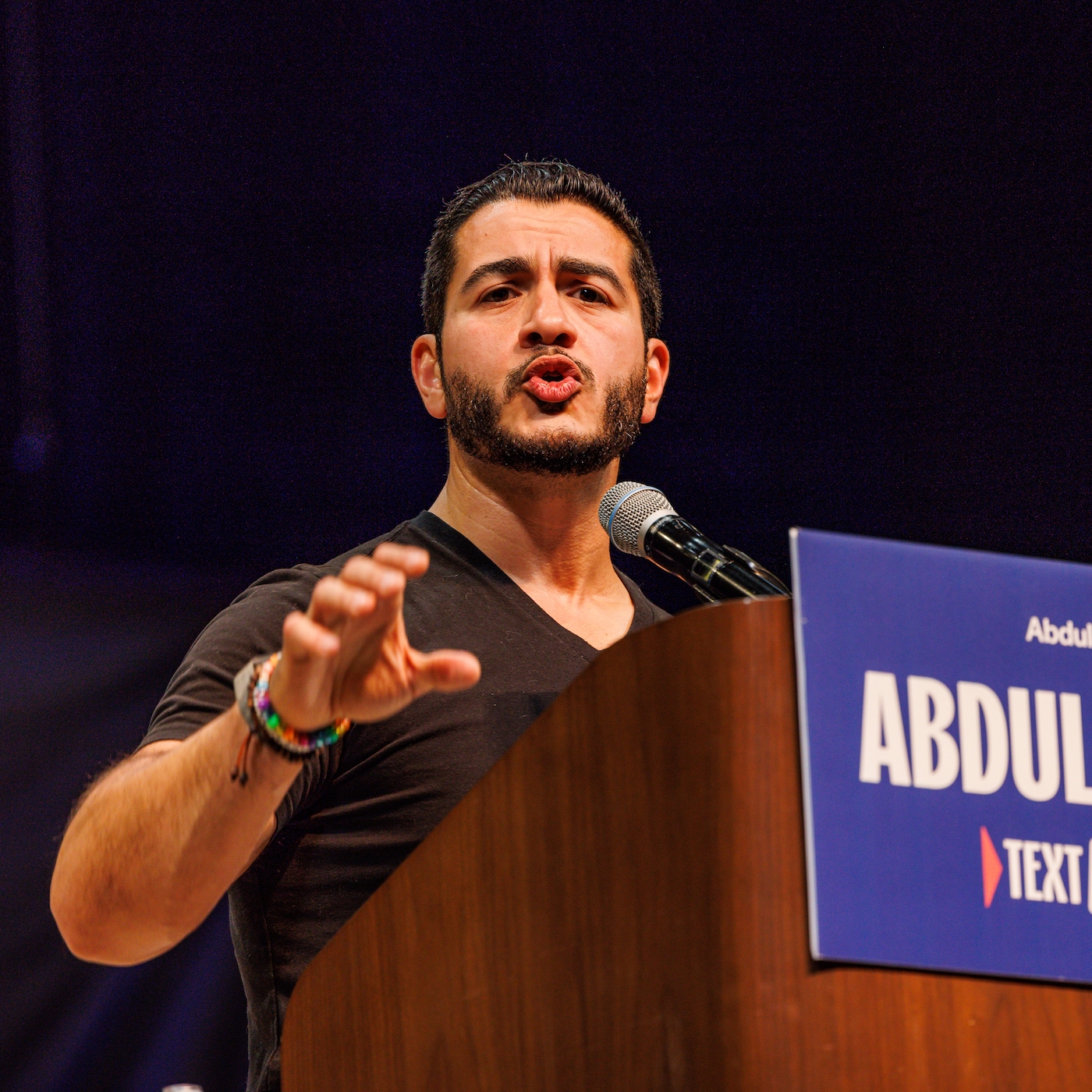
Michigan: Haley Stevens vs. Abdul El-Sayed
- Michigan is framed as a prime example of the Democratic Party’s establishment-versus-progressive divide.
- The race pits:
- Haley Stevens, backed by party leaders like Chuck Schumer and seen as the more moderate, establishment choice
- Abdul El-Sayed, a progressive outsider backed by Bernie Sanders, Elizabeth Warren, and Alexandria Ocasio-Cortez
- The panel notes conflicting polls and no clear electability consensus.
Key argument
- Stevens is presented as the stronger “traditional Democrat” with a more conventional coalition.
- El-Sayed may energize some voters who are alienated from politics, but that enthusiasm may not translate into a winning general-election coalition.
- A major theme is that primary voters often confuse ideological intensity with general-election viability.
Governor Races: Bold vs. Safe
Wisconsin: Democratic primary chaos
- Wisconsin’s governor’s race becomes a case study in Democratic intervention.
- Milwaukee County Executive David Crowley re-entered the race after initially dropping out, as the party tried to block Francesca Hong, a DSA-backed progressive, from becoming the nominee.
- Mandela Barnes is also discussed as a more credible “bold” candidate who has statewide experience.
The panel’s read
- Mo Alethi says the race is messy and risks making the Democratic establishment look heavy-handed.
- Sarah Isgur argues the party is misreading its own base by treating “safe” as more electable than “bold.”
- They agree the race reflects a broader tension:
- activists want insurgent energy
- party leaders want governability and general-election caution
Voter question: What should matter most?
- A listener from Milwaukee asks whether voters should prioritize:
- policy agreement
- governing track record
- electability
- The panel’s answer is nuanced:
- for Senate, character and coalition-building matter most
- for governor, executive competence and administrative skill matter more
- In primaries, however, voters often overvalue enthusiasm and ideological clarity.
Arizona: Election Deniers and the Republican Brand
Andy Biggs and Alexander Kolodin
- Republican Andy Biggs becomes the official challenger to Democratic Governor Katie Hobbs.
- He campaigns as a bipartisan worker, but his long record of denying Joe Biden’s 2020 victory undercuts that image.
- On the down-ballot side, Alexander Kolodin wins the Republican primary for secretary of state, also carrying election-denial baggage.
Why it matters
- The panel sees this as part of a broader GOP problem: election denial is a credential in the MAGA base but a liability in a competitive state like Arizona.
- Arizona still retains a more moderate statewide tradition rooted partly in the legacy of John McCain.
- The state’s current competitiveness comes from a mix of:
- Republican voters rejecting hardline MAGA politics
- Democrats benefiting from those splits
Election security: important, but not always decisive
- Sarah argues both parties use election-security fears to energize their most extreme voters, even when the evidence for widespread fraud or suppression is weak.
- Mo adds that for most voters, pocketbook issues like gas and grocery prices matter much more than election-security messaging.
- The big distinction:
- election integrity is a high-salience issue for the base
- but it may not be the main factor for persuadable voters
Congress and Iran: Voting for War, Then Complaining About War
House Republicans approve more military funding
- The House passes:
- the SAVE Act / election security bill
- the Farm Bill
- $73 billion in additional military spending tied to the war in Iran
- Republicans do this through reconciliation, bypassing the Senate filibuster.
The political problem
- The panel sees this as politically dangerous because Republicans are simultaneously:
- expanding war funding
- failing to address cost-of-living concerns
- Mo argues voters will see the contradiction: Congress is funding a war many oppose while doing little to lower everyday expenses.
- He also notes the awkward politics of pairing farm relief with a bill that may worsen costs for farmers.
Bigger constitutional point
- Sarah praises any moment when Congress reasserts its power over war-making, but notes the votes were inconsistent and largely partisan.
- The panel suggests Congress is beginning to “come alive,” but in a messy, contradictory way.
- The Senate is unlikely to pass the full package, so more conflict is expected in September.
Closing Notes and Rants
Mo’s rave
- A heartwarming Arkansas story: a man in a Spider-Man costume helped an elderly man in a wheelchair cross the street.
- The story is framed as a real-life reminder that heroism can come from ordinary people.
Sarah’s rant
- She pushes back on the idea of permanent daylight saving time.
- Her preference: stop switching clocks altogether, but permanent daylight saving time would be worse than permanent standard time.
Shared takeaway
- The episode repeatedly returns to one core political insight:
- energized primary voters are not the same as general-election voters
- and parties that cater too heavily to the loudest activists risk weakening themselves in November
Main Takeaways
- Democratic primaries are increasingly dominated by a fight between bold insurgents and electable pragmatists.
- In swing states, generic candidates are often the safest general-election bet.
- Election denial remains a useful tool for activating the GOP base, but it can alienate moderates and independents.
- Congress’s Iran funding vote may become a political liability if voters focus on war spending rather than domestic concerns.
- The midterms are shaping up as much about party identity and voter vibes as about policy specifics.