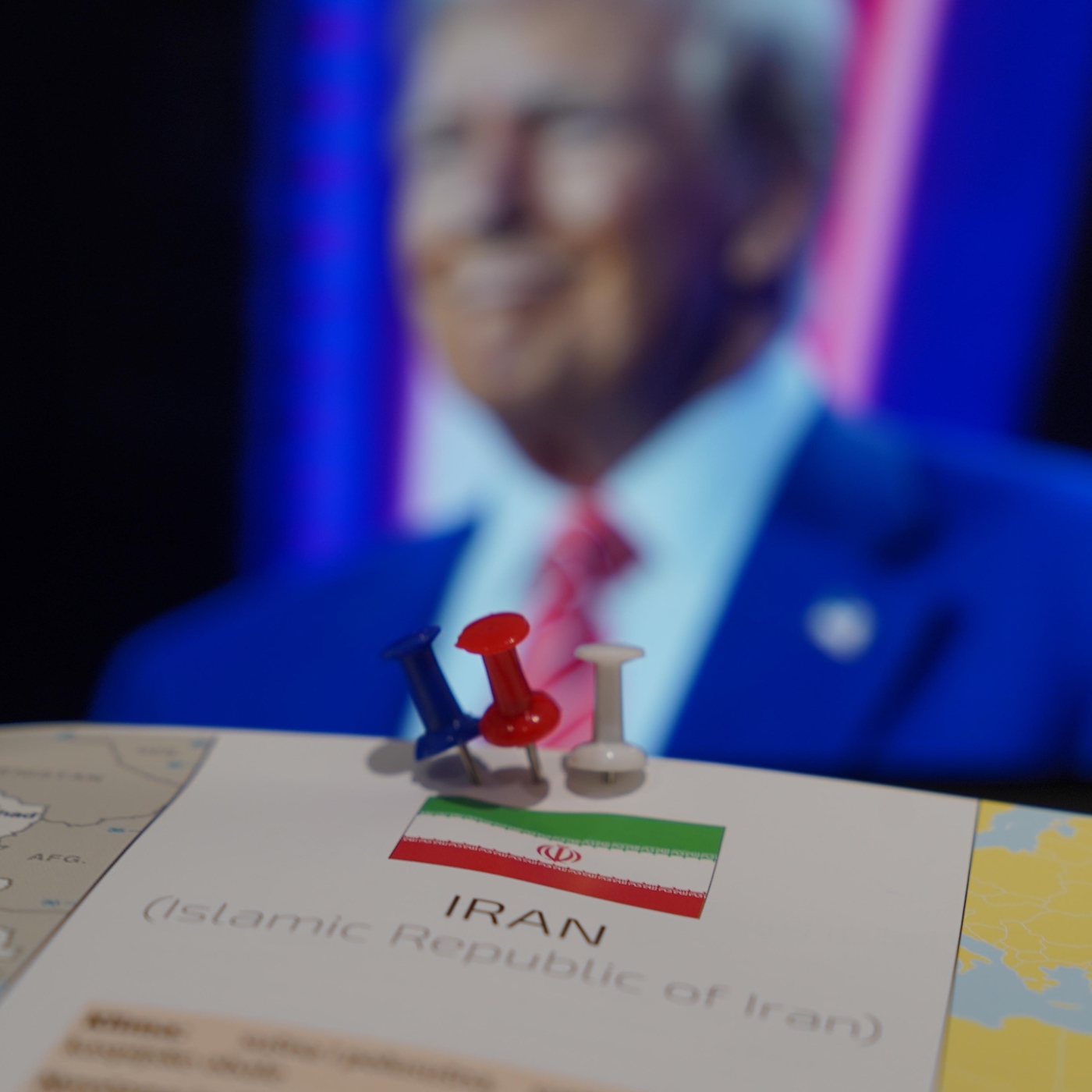
Overview of The Iran War Is Redefining America’s Place In The World
This episode of Left, Right & Center (host David Green) examines how President Trump’s recent actions toward Iran have reshaped U.S. foreign policy, geopolitics and domestic politics. Guests Liz Bruenig (The Atlantic, left) and Sarah Isgur (conservative commentator, right) debate the real-world consequences of the Iran conflict, the administration’s push to redefine birthright citizenship (and its Supreme Court challenge), the limits of governing by executive order, and an intensifying fight over media and free speech. The program balances immediate geopolitical effects with legal and political fallout at home, and closes with listener mail, “rants and raves,” and small rays of civic hope.
Key topics covered
- Trump’s speech on the Iran conflict: rhetoric (“bring them back to the Stone Ages”), blame-shifting, and threats to escalate.
- Geopolitical effects: disruption of the Strait of Hormuz, oil-price impacts, and potential strategic gains for Russia and China.
- NATO and U.S. alliances: Trump’s criticism of allies and talk of withdrawing from NATO.
- Birthright citizenship: the administration’s executive order, the Supreme Court hearing, and legal obstacles tied to the 14th Amendment.
- Executive orders vs. Congress: repeated examples of attempts to change major policy (citizenship, mail voting, tariffs) without legislation.
- Media and free-speech landscape: FCC chair’s CPAC remarks, Trump’s legal pressure on outlets, and concerns about press freedom.
- Political implications: effects on Republican unity, Democratic strategy (economic populism), and the electorate’s increasing independence.
- Grassroots civic engagement and hopeful political developments (e.g., down-ballot primary upset in Texas, bipartisan governor efforts).
Main takeaways
- Actions matter more than rhetoric: Guests stress that Trump’s deeds over the past five weeks are redefining America’s global posture and economic position more than his speeches.
- Unintended global winners: Cutting off Iranian oil and instability in the Gulf risks benefiting Russia and China (higher oil prices, new trading arrangements).
- Legal barriers to unilateral change: The birthright citizenship EO faces steep constitutional hurdles—text of the 14th Amendment, history, and statutory practice make a presidential redefinition unlikely to stand.
- Executive orders are a poor substitute for legislating: Many of the administration’s signature shifts (citizenship, voting rules) would be far more durable and defensible if pursued through Congress.
- Media pressure is escalating and partisan: Both parties have pressured platforms when in power, but current tactics (lawsuits, regulatory threats, celebrating media “wins”) heighten concerns about free press and speech.
- Political fragmentation persists: Both parties are dysfunctional; populist economic messages give Democrats some traction, while GOP leaders feel trapped by Trump’s base.
Notable quotes and moments
- Opening framing: “The whole world is watching” — used to frame global attention to U.S. actions.
- Trump (quoted in discussion): “We’re going to bring them back to the Stone Ages” — emblematic of escalatory rhetoric.
- Justice Ketanji Brown Jackson, questioning the administration at the Supreme Court: “How does this work? Are you suggesting that when a baby is born people have to have documents present… Is this happening in the delivery room?” — highlights practical and constitutional problems with the EO.
- Sarah Isgur on geopolitical effects: “If Russia put in a president of the United States, what would be different?” — used to underscore how current policy outcomes may align with Russian/Chinese interests.
- Liz Bruenig on war costs: “We have a duty to the people who are already dead to get more people killed” — a critique of escalation logic and historical parallels to Iraq.
Legal and policy specifics explained
- Birthright citizenship EO: Sought to deny automatic citizenship prospectively (children born 30+ days after the order) to those whose parents are not U.S. citizens or permanent residents (e.g., tourists, temporary visitors).
- Constitutional hurdle: The 14th Amendment grants citizenship to “all persons born… and subject to the jurisdiction thereof.” Historical practice and a 1952 statute used identical wording—making an executive change legally uphill.
- Practical problems: Determining citizenship status at birth (documentation, retroactivity), and the administrative chaos a president-only fix could create.
- Mail-in voting EO: The administration proposed using social security data to create a voter mail-ballot list and restrict USPS ballot deliveries—likely to face court challenges and is a change that would be better handled legislatively.
Geopolitical implications summarized
- Strait of Hormuz disruptions drove oil-price spikes and pushed other nations to seek alternate supply sources.
- Russia: higher oil prices and reduced sanctions impact Russia positively; China benefits by negotiating safe passage and alternate ties to Iran.
- NATO and allies: Trump’s criticism of allies over perceived lack of support could further strain alliances and undermine collective responses.
Political consequences at home
- Republican leadership trapped: GOP leaders fear losing elections but are constrained by Trump’s base, producing public silence or cautious distancing.
- Democratic strategy: A populist economic message (cost-of-living, anti-billionaire rhetoric) is seen as a promising electoral lever heading into November.
- Voter attitudes: Growth in independent identifiers; widespread disaffection with both parties’ dysfunction.
Media, free speech, and institutional risk
- FCC chair’s CPAC remarks celebrated perceived “wins” against public broadcasting and certain media personalities—raising fears about politicized regulation.
- Trump’s tactic of suing outlets, dragging them into expensive litigation (and sometimes “settling”) signals a tactic that can chill journalism and pressure outlets.
- Both parties have used power to influence platforms when in office; the program stresses the need to treat press-freedom concerns as non-partisan.
Rays of hope and civic actions suggested
- Local civic engagement: Host or join community conversations with people across the political spectrum to reduce polarization.
- Political examples to watch: James Tallarico’s Texas primary win (positive campaigning) and bipartisan efforts by governors (Spencer Cox, Wes Moore) touring to argue for duty and competence.
- Practical civic steps: Monitor Supreme Court developments, support independent journalism, encourage Congress to legislate on contentious issues instead of relying on executive orders.
Action items / recommendations for listeners
- Track the Supreme Court’s decision on birthright citizenship—this will determine whether Congress or the Court shapes the outcome.
- Contact (and pressure) your congressional representatives if you favor a durable legislative solution on citizenship, mail voting, or election rules.
- Support local, cross-partisan civic dialogues to rebuild trust and reduce polarization.
- Back independent media outlets and legal defenses of press freedom if concerned about politicized media pressure.
- Send questions or voice memos to the show (lrc@kcrw.org) if you want topics addressed on future episodes.
Where this episode adds value
- Balances left and right perspectives in real time on a fast-moving foreign policy crisis.
- Explains the constitutional and practical problems with trying to rewrite birthright citizenship by executive fiat.
- Connects geopolitical outcomes (oil, Russia/China) to domestic political consequences and media dynamics.
- Offers concrete civic responses listeners can take (engage locally, push Congress to act, monitor courts).
Credits: Host David Green; guests Liz Bruenig (The Atlantic) and Sarah Isgur; produced by KCRW’s Left, Right & Center.