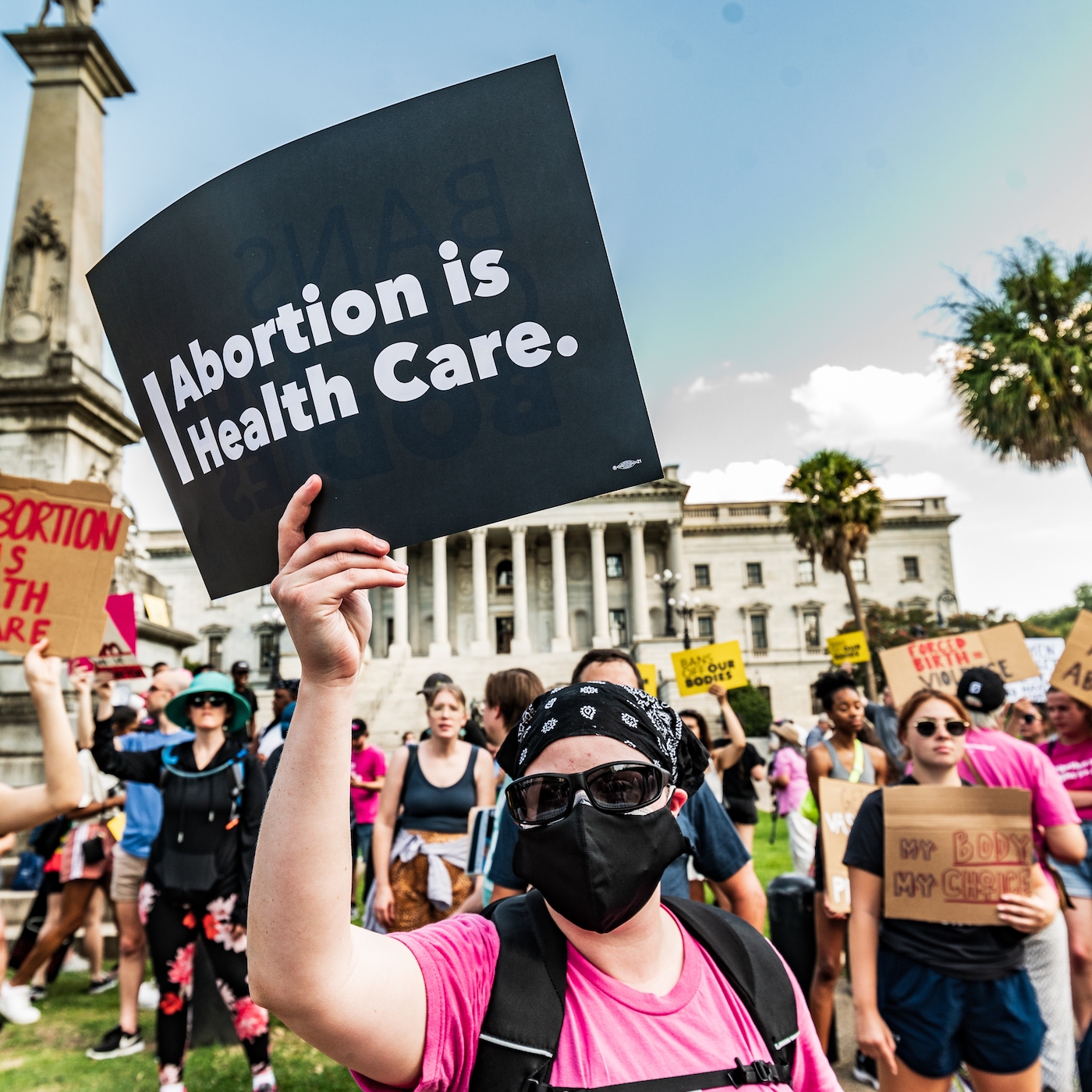
Overview of The Abortion Debate Returns With Risks For Both Parties
This Left, Right and Center episode centers on the Supreme Court fight over mifepristone and why abortion could once again become a major national political issue heading into the midterms. The panel argues that the controversy creates risks for both Democrats and Republicans: Democrats may be tempted to overuse abortion as a message, while Republicans must balance anti-abortion voters against Donald Trump’s reluctance to fully embrace restrictions. The discussion also covers Republican primary shakeups in the Midwest and the increasingly volatile California governor’s race.
Supreme Court Fight Over Mifepristone
What the Court is dealing with
- A federal appeals court blocked nationwide access to the abortion medication mifepristone, including mail delivery and telemedicine prescribing.
- The Supreme Court temporarily restored access, but only until Monday, when it may decide how to proceed.
Why this case matters
- Mifepristone accounts for more than 60% of abortions in the U.S.
- Since Dobbs, abortion opponents have increasingly focused on restricting this drug because it has become central to abortion access.
- The case could determine whether states can use procedural challenges to force broader limits on abortion medication.
The legal question
- Sarah Isgur explains that the immediate issue may be less about abortion policy itself and more about standing:
- Does Louisiana have a direct enough injury to sue the FDA?
- Louisiana argues the FDA’s rule harms its sovereignty and forces state hospitals to absorb Medicaid costs from complications.
- The panel notes the Supreme Court has become much stricter about who gets to sue the federal government.
Political Stakes: Abortion Returns to the Midterm Conversation
Why Democrats want to lean in
- Democrats see the ruling as a chance to re-mobilize pro-choice voters.
- But Mo Elleithee argues the issue should be part of a broader story about:
- Republican overreach
- Broken affordability promises
- Threats to health care access
Why Republicans are divided
- Trump is portrayed as having marginalized the pro-life movement while avoiding action that would directly restrict mifepristone.
- Pro-life activists are frustrated that the administration has not acted to undo the mail-prescription rule.
- The episode suggests Trump has an uneasy relationship with the anti-abortion base despite his role in overturning Roe.
The broader warning
- The panel agrees abortion could become a nationalized issue again, even though after Dobbs many expected it to be handled state by state.
- The political question is not just whether abortion matters, but how much each party chooses to make it central.
Midterm Primaries and Trump’s Grip on the GOP
Indiana’s warning sign for Republicans
- Indiana Republican senators who opposed a Trump-backed redistricting push lost in primaries to more MAGA-aligned challengers.
- The episode frames this as Trump using primaries as a tool of party discipline.
What it says about the Republican Party
- Trump still has a strong grip on Republican primary voters.
- He continues to push the party further in his image, even if that helps Democrats in general elections.
- Sarah argues Democrats have also meddled in GOP primaries in the past, so they should not pretend to be above the same tactics.
Senate Battlegrounds: Ohio, Texas, and Maine
Ohio
- Sherrod Brown remains one of Democrats’ best Senate hopes:
- strong name ID
- authentic economic populist message
- appeal to working-class voters
- His challenge: Ohio has trended red, and the map remains difficult.
Texas
- Texas could become a major money sink for both parties.
- If Ken Paxton wins the Republican nomination, the GOP may have to spend heavily to defend the seat.
- Mo argues Democrat James Talarico is a stronger general-election candidate than Beto O’Rourke, especially with faith-based messaging.
Maine
- The panel spends time on Graham Platner, the Democratic nominee who has faced controversy over a Nazi SS tattoo and past behavior.
- Debate centers on:
- whether voters will forgive him
- whether Democrats are giving up the moral high ground to win
- Mo says Maine voters appear to have chosen a fighter they believe can take on Trump, even if the candidate is deeply flawed.
California Governor’s Race and the Challenge of Messaging
A crowded jungle primary
- California’s top-two jungle primary creates a scenario where two Republicans could advance if Democrats split the vote.
- The panel notes that’s already a real possibility in the polls.
Main issue: affordability
- Even in California, voters’ top concern is affordability, not just Trump.
- Mo argues Democrats should connect the two:
- Trump promised lower costs
- life is more expensive under him
- The key message should be that Trump’s priorities are distracting from the pocketbook issues voters care about.
What Democrats should avoid
- The panel agrees that simply saying “Trump is bad” or “Trump is a fascist” is not enough.
- They want a more concrete argument: Trump makes life harder and more expensive.
Ranked Choice Voting and Reform
What the panel thinks
- Sarah supports ranked-choice voting but says it is not a silver bullet.
- Mo agrees it can improve elections in some ways but won’t magically solve polarization.
Bigger structural issue
- Both guests say the real problem is:
- extreme primary electorates
- partisan redistricting
- a fractured information ecosystem
- Their conclusion: electoral reform helps, but the country’s political habits matter just as much.
Rants, Raves, and Closing Notes
Raves
- Sarah raved about her two cats from Kuwait, jokingly describing them as immigrant cats with passports.
- Mo raved about Marco Rubio DJing at a family wedding, joking that he should be called “DJ Marco Mark.”
Rant
- David ranted about the celebrity-heavy atmosphere at Knicks games, saying he’d rather just watch basketball than see courtside antics.
Listener engagement
- The episode ends with an invitation for listeners to send in voice memo questions for future discussion.
Key Takeaways
- Mifepristone is back at the center of the abortion fight, and the Supreme Court’s decision could have national consequences.
- Both parties face political risk:
- Democrats must avoid making abortion their only issue.
- Republicans must manage the tension between Trump’s posture and anti-abortion activists.
- Trump still dominates Republican primaries, reshaping the party in his image.
- The 2026 midterm conversation may be defined by affordability, health care, and abortion access all at once.
- California, Ohio, Texas, and Maine all illustrate how polarized and unpredictable the current political landscape has become.