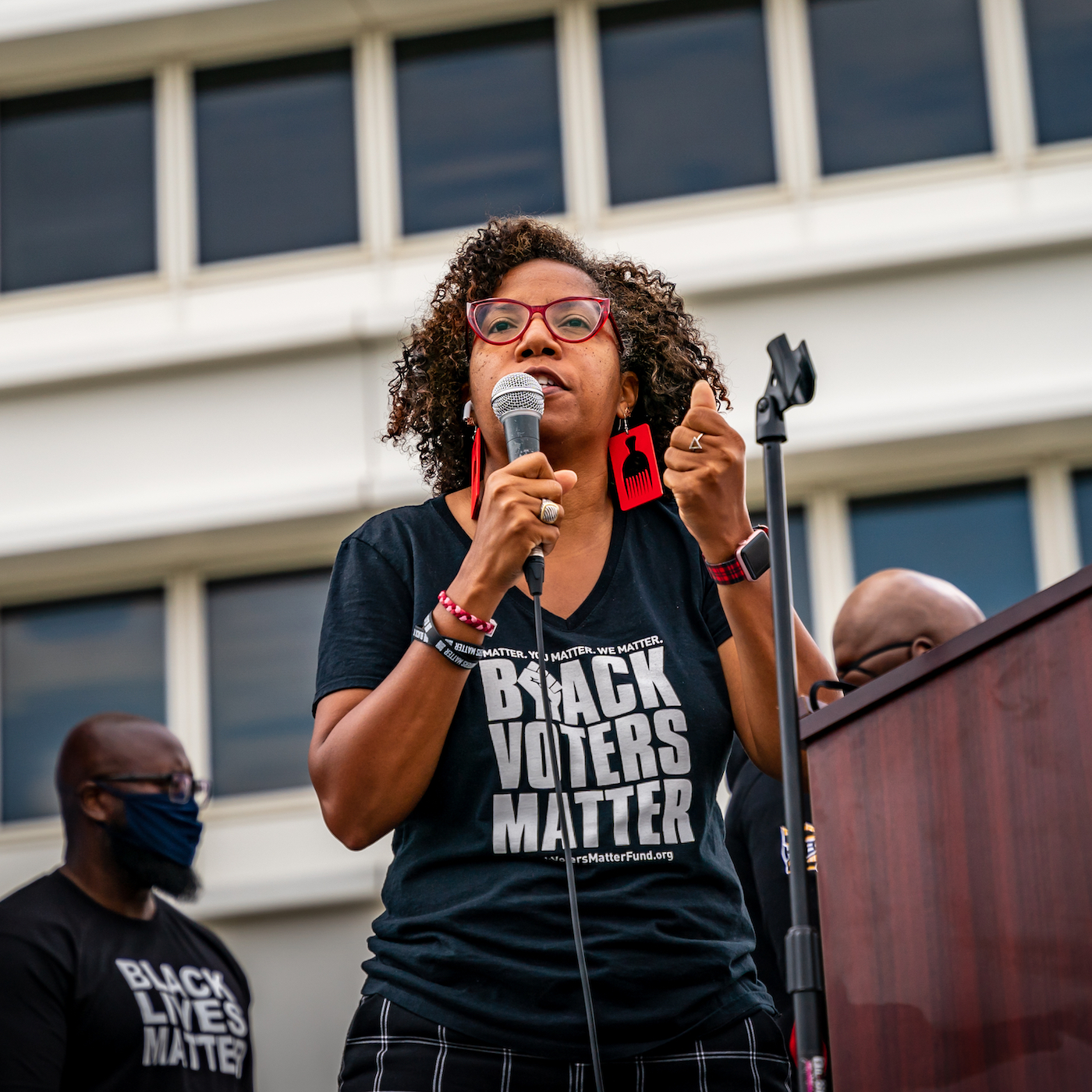
Overview of Left, Right & Center (KCRW): Supreme Court Ruling Threatens Black Representation in Congress
This episode centers on the Supreme Court’s decision to strike down Louisiana’s congressional map under the Voting Rights Act, a ruling that could reduce Black representation in Congress and intensify future redistricting battles. The panel also discusses the rapid spread of conspiracy theories after an apparent attempted attack on President Trump, and closes with a look at King Charles’ visit to Washington and what it says about strained U.S.-U.K. relations.
Supreme Court Ruling and the Future of Black Representation
The main topic is the Court’s 6–3 decision overturning Louisiana’s 2024 congressional map, which had created a second majority-Black district and elected Democrat Cleo Fields.
What the ruling changed
- The Court limited how Section 2 of the Voting Rights Act can be used in redistricting.
- Louisiana had argued the map was necessary to protect minority voting power.
- The majority said the state did not adequately justify drawing the district on racial lines to prevent intentional discrimination.
Why it matters
- The decision could weaken protections that have helped Black voters elect candidates of their choice, especially in the South.
- Hosts note that many Southern House Democrats are Black, making this ruling especially consequential for representation.
- Justice Elena Kagan’s dissent warned of “far reaching and grave consequences” for minority representation.
Practical effects
- Louisiana postponed its congressional primaries to redraw maps.
- Florida and Tennessee were cited as states quickly exploring or pursuing changes in response.
- The panel argues the ruling may accelerate partisan and racial gerrymandering fights in multiple states.
Debate: Race, Partisanship, and Gerrymandering
Mo Alethi and Sarah Isger agree that the decision changes redistricting incentives, but they emphasize different consequences.
Mo Alethi’s view
- The Voting Rights Act was designed to stop states from diluting Black political power through tactics like literacy tests, poll taxes, and district manipulation.
- He argues the ruling effectively shifts the standard from “effect” to “intent,” making it easier to dilute minority voting power without openly admitting racial motives.
- He warns that Black and Brown representation will suffer, and Congress is less likely to look like the country.
Sarah Isger’s view
- She frames the Louisiana case as an example of states getting trapped between too much and too little use of race in drawing districts.
- She argues the Court is increasingly saying race should not be used to draw district lines, and that if race and partisanship are correlated, the result may simply be a partisan gerrymander.
- She says Congress could fix this by setting national rules for redistricting or creating independent commissions, but has failed to do so.
Shared takeaway
- The panel agrees the ruling will not end redistricting conflict.
- Instead, it may make districts more partisan, more competitive in some places, and less representative overall.
- Both also note that Congress has the power to reform the process but is unlikely to give up that power.
Conspiracy Theories After the Attempted Attack on Trump
The second major segment examines how conspiracy theories spread almost instantly after an apparent attempted attack on President Trump.
Key observations
- Even with video, eyewitnesses, and extensive press coverage, false theories spread immediately online.
- The panel says this reflects a deeply fractured information ecosystem and the rise of “vibes-based politics.”
- Social media algorithms and distrust of legacy media make people more vulnerable to misinformation.
Political responsibility
- Mo Alethi stresses that Trump does not get a pass, given his own history of amplifying conspiracies.
- He criticizes elected officials on the left for echoing “false flag” style claims.
- Sarah Isger argues both sides have become susceptible to conspiratorial thinking, though Trump has been especially effective at weaponizing it politically.
Broader concern
- The panel connects conspiracy culture to political violence and public distrust.
- They argue that fact-based reporting alone may not be enough to combat the speed and reach of misinformation, but better media strategies are still necessary.
King Charles’ Visit and U.S.-U.K. Relations
The episode also touches on King Charles’ state visit to Washington as a diplomatic attempt to stabilize the U.S.-U.K. relationship.
Main points
- Charles used his address to Congress to praise NATO, highlight the U.S.-U.K. alliance, and make subtle appeals about Ukraine and climate change.
- The panel notes Trump is personally charmed by monarchy and British pageantry, which may make the king more effective than the prime minister in this kind of diplomacy.
- Still, both guests agree the visit probably won’t change Trump’s broader posture toward Europe or NATO.
Bigger picture
- The discussion suggests Trump’s second term is further straining alliances.
- Mo Alethi warns that alienating allies weakens the U.S. as China and Russia gain room to expand influence.
- Sarah Isger notes that foreign allies increasingly view the U.S. as less reliable under Trump.
Closing Notes
The episode ends with the show’s “rants and raves” segment, offering a lighter, personal close:
- Mo praises Sarah Isger’s book, which his 13-year-old son enjoyed enough to start quoting Supreme Court anecdotes.
- Sarah raves about trees and the joy of planting a pawpaw tree.
- Susan Davis rants about a likely bad mosquito season in Washington, D.C., after mistakenly assuming winter weather would reduce mosquitoes.
Main Takeaways
- The Louisiana redistricting ruling could significantly weaken Black representation in Congress.
- The decision may intensify partisan redistricting and push more states to redraw maps aggressively.
- Conspiracy theories spread faster than facts in today’s fragmented media ecosystem.
- Trump’s relationship with allies remains unstable despite diplomatic efforts like King Charles’ visit.
- Congress has tools to reform redistricting, but political incentives make real change unlikely.