Overview of Left, Right & Center (KCRW)
This episode, hosted by Susan Davis with panelists Sarah Isgur and Mo Alethi, centers on the growing political backlash to AI data centers and what it reveals about public anxiety over technology, jobs, utility costs, and local control. The conversation broadens into immigration enforcement, where the panel contrasts Trump-era rhetoric with current ICE operations and public opinion, and ends with a listener-driven debate about how to address the $40 trillion U.S. debt. Across all topics, the episode emphasizes a common theme: politicians are struggling to keep up with fast-moving public anger and shifting voter priorities.
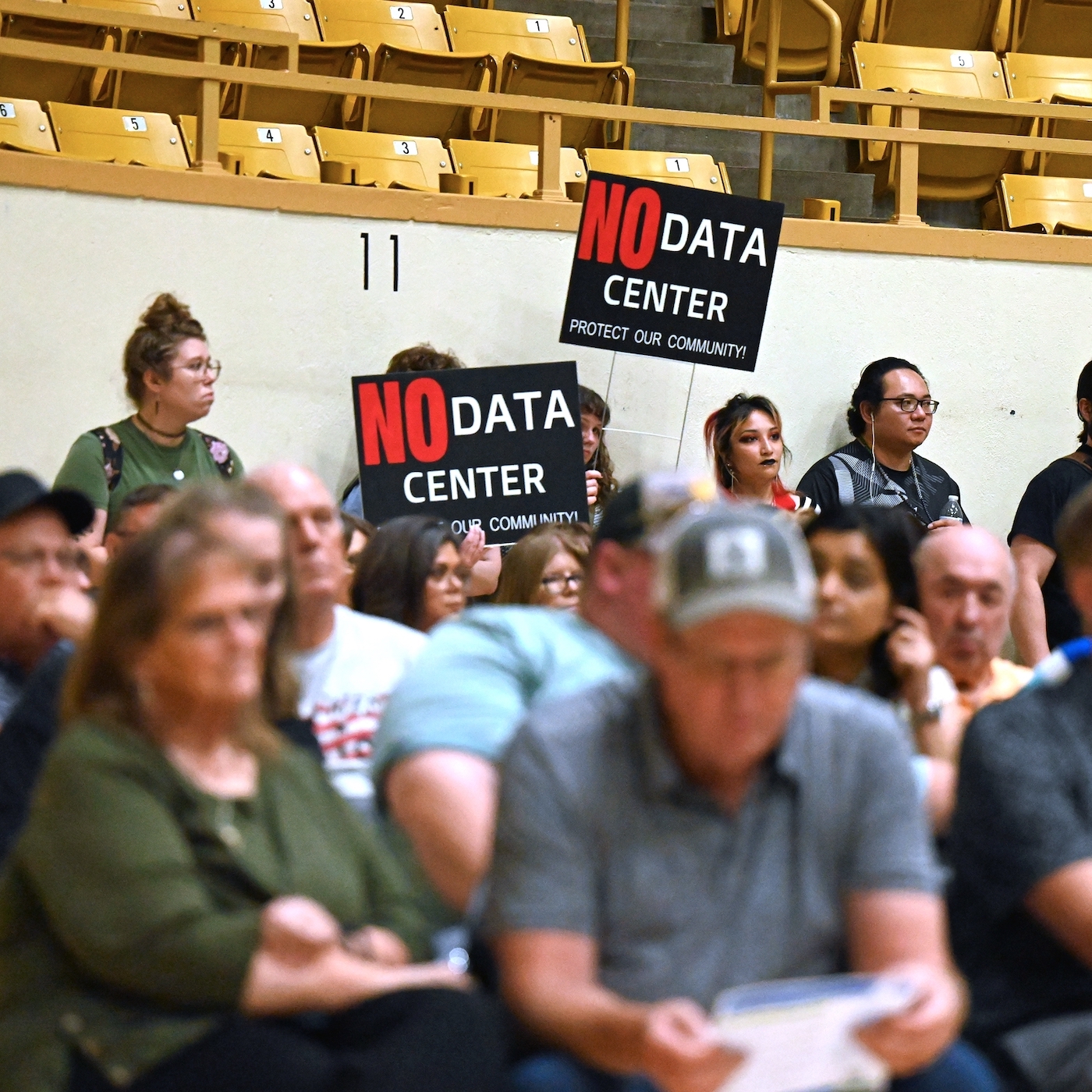
AI Data Centers: The New Political Flashpoint
The main segment explores how AI data centers have become a highly visible target for public frustration.
Why communities are pushing back
- Residents are protesting proposed data centers because they fear:
- higher electricity bills
- environmental damage
- neighborhood blight
- lack of local input
- Town halls and council meetings are increasingly heated, with residents framing the issue as a threat to their communities and home values.
Trump’s message
- President Trump is defending data center construction as essential to America’s future.
- He argues that rejecting them will leave communities “backwards and poor” and warns that China would benefit if the U.S. slows down.
- Sarah Isgur describes this as a tension between:
- Trump’s usual “luxury populism” approach, where people get the benefits without sacrifice
- and a more traditional “sacrifice for national gain” argument, which asks people to accept tradeoffs for economic and strategic reasons
What Mo Alethi says the backlash is really about
- Mo argues that data centers have become a symbol for broader fears about AI:
- job displacement
- unelected tech elites
- loss of community control
- rapid change that policymakers cannot keep up with
- He cites polling showing Americans are increasingly more worried than excited about AI.
- Young adults in particular are concerned that AI will reduce job opportunities.
Key takeaway
- The panel agrees that the issue is not just about ugly buildings or local zoning.
- It is becoming a broader people vs. machines / people vs. tech elites culture-war issue.
- Both panelists say the country needs a more honest conversation about tradeoffs, especially because AI is advancing faster than policy can adapt.
Immigration Enforcement: Quiet but Still Politically Potent
The discussion then shifts to immigration, especially the Trump administration’s ongoing deportation efforts.
What’s happening now
- ICE arrests have reached historically high levels over the summer.
- Enforcement has become more quiet and targeted, with actions at places like:
- airports
- churches
- immigration courts
What the panel thinks
- Sarah argues both parties have struggled to offer a politically viable and competent immigration message.
- She says voters often want:
- strict enforcement
- but also competence and order
- Mo pushes back on the idea that Democrats are losing because they’re too compassionate, saying people are reacting to what a lack of compassion looks like in practice.
Political impact
- Mo says Democrats now hold an edge on immigration in polling, but the issue is losing salience because:
- it is no longer dominating headlines
- voters are more focused on affordability and the economy
- Sarah argues that if immigration is not front-and-center in the news, it is less likely to swing votes strongly, especially when the economy is the dominant concern.
Notable examples discussed
- Milo Yiannopoulos’ deportation: the panel sees it as a case of the government making an example out of a provocative Trump critic.
- A Haitian college student in Ohio: Mo highlights this as a more tragic example of the system’s cruelty and overreach, especially for someone who was trying to follow the rules.
The $40 Trillion Debt: No Easy Fix
In response to listener questions, the panel turns to the national debt and how to honestly talk about taxes and spending.
Sarah’s view
- She says the debt problem is fundamentally tied to entitlements, especially:
- Social Security
- Medicare
- She argues that neither party is willing to make the necessary tradeoffs:
- Democrats resist saying taxes must go up
- Republicans resist saying benefits must be cut
Mo’s view
- Mo agrees that no serious solution exists without people paying more taxes and/or accepting major spending changes.
- He rejects the idea that taxes are simply punishment.
- He argues that people are frustrated because they do not see a clear return on investment from the taxes they pay.
Shared concern
- Both panelists say political rhetoric obscures the real math:
- small cuts to foreign aid or other minor programs will not fix the deficit
- meaningful reform would require honest discussion of taxes, entitlements, and the true size of government
Key takeaway
- The debt conversation keeps getting framed as a partisan blame game, but the panel says the U.S. is already in a fiscal crisis that will only worsen if leaders keep avoiding the issue.
Rants and Raves
Mo’s rave: Bigfoot in Maine
- Mo celebrates a local Bigfoot calling contest in Maine.
- He enjoys the idea of a community event that is playful, weird, and inclusive.
- His point: local culture can bring people together in unexpected ways.
Sarah’s rant: moving is terrible
- Sarah, fresh off a family move to Houston, says moving is miserable:
- small children
- loud cats
- missing household items
- no window treatments
- moving right before school starts
- Her conclusion: don’t move if you can avoid it.
Susan’s rant/rave: George Santos
- Susan jokes about George Santos being banned from the prediction market Kalshi after betting on whether he would attend the State of the Union.
- He apparently profited anyway, making the story both absurd and very on-brand for Santos.
Bottom Line
This episode argues that American politics is being pulled in multiple directions at once:
- AI backlash is becoming a major public-policy and culture-war issue.
- Immigration remains politically potent even when it is less visible in the news.
- The national debt is too large to solve with slogans, but leaders keep avoiding the hard choices.
The recurring theme is that voters are increasingly driven by practical anxieties — affordability, control, fairness, and security — while politicians and institutions are struggling to respond quickly enough.