Overview of Left, Right & Center
This episode of Left, Right & Center examines a set of seemingly contradictory Democratic primary results, the worsening U.S.-Iran war and Congress’s role in limiting it, and the growing culture-war attention around the WNBA. The hosts argue that the primaries are less a simple progressive-vs-moderate showdown than a broader voter search for change, competency, and electability—while foreign policy and sports both show how politics keeps spilling into every corner of American life.
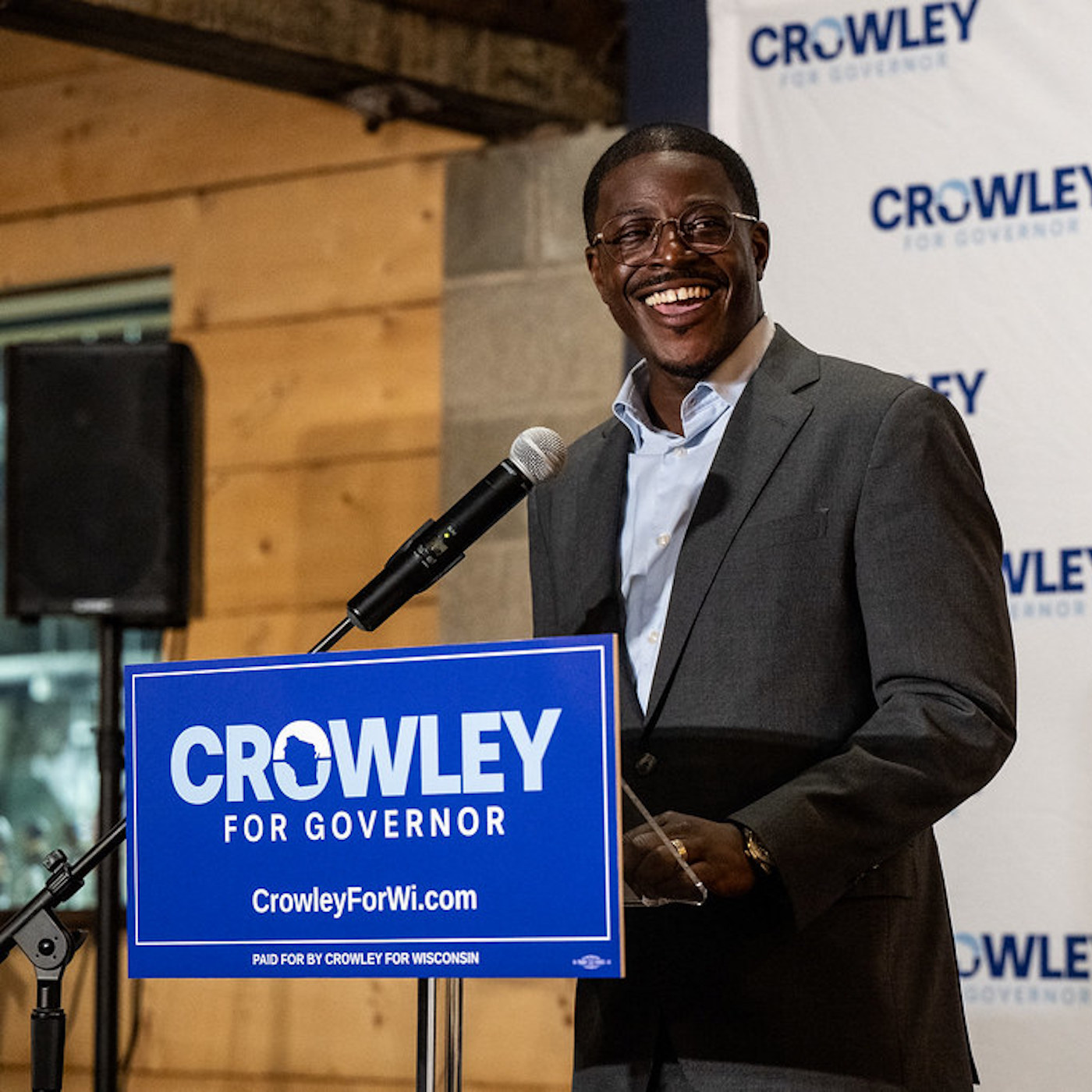
Democratic Primary Results: Not Just “Progressive vs. Moderate”
The main takeaway
- The hosts reject the idea that the primaries can be reduced to a clean ideological battle between moderates and progressives.
- Instead, they frame the contests as “change elections” where voters are asking:
- Who best represents change?
- Who seems competent and sane?
- Who is most electable in November?
What the primaries seemed to show
- In Michigan and Wisconsin, voters were drawn to different versions of change:
- some preferred fresher, bolder candidates;
- others preferred the more pragmatic, established option.
- In Connecticut, Mo highlights the defeat of longtime incumbent John Larson by younger, more centrist Luke Bronin as another sign that generational change is a real force.
- The hosts also note that early voting and high-information electorate dynamics can make outcomes look more puzzling than they are.
“Don’t be weird”
- A major recurring theme is that candidates can lose when they seem too extreme, unserious, or politically odd.
- Jonah Goldberg argues that many voters are simply rejecting kooky or unstable-seeming candidates, not necessarily their policy agenda.
- He and Mo both agree that candidate quality matters a lot.
Broader party tension
- Mo says Democratic voters are split between:
- insurgent candidates who promise real change, and
- establishment candidates who argue they have the track record to deliver.
- Jonah adds that both parties are distorted by primaries that reward base voters rather than the median voter, which can push each party toward caricature.
Foreign Policy: The Iran War and Congress’s Pushback
Trump’s war strategy looks increasingly shaky
- The discussion turns to the U.S. war with Iran, now several months in.
- Jonah argues bluntly that Trump made a mistake entering the war and now has very few good options.
- He says a blockade or escalation would raise the economic pain for Americans, especially through gas prices and shipping disruption in the Strait of Hormuz.
Congress finally applies pressure
- Mo says Congress is doing one of the few things it can actually do: refuse to fund a blank check.
- He frames this as Congress acting more like a constitutional check on the executive than it has in some recent wars.
- The timing may be political, but the message is still clear: lawmakers do not trust the White House’s strategy.
Why the war is hard to end
- Jonah notes that Iran and the U.S. have very different “pain points”:
- Americans react quickly to rising gas prices;
- Iran’s regime can absorb pain for much longer.
- Mo adds that Iran thinks in years and decades, not election cycles, which gives it endurance in a prolonged conflict.
Republican divisions
- The war also exposes fractures inside the post-Trump GOP:
- hawks vs. non-interventionists,
- Trump loyalists vs. future-party-builders,
- elected Republicans worried about being seen as undermining a wartime president.
- Jonah says many Republicans are quietly uncomfortable with the war, but are hesitant to challenge a sitting president in conflict.
Secret Service controversy
- The hosts also discuss the report that Trump was moved secretly into a catering container during a security threat.
- Both say the Secret Service’s need to protect the president is understandable.
- But they criticize the decision to hide the facts afterward, especially from reporters and staff.
The WNBA, Caitlin Clark, and the Culture War
Why the WNBA is in the spotlight
- The WNBA’s rise in popularity has brought more attention, more scrutiny, and more political baggage.
- The conversation centers on:
- Caitlin Clark and on-court physicality,
- Sophie Cunningham’s comments about trans athletes,
- and the way right-wing commentators have amplified the controversy.
Different views on sports and politics
- Mo’s view:
- Sports and politics have always been intertwined.
- Players should be free to speak.
- Fans decide whether to care, and sometimes these debates are part of the cost of a bigger platform.
- Jonah’s view:
- Leagues should try to keep politics out as much as possible.
- He thinks the WNBA has been poorly led in handling the issue.
- He sees the controversy as one that became bigger because the league’s popularity made it a target.
Shared frustration
- Both agree that a lot of the online outrage is silly.
- They also agree that once a sports league becomes culturally important, it becomes impossible to stop political arguments from attaching themselves to it.
Rants and Raves
Jonah’s rant: capitalism is being misunderstood
- Jonah argues that many young people who say they dislike “capitalism” actually mean they dislike:
- the current economic status quo,
- cronyism,
- corruption,
- or state-backed favoritism.
- He says that when pollsters ask about a free market economy, opinions improve dramatically.
- His point: “capitalism” and “free market economy” are not the same thing as the way people use them in politics.
Mo’s rant: naked dining is a terrible idea
- Mo rails against a Florida restaurant offering a recurring naked dining experience.
- His objections:
- unhygienic,
- unsafe,
- uncomfortable,
- and likely unnecessary.
- He jokes that the restaurant should serve scalding soup if it wants to test the concept.
David’s rant: alpha-gal
- David ends with a warning about alpha-gal syndrome, a tick-borne meat allergy spread by Lone Star ticks.
- His message is practical: if you’re in an area where these ticks are common, do tick checks.
Bottom Line
- The Democratic primaries are not giving one simple ideological message; they’re reflecting a mix of change-seeking, generational turnover, electability concerns, and candidate quality.
- The Iran war is becoming a test of whether Congress can restrain a president who lacks a clear exit strategy.
- The WNBA’s cultural rise has made it both more powerful and more vulnerable to political exploitation.
- Across all topics, the episode’s core theme is the same: American politics is increasingly about narrative, identity, and perception—not just policy.