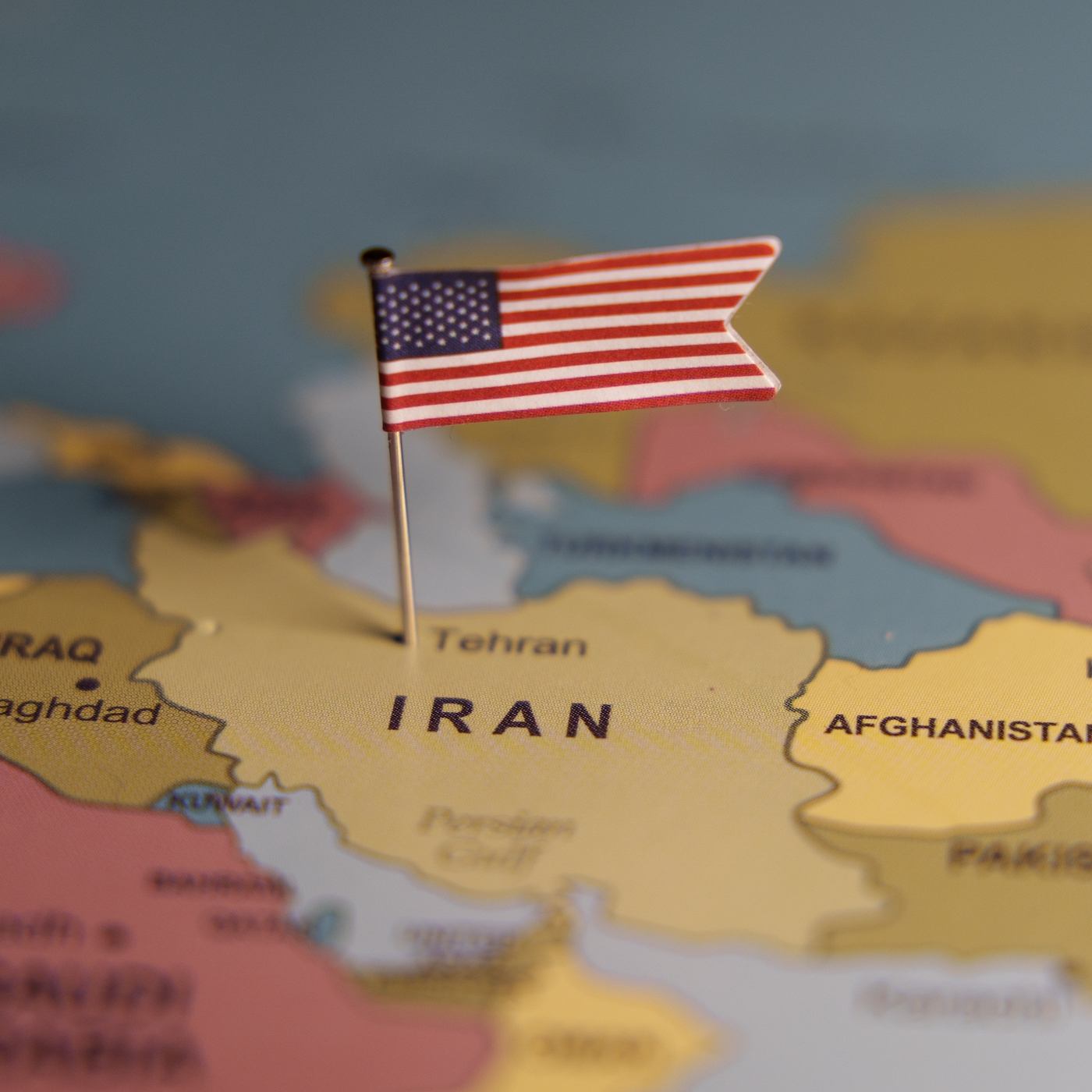
Overview of Left, Right & Center — "Trump Goes to War While Congress Sits Back"
This episode (KCRW) — hosted by David Green with Mo Alethi (left) and Sarah Isger (right) — examines the Trump administration’s recent military action against Iran (dubbed "Operation Epic Fury" in the episode), the evolving public and congressional response, and the political fallout leading into midterm primaries (notably in Texas). The conversation centers on executive war powers, the absence of a clear U.S. public rationale, Congress’s limited pushback, and the domestic political consequences for both parties.
Key takeaways
- Hosts expressed alarm at broad military action taken without sustained, coherent public justification from the White House, and at Congress’s limited use of constitutional levers to check the president.
- Legal enforcement is unlikely: disputes over declaring war are “political questions” that won’t be resolved in court; accountability depends on Congress and voters.
- The administration’s rationale has shifted publicly (regime change, preventing nuclear capability, preemption of Israeli strikes), undermining public support and clarity of mission.
- Congressional inaction (and a vote not to invoke the War Powers Resolution) continues a long trend of deference that has effectively expanded executive foreign-policy freedom.
- Political calculations matter: Republicans in Congress have been cautious about fully embracing the White House action because of polling, costs (e.g., higher gas prices), and midterm electoral risks.
- In Texas primaries, Democrat James Tallarico beat Jasmine Crockett; on the GOP side, John Cornyn and Ken Paxton go to a runoff — results with major implications for Senate control, campaign funding allocation, and Latino turnout dynamics.
Discussion highlights
What happened and why it matters
- The episode reports coordinated U.S. and Israeli strikes against Iran, claims high casualties (citing Iranian state media), and notes U.S. service-member deaths and evacuations of U.S. citizens from the region.
- Hosts questioned the administration’s shifting explanations and asked what the achievable endgame is (limited decapitation of nuclear capability vs. regime change vs. longer-term occupation/occupation-like outcomes).
Executive power vs. Congressional authority
- Constitutional framing: Congress holds the power to declare war; the president is commander-in-chief. In practice, standing military funding and precedent have enabled presidents to pursue major military actions without formal war declarations.
- Remedies exist (appropriations, War Powers Resolution, investigatory powers), but Congress has repeatedly failed to use them meaningfully. That failure makes the issue primarily political rather than legal.
Politics, public opinion, and presidential legacy
- Unlike past conflicts that initially rallied public support, polling showed a majority of Americans disapproved of this action at the time of the recording.
- The hosts debate whether a successful outcome could retroactively validate the action (historical examples noted), but emphasize the high risk of long-term instability if there’s no clear post-strike plan (citing Iraq, Libya, Afghanistan).
- Trump’s second-term motivations were framed as legacy- and strength-driven — willing to preempt Congress and expand executive authority.
Congress and midterms — Texas as a bellwether
- Democratic primary: James Tallarico defeated Jasmine Crockett — notable for strong Latino turnout and Tallarico’s statewide ground operation.
- Republican side: Cornyn vs. Paxton runoff — outcome will determine how much GOP money and attention goes to Texas versus other Senate battlegrounds.
- Strategic implication: If Republicans must spend heavily in Texas, that reallocates resources away from other competitive states (e.g., North Carolina, Maine), improving Democrats’ Senate chances.
- Broader trends: ground organization (Beto’s 2018 infrastructure) still matters; turnout patterns, Latino voting, and redistricting will shape fall outcomes.
Notable quotes and moments
- Hosts play President Trump’s message: “When we are finished, take over your government. It will be yours to take…” — used to illustrate the administration’s public framing.
- Senator Tim Kaine (clip) argued: “All of the excuses … evaporate because this is a war,” underscoring the need for congressional debate to inform citizens about risks and objectives.
- Repeated theme from panelists: “This is a political question” — courts won’t resolve the declare-war dispute; voters and Congress will.
Caveat about factual claims
- The episode relays on-air claims (e.g., the elimination of Iran’s Supreme Leader and casualty counts) that were presented as news in the program. Listeners should treat casualty and leadership-impact claims as reported by the show at that time and consult multiple, up-to-date sources for confirmation, since reporting on active conflicts can change rapidly.
Action items / what listeners can do
- Demand clarity: ask local representatives for the administration’s stated objectives, intelligence basis, and post-strike strategy. Push Congress to use its powers of oversight and appropriations if concerned.
- Follow the midterm developments: watch the Texas runoff and other early contests — outcomes will shape national resource allocation and Senate control.
- Engage civically: sign up for updates (the hosts mentioned kcrwlrc.substack.com), send short voice memos to lrc@kcrw.org, and participate in local political organizing and voter outreach, especially in swing districts.
- Verify breaking claims through multiple credible news sources before accepting operational/causal assertions about the conflict.
Rants & raves (lighter segment)
- Rave: United Airlines policy change — potential ban for refusal to wear headphones on flights applauded by one panelist.
- Rant: Pew Research finding (cited by a panelist) that a majority of Americans view fellow citizens negatively; hosts urged more assumption-of-good-faith social norms and civic repair.
Bottom line
The episode frames a tense moment in U.S. foreign policy: a major military escalation undertaken amid shifting public explanations and muted congressional pushback. The discussion highlights constitutional limits, political incentives, and historical lessons—while underscoring that outcomes, not intentions, will ultimately determine whether the action is judged successful. The developing midterm landscape (Texas primaries and runoffs) will interact with the conflict’s political fallout and may reshape campaign resource priorities in the months ahead.