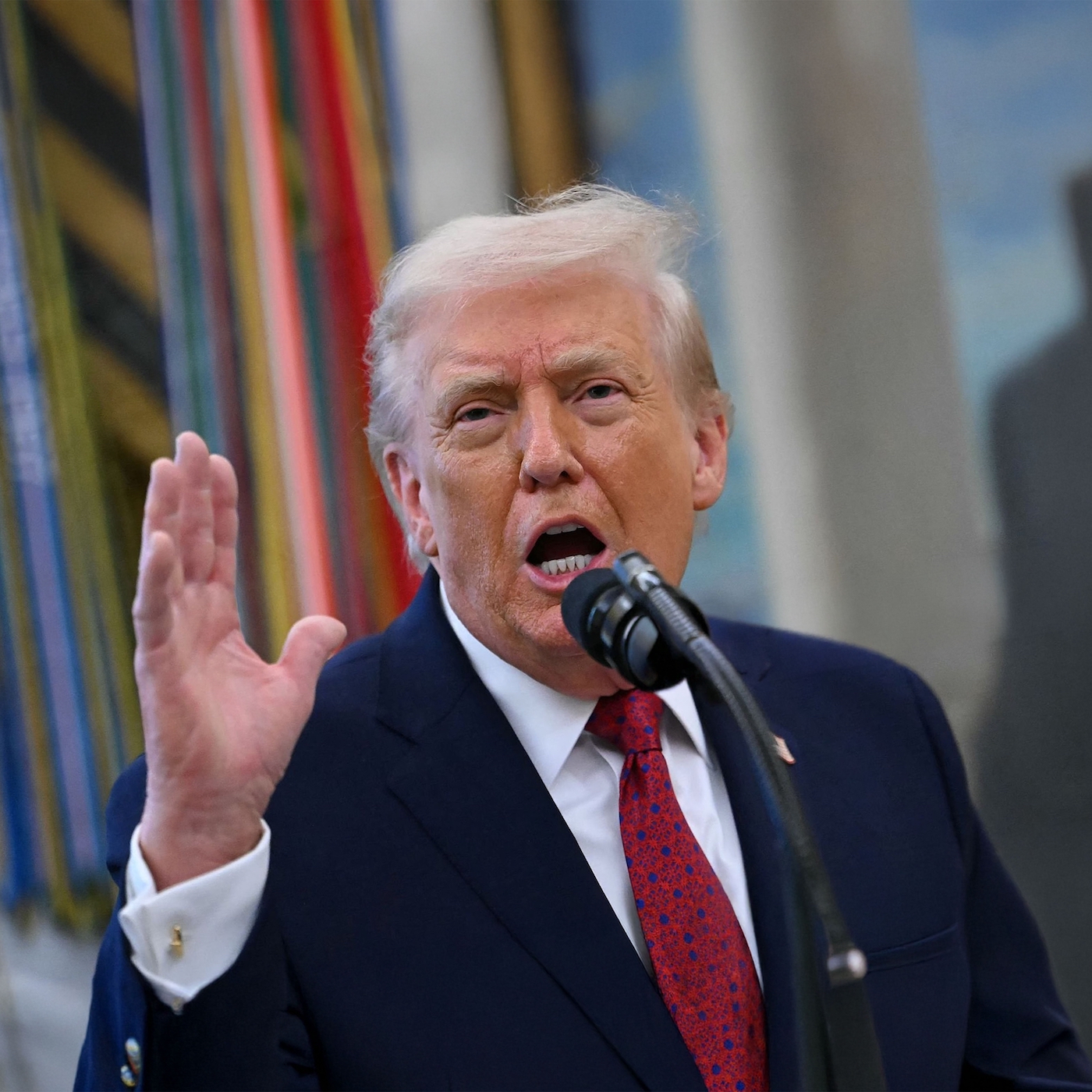
Overview of Left, Right and Center — "Does Trump’s Economic Vision Match What Americans See?"
This episode of KCRW’s Left, Right and Center uses President Trump’s recent State of the Union and surrounding events as a springboard to examine whether the administration’s economic messaging aligns with day‑to‑day American experience. Hosts David Greene, Sarah Isser, and Mo Elleithee parse the speech’s “victory lap” on the economy, Democratic response and midterm implications, a Supreme Court decision rebuking the administration’s tariff authority, and the broader political culture of outrage (including reactions to Gavin Newsom’s remarks and the U.S. men’s hockey team’s response to a presidential joke).
Key takeaways
- The panel agrees Trump’s State of the Union leaned heavily into a macroeconomic victory narrative (lower prices, stronger economy) that many Americans say they do not feel. Messaging that asks voters to “be patient” risks political backlash when lived experience differs from national statistics.
- Both parties struggle to present sharp, distinct economic policies. Panelists urge more concrete, consumer‑focused proposals (specific, time‑bound policy promises) rather than broad upbeat claims.
- The Supreme Court’s ruling limiting the administration’s tariff authority under the International Emergency Economic Powers Act (IEEPA) is a significant check on executive power; the court demanded clearer congressional authorization for such major economic actions.
- Outrage has become political currency. Incidents—from Gavin Newsom’s joke to the hockey team’s laughter at the president’s telefonic joke—illustrate how outrage, authenticity, and media amplification shape political narratives and candidate viability.
- The Supreme Court remains institutionally independent and unpredictable; ideological labels don’t always predict outcomes (e.g., Justice Gorsuch’s strong concurrence criticizing expansive executive authority).
Topics discussed
1) State of the Union and economic messaging
- Panel summary: Trump emphasized inflation declines and falling prices for many items (quote cited: “The price of eggs is down 60 percent…rent is lower today than when I took office by a lot”), urging patience as more gains materialize.
- Panel critique: Those statements clash with polls showing many Americans believe the economy is worse. The hosts argue Trump missed an opportunity to present a focused set of tangible policies and timelines to make economic gains feel real to households.
- Suggested better approach (panel view): A courtroom‑style pitch—“here’s our plan, here’s how it will work, here’s when you’ll feel it,” plus concrete legislative asks—would be more persuasive than general victory laps or asking for patience.
2) Democratic strategy for midterms
- Problem: Democrats are positioned well politically in some polls but lack crisp, contrasting messaging; both parties often repurpose similar policy ideas.
- Panel recommendation: Democrats should articulate a short list (e.g., “five things”) —a modern “contract with America”—that shows clear, tangible commitments to affordability and daily life improvements if granted congressional control.
3) Tariffs and the Supreme Court ruling
- Court ruling: The Supreme Court rejected the administration’s use of IEEPA to impose tariffs, saying Congress did not clearly delegate that major economic authority in the statute.
- Legal primer from the show:
- IEEPA (emergency powers act): Court said it doesn’t clearly authorize tariffs—major economic measures require explicit congressional authorization.
- Other tariff authorities exist: (a) time‑limited tariff power (about 150 days, then Congress must ratify) and (b) targeted tariff statutes (e.g., on steel)—but both are limited in scope or may not be legally available now.
- The administration had previously argued some statutory triggers (e.g., balance of payments) weren’t met—complicating fallback options.
- Political/legal fallout: Expect litigation if the administration pursues alternate routes; Congress may be forced into politically fraught midterm votes if tariffs are reintroduced.
- Notable judicial moment: Justice Neil Gorsuch’s concurrence (described on the show as a “festivus” critique) emphasized protecting the legislative process and limited executive power, even chastising some colleagues for reasoning.
4) Outrage culture: Newsom, hockey team, and broader effects
- Gavin Newsom controversy: His “I’m like you…a 960 SAT guy” joke in Atlanta provoked criticism and debate about authenticity, code‑switching, and candidate readiness for national stage. Panelists note context matters (mixed‑race audience, Atlanta setting) and that political candidates now must manage outrage carefully.
- U.S. men’s hockey team incident: The team laughed at a president’s tasteless joke about also inviting the women’s team; panelists defended the athletes—tired, celebrating, on speakerphone—and urged outrage to be targeted at adults and institutions (e.g., the president) rather than firing at non‑public figures.
- Broader point: Outrage drives attention and can be weaponized; it often functions as political currency in primaries and media cycles. Media and social platforms amplify minor incidents into national stories.
Notable quotes and soundbites
- President Trump (as quoted in the show): “The price of eggs is down 60 percent…rent is lower today than when I took office by a lot…Just hold on a little while.”
- Abigail Spanberger (Democratic response excerpt): “Americans deserve to know that their leaders are focused on addressing the problems that keep them up at night…Is the president working to make life more affordable for you and your family? We all know the answer is no.”
- Panel description of Justice Gorsuch’s concurrence: a pointed “festivus” critique calling for stronger defense of legislative authority and liberty.
Recommendations and action items (from hosts’ perspective)
- For the administration: Move beyond macro bragging—present a short, specific set of policy steps (with timelines and measurable impacts) that directly address household costs.
- For Democrats: Create a clear, concise list of tangible commitments voters can compare to Republican proposals—avoid abstract claims and prioritize voter pain points (housing, groceries, healthcare).
- For legal observers: Expect continued litigation and narrow statutory interpretation from the Court on major executive economic actions—Congress must be explicit if it wants to delegate major authority.
- For voters: Look for concreteness and authenticity in campaigns—policy specifics and demonstrated understanding of everyday struggles matter more than rhetorical victory laps.
- For media consumers: Be aware of outrage dynamics—distinguish between worthy institutional accountability and reactive pile‑ons that target non‑public individuals.
Quick episode summary (closing)
- Episode focus: Reality‑check of Trump’s economic portrayal versus public perception; legal limits on unilateral tariff power affirmed by the Supreme Court; how outrage functions in modern politics (Newsom, athletes); and the need for clearer, tangible policy messaging from both parties ahead of the midterms.
- Tone: Critical of mismatches between rhetoric and lived experience; legally explanatory on tariff limits; reflective and somewhat skeptical about outrage culture.
If you want a shorter bullet summary of the episode’s main conclusions, I can provide one.