Summary — "Ceasefire deal emerges, but peace may be far off" (KCRW — Left, Right & Center)
Overview
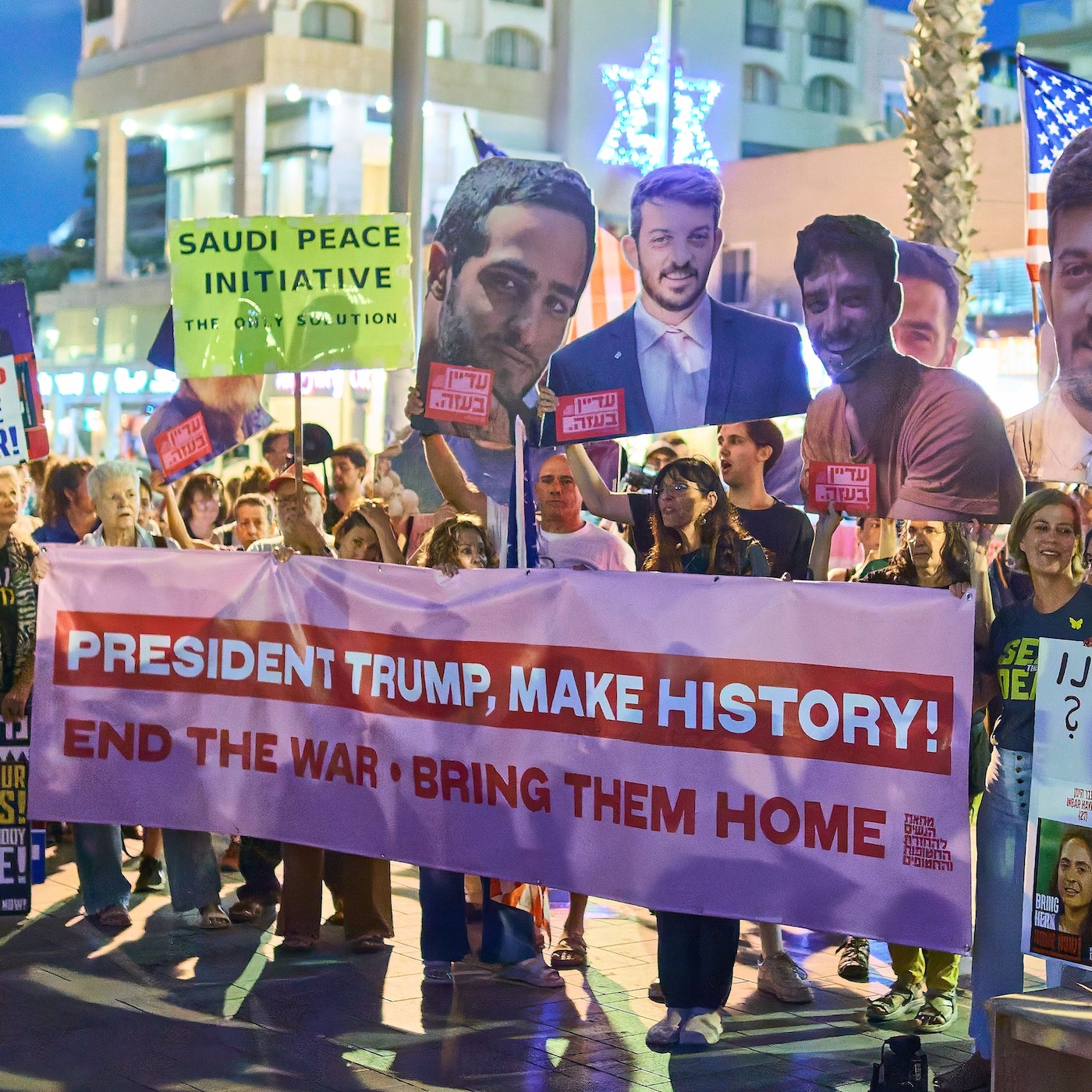
This episode discusses a newly announced ceasefire framework for Gaza and its implications, followed by a debate over the Trump administration's efforts to label and target "left-wing" political violence (Antifa and allied groups). Hosts David Greene, Mo Alethe (left), and Will Swaim (right) analyze the potential and limits of the Gaza deal, broader regional security ramifications, and domestic political consequences of government responses to protest and political violence. The show closes with a listener question about polarization and brief rants/raves.
Key points & main takeaways
Gaza ceasefire deal — cautious optimism, many unresolved issues
- The U.S. (President Trump referenced in the show) circulated a 20-point outline: phased hostage returns, removal and disarmament of Hamas from Gaza, an international security force, and a board chaired by Trump and Tony Blair.
- Panel consensus: the ceasefire/first-phase is a necessary relief and reason to celebrate, particularly for hostage families — but it is only the first step.
- Major outstanding questions:
- Will Hamas be fully removed and disarmed in practice?
- Will Israeli forces fully withdraw or only partially? Partial occupation would jeopardize long-term peace.
- Who will have legitimate Palestinian self-determination vs. international governance? Past foreign-imposed arrangements have proven unsustainable.
- Broader regional stakes: the conflict highlighted a network of actors (Hezbollah, Iranian proxies, Houthis, Russia, China) — meaning a much larger, multi-year strategic contest beyond Gaza alone.
- Takeaway: a fragile, tentative gain — meaningful peace will require trust, enforcement, and answers to key political questions; long-term stability is uncertain.
Domestic politics — defining and responding to political violence
- The Trump administration is emphasizing threats from left-wing political violence, signed a memorandum targeting organizations that support political violence, and publicly framed groups like Antifa as a domestic terror threat.
- CSIS assessment noted an increase in left-wing attacks in 2025 (first time in 30+ years left-wing attacks outnumber right-wing) but emphasized levels remain much lower than historical right-wing and jihadist violence and warned against overbroad crackdowns.
- Debate points:
- Mo Alethe: Concern that the administration conflates three distinct things — peaceful protest, civil disobedience, and violent political action — and that conflation threatens civil liberties; also highlighted hypocrisy given pardons for right-wing actors.
- Will Swaim: Acknowledges organized efforts to disrupt federal enforcement (e.g., ICE protests in L.A.), supports legitimate federal response where law enforcement is obstructed, but recognizes risk of overreach and the role of mental illness and lone actors in violence.
- Specific controversy: announcements that ICE/homeland security would be prominent at the Super Bowl after Bad Bunny agreed to perform—panelists criticized politicizing security deployments and argued ICE presence is largely theatrical and disruptive to local workers.
- Takeaway: legitimate need to address political violence, but risks of politicized enforcement and civil-liberties infringements are real; clarity and restraint are needed.
Polarization & civic health
- Listener question: Are we headed toward deeper dysfunction and demonization of the other side?
- Panel responses:
- Polling paradox: majority of Americans say they want compromise and common ground, but a near-equal majority also favors leaders who resist compromise — mixed cues to politicians.
- Recommendations: citizens must demand and incentivize compromise; political life should not consume civic life — engage outside politics and model pluralism.
- Takeaway: hope for compromise exists but requires active civic choices and cultural restraint.
Notable quotes & insights
- "The ceasefire is so desperately needed... but our celebration must be measured — this is only the first step." — Mo Alethe
- Paraphrase from staff: "The deal's so close, peace so far." — Markay Green
- Mo: "Hamas has to go if the Palestinian people are ever going to have the potential for real freedom."
- CSIS (quoted): Left-wing attacks have increased from very low levels and now outnumber violent far-right attacks in 2025, but remain lower than historical right-wing and jihadist violence.
- On polarization: "We say we want common ground... then we say we want leaders who won't compromise." — Mo Alethe (citing institute polling)
- Advice to listeners: "Do not look for salvation inside politics." — Will Swaim
Topics discussed
- U.S.-brokered Gaza ceasefire framework (phases, hostages, Hamas disarmament, international security forces)
- Trust deficits between Israel and Hamas; Netanyahu government posture; Palestinian self-determination concerns
- Regional security implications: Hezbollah, Iran, Houthis, Russia, China
- Trump administration policy on domestic political violence; Antifa labeling; CSIS analysis
- ICE enforcement, the Super Bowl, Bad Bunny controversy, and politicization of security deployments
- Hypocrisy/consistency concerns over pardons and selective enforcement
- Mental illness and lone-actor violence as a complicating factor
- American polarization, public appetite for compromise vs. confrontation
- Cultural notes: trains/Amtrak praise; K-pop demon hunter fatigue
Action items & recommendations (what listeners / policymakers should watch or do)
For observers and policymakers:
- Treat the Gaza ceasefire as provisional — monitor implementation closely (hostage returns, Hamas removal, withdrawal steps), and insist on transparency and enforcement mechanisms.
- Demand clarity on Palestinian self-governance and who legitimately represents Gaza; resist indefinite foreign administration.
- Consider broader regional strategy — track Iran, Hezbollah, Houthis, and extra-regional actors (Russia, China) that are implicated and may exploit instability.
- Avoid conflating peaceful protest/civil disobedience with terrorism; policy responses should be targeted at proven violent actors and preserve civil liberties.
- Follow CSIS and similar nonpartisan analyses to calibrate threat assessments and avoid overreaction.
- Citizens should incentivize political compromise: vote, pressure representatives, and engage in local civic norms that reward negotiation over scorched-earth tactics.
- Reduce politicization of cultural events and security deployments — evaluate homeland-security presence on objective threat grounds, not political theater.
- For listeners: stay engaged but balanced—seek news and civic engagement without letting politics crowd out other life pursuits (art, books, community).
If you want, I can:
- Produce a one-page timeline of the ceasefire framework with the phases described in the episode.
- Pull out exact timestamps and speaker attributions for quotes and claims from the transcript.