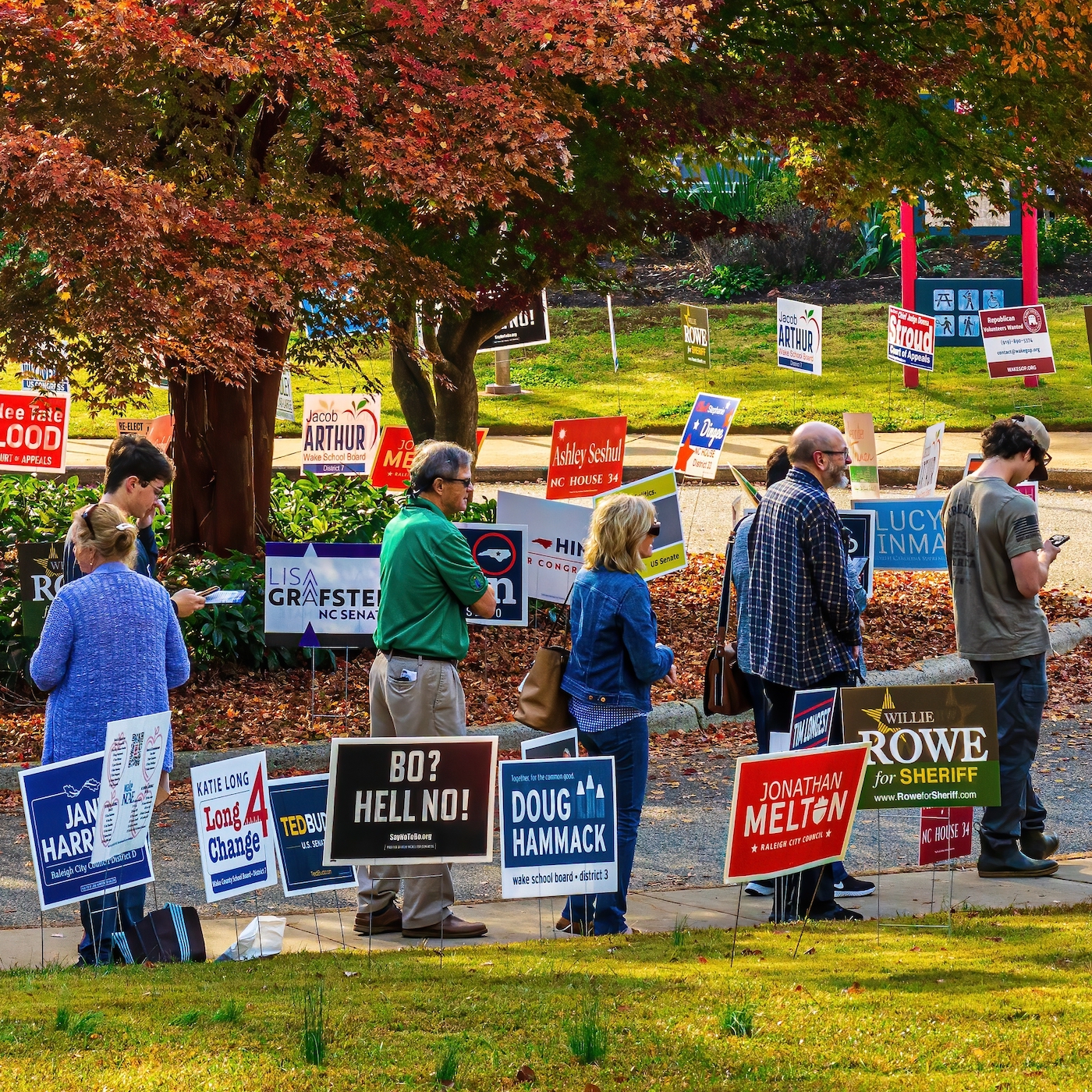
Overview of Left, Right, and Center — “If Democrats Win The Midterms, How Bold Can They Be?”
This episode centers on the 2022 midterms, with a focus on whether a potential Democratic win would be a mandate for bold action or a warning against overreach. Host David Green is joined by progressive strategist Nomiki Konst and The Dispatch editor Jonah Goldberg to debate the politics of affordability, party strategy, election norms, and how Democrats should govern if they take control of the House or Senate. The conversation also touches on ballot-manipulation concerns in Alaska, the implications of Israel’s election, and what all of this says about polarization in the U.S. and abroad.
Midterm Mood: Affordability vs. Existential Politics
Why Democrats may be gaining ground
- Democrats are benefiting from voter frustration over the cost of living, inflation, and economic anxiety.
- The episode notes that many voters see Republicans as “in charge” and may be ready to “throw the bums out.”
- Polls suggest Democrats are feeling increasingly confident about the House, though the hosts repeatedly caution against overreading polling.
Competing Democratic messages
- Nomiki Konst’s view: Democrats should frame the moment not just around affordability, but around the broader “existential” threat posed by Donald Trump and corruption in politics.
- Jonah Goldberg’s view: Democrats risk overestimating their mandate and swinging too far left if they interpret a midterm win as approval for a sweeping agenda.
The Core Debate: Boldness or Overreach?
Nomiki Konst: Build a bigger, populist coalition
- Argues that Democrats should tie affordability to corruption, foreign policy instability, health care costs, student debt, and AI/job disruption.
- Sees progressive economic proposals like Medicare for All as broadly popular and politically useful.
- Believes Democrats need a more unified, ambitious economic message that speaks to crisis-era politics, especially for younger voters.
Jonah Goldberg: Don’t confuse a win with a mandate
- Warns that both parties repeatedly overinterpret narrow victories and then overextend once in power.
- Says parties should build broad coalitions instead of treating every election like a last stand.
- Suggests Democrats, like Republicans under Trump, may be tempted to believe voters endorsed a full ideological agenda when many were simply voting for change, normalcy, or checks and balances.
Congress, Leadership, and the Role of Hakeem Jeffries
Jeffries and the future of Democratic governance
- The discussion turns to whether House Democratic leader Hakeem Jeffries would govern like Nancy Pelosi: progressive in principle, pragmatic in practice.
- Konst says leadership should create room for moderates while pushing a stronger economic agenda.
- Goldberg argues Congress itself is structurally broken, with leadership too centralized and too little room for genuine negotiation.
A deeper institutional critique
- Goldberg blames modern congressional dysfunction on reforms and power centralization that have made politics more rigid.
- He says legislation is increasingly forced through in a top-down, take-it-or-leave-it way, which reduces compromise and fuels extremism.
Alaska’s Strange Ballot Politics
The “other Dan Sullivan” controversy
- The episode examines reporting that Democrats in Alaska may have encouraged a second candidate with the same name as Republican Sen. Dan Sullivan to confuse voters.
- The hosts agree it looks bad, even if it may not be illegal.
- Konst defends it as hardball politics; Goldberg says it is hypocritical and grubby, especially given Democrats’ emphasis on protecting election integrity.
Takeaway
- Both hosts agree the stunt could hurt Democrats’ credibility, even if it does not ultimately decide the race.
- The issue reinforces the episode’s broader theme: both parties regularly complain about democratic norms while engaging in tactics that test them.
Israel’s Election and U.S. Political Projections
Netanyahu, coalition politics, and American reactions
- The episode briefly pivots to Israel’s election and Benjamin Netanyahu’s uncertain political future.
- Goldberg warns against projecting American political assumptions onto Israeli elections, which are shaped by different coalition dynamics and internal issues.
Israel in U.S. politics
- The hosts debate whether criticism of Israeli policy is becoming entangled with anti-Semitism and partisan identity in the U.S.
- Konst argues that there should be room to question U.S. aid to Israel and the politics surrounding it.
- Goldberg says some criticisms are legitimate, but others are pretextual or anti-Semitic, especially when they blame Israel for U.S. grocery prices or broader inflation.
Bigger implication
- Both agree the Israel debate is not going away, especially among younger voters and progressive activists.
- Goldberg suggests that if U.S. aid to Israel declines, it may expose whether some critics were focused on policy or simply using Israel as a proxy issue.
Rant and Rave Highlights
Nomiki’s rant: noisy headphones
- Konst vents about Apple headphones/AirPods and how difficult it is to hear audio clearly in noisy environments like the subway or street.
Jonah’s rant: forgetting what to rant about
- Goldberg jokes that he always forgets his complaints when given a chance to rant on air.
- His complaint becomes a meta-rant about the difficulty of remembering grievances in the moment.
David’s rave: Obama, Trump, and the Cheesecake Factory analogy
- Green praises Barack Obama’s response to Trump’s White House renovations and the media attention around them.
- He argues Obama successfully reframed the conversation around Trump’s distractions versus real economic problems, especially affordability.
Main Takeaways
- Democrats may be benefiting from economic dissatisfaction, but there is no consensus yet on whether that should translate into a modest governing mandate or a bold progressive agenda.
- The episode repeatedly returns to a central question: What does it mean to “win” in a polarized, crisis-driven political era?
- Both guests agree that modern politics rewards sharp messaging, but they disagree on whether Democrats should use a win to govern cautiously or seize the moment for sweeping change.
- The conversation suggests that the real test after the midterms will not just be electoral success, but whether either party can break out of its cycle of overreach, backlash, and institutional dysfunction.