Overview of Left, Right & Center (KCRW)
This episode centered on Graham Platner’s withdrawal from the Maine Senate race after new sexual assault allegations resurfaced, and what his exit means for Democrats’ chances of defeating Sen. Susan Collins. The panel also debated political vetting, party responsibility, candidate authenticity, corruption narratives around Donald Trump, and whether Congress’s dysfunction is really voters’ fault. The show closed with listener questions and the hosts’ weekly rants/raves.
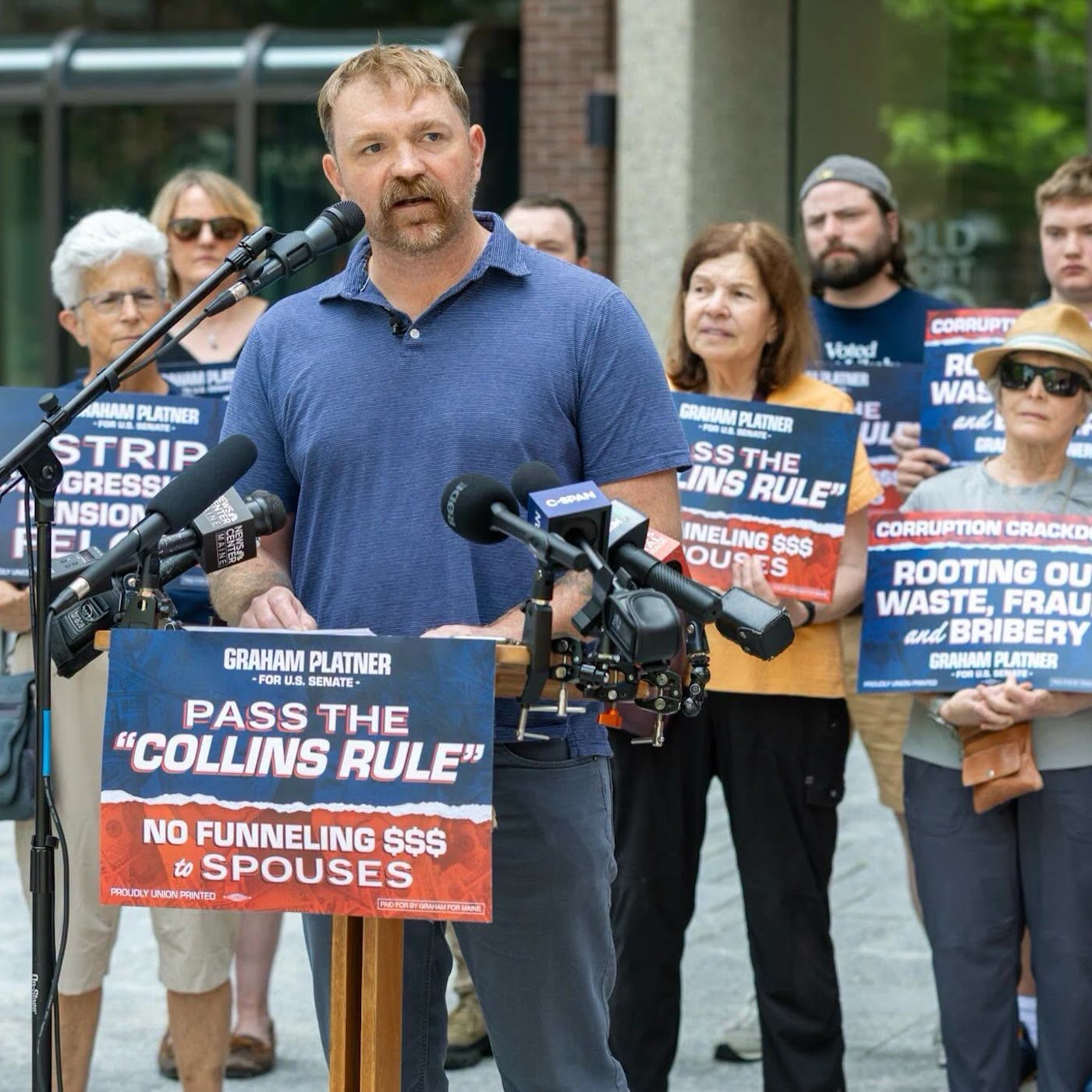
Maine Senate Race: Graham Platner Drops Out
Platner, the Democratic candidate in Maine, suspended his campaign after a woman he once dated accused him of rape. The panel discussed how the story further destabilizes a race that Democrats viewed as important for retaking the Senate.
Main points of debate
-
Why he got this far:
- Mo argued Platner rose because he fit the mood of anti-establishment anger and because consultants who backed him also handled vetting, creating a conflict of interest.
- Sarah said the candidate’s public image as a working-class outsider did not match the polling, which showed his support was strongest among college-educated white voters, not working-class voters.
-
Role of the party:
- Mo emphasized that political parties do not formally vet primary candidates in the U.S.; the system is designed to let voters decide.
- The party can’t fully control who wins a primary, but it can help shape the eventual general-election field.
-
Lessons from the fallout:
- Sarah argued Democrats ignored obvious red flags for too long, including earlier accusations and troubling symbols in his past.
- Mo agreed Platner should have been disqualified earlier, saying the more the public learned, the more troubling he became.
What happens next in Maine
- Platner said the replacement should be chosen through a democratic process, not a backroom decision.
- Mo stressed that the Maine Democratic Party needs to make the replacement process transparent and inclusive, ideally with debates and broad participation.
- There was concern that national party leaders, like Chuck Schumer, should not appear to simply install a candidate.
Candidate Authenticity, Working-Class Politics, and Party Messaging
The panel used Platner’s rise and collapse to discuss a broader Democratic dilemma:
- Progressive candidates often talk the language of working-class politics, but may not actually win working-class voters.
- Mo argued these candidates are forcing a conversation the Democratic establishment has avoided: how to reconnect with working-class Americans in a credible way.
- Sarah pushed back on the idea that this style of candidate is automatically the answer, calling it more like “message cosplay” than genuine working-class alignment.
- Both agreed the party has a real opening only if it can offer authentic, not performative, economic populism.
Corruption, Trump, and the FIFA Red Card
The second major discussion focused on accusations of corruption and how Americans interpret them.
Trump/FIFA example
The panel discussed Donald Trump’s call to FIFA after a controversial red card involving a U.S. player was overturned.
-
Sarah’s argument:
- This incident should not be treated as a grand moral or constitutional crisis.
- FIFA’s process is messy and self-interested; Trump’s call may have been opportunistic, but it does not prove anything beyond that.
- She warned against turning every episode into a binary judgment on Trump’s entire presidency.
-
Mo’s argument:
- Trump wants people to believe he can simply exert power by making a phone call and changing outcomes.
- He thrives on the image of being so powerful that he can bend institutions to his will.
Bigger corruption message
The panel agreed the Trump/FIFA story is not the best argument for Democrats.
- Mo said Democrats should focus instead on:
- Trump’s crypto profits and self-enrichment
- the fact that his family appears to be benefiting from his presidency
- the everyday economic pain of voters whose lives are getting more expensive while Trump gets richer
Core takeaway
Corruption only becomes politically powerful when it is tied to how it affects ordinary people’s lives. Abstract complaints about corruption are less effective than showing how elites profit while voters struggle.
Congress Gridlock: Is It the Voters’ Fault?
The hosts then took on listener questions about why Congress passes so few bills and whether the real blame lies with voters, political parties, or money in politics.
Listener concerns
- One listener argued that super PACs, parties, and media-driven radicalization are the real problem, not voters.
- Another suggested the electorate is too uninformed or “stupid,” which the hosts rejected.
The panel’s response
-
Sarah:
- The biggest issue is the small-dollar donor ecosystem and the incentive structure around outrage.
- Candidates who scream the loudest and provoke the most anger tend to raise the most money and win primaries.
- She rejected the idea that voters are stupid; instead, they are busy and have many priorities.
-
Mo:
- Politics is incentive-driven, and voters reward the behavior they say they dislike.
- People who don’t vote in primaries are also part of the problem because they leave the field to highly engaged partisans.
- He agreed that people are self-interested, and politicians exploit that.
Bottom line
The hosts argued that Congress is dysfunctional because the system rewards outrage, fundraising, and narrow primary electorates, not compromise or governance.
Rants and Raves
The episode ended with the hosts sharing personal highlights:
Sarah’s rave
- A love of handwritten notes.
- She said old notes she has saved bring her real joy and encouraged listeners to write a note to someone they care about.
Mo’s rave
- A reflective Fourth of July story about watching fireworks in Washington, D.C.
- He said the moment reminded him that community and shared celebration matter more than cable-news narratives.
David’s rave
- A tribute to Don Gonyea, a veteran NPR journalist and friend who is stepping away from the network.
- David praised Gonyea’s storytelling, mentorship, and humanity.
Key Takeaways
- Platner’s withdrawal is a major setback for Maine Democrats, but it also gives them a chance to reset with a more viable nominee.
- The episode highlighted a tension in modern politics: outsider energy can be powerful, but it can also mask weak vetting and bad candidates.
- The panel agreed that corruption narratives are only persuasive when tied to real-life costs for voters.
- Congress’s dysfunction is less about one villain and more about incentives that reward outrage over governing.
- Despite the heavy political themes, the episode ended on a hopeful note about community, gratitude, and public service.