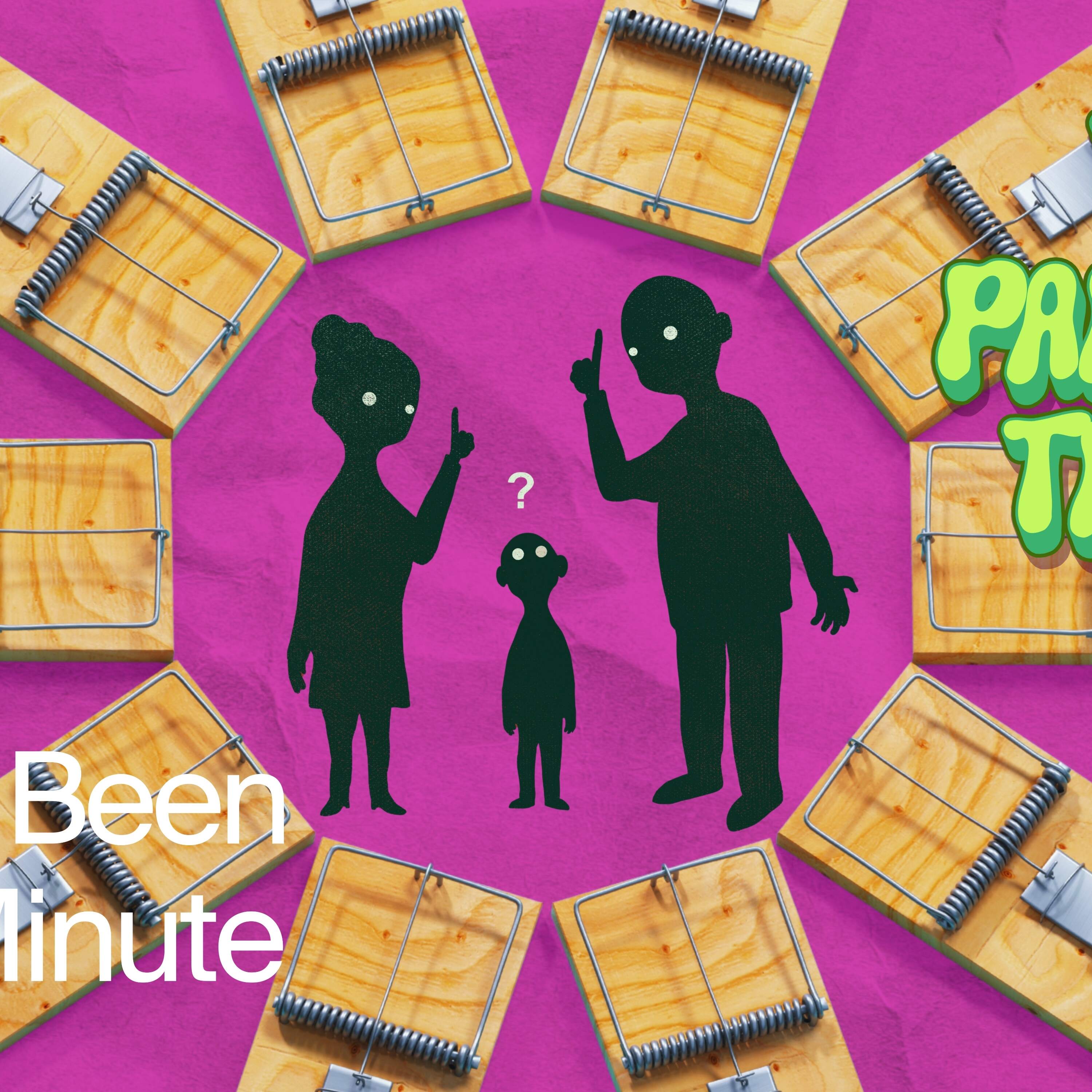
Overview of It's Been a Minute — "The fear & shame of modern parenting"
This NPR episode (host Brittany Luce) examines how fear, shame and identity shape contemporary parenting in the U.S. Guests Cynthia Wong (Kellogg School of Management) and Karen Leick (author of Parents, Media, and Panic Through the Years) discuss psychological drivers of parental anxiety, how media and culture amplify moral panics, the real impacts on kids and society, and practical ways parents can distinguish legitimate risks from emotion-driven reactions.
Key points and main takeaways
- Parental identity is powerful: parents often view children as extensions of themselves, so children's successes or failures feel like reflections on parental worth.
- Fear and shame produce predictable parenting styles:
- Perfectionist parents push achievement as a reflection of their own status.
- Helicopter parents try to control/monitor to stave off uncertainty or chaos.
- Psychological mechanism: uncertainty → pattern-seeking and oversimplified explanations → efforts to regain control (often by removing the feared object) rather than addressing emotions.
- Fear spreads to children: over-control and perfectionism teach children to distrust themselves and internalize anxiety ("anxiety is the price of caring").
- Media and moral panics have historical precedent (radio, TV, women's magazines) and modern amplification via social media; these panics can lead to regulation (e.g., ESRB from video-game panic) or harmful movements (e.g., vaccine hesitancy).
- Gendered burden: mothers report higher overprotectiveness and judgement—Pew: 51% of mothers say they tend to be overprotective vs 38% of fathers; 41% of mothers feel judged vs 27% of fathers.
- When parents feel powerless or distrust institutions, they may reject expert advice to reclaim control, sometimes with harmful outcomes (e.g., vaccine refusal, polarization).
Topics discussed
- Psychological roots of parenting fear and shame
- Types of fear-driven parenting (perfectionism, helicoptering)
- How uncertainty and crises (e.g., pandemics) fuel conspiracy thinking and distrust
- Historical and modern media roles in parenting panics
- Societal consequences: policy, polarization, economic fallout
- Gendered expectations and the disproportionate pressure on mothers
- Practical balance: safety vs over-surveillance (example: phone tracking in Chicago vs reasonable logistics)
Notable quotes and insights
- "The parent is thinking, my identity as a parent is very important. If the child succeeds, then it shows that I'm also succeeding as a parent." — Cynthia Wong
- "Anxiety is the price of caring." — Cynthia Wong (highlighted as a resonant line)
- "Children are really sensitive. They absorb emotional tone." — Cynthia Wong
- Historical note: fear-based parenting content frequently ran in women's magazines (Ladies Home Journal, Good Housekeeping), showing a long pattern of mother-targeted messaging.
Practical advice & recommendations (actionable takeaways)
- Pause and self-reflect: recognize fear is an automatic emotional response before acting on it.
- Fact-check sources: prefer reputable, evidence-based information rather than sensationalized coverage.
- Talk with your child: be curious, ask questions, engage in conversation rather than assume the worst.
- Distinguish risk vs probability: focus on realistic, high-probability harms rather than low-probability catastrophes.
- Avoid over-surveillance: use tools for legitimate logistics; avoid tracking or micromanaging out of fear.
- Teach autonomy and trust: over-control undermines children’s self-trust and decision-making.
- Seek community and expert guidance when uncertainty is high (and be wary of conspiratorial explanations that promise control).
Episode guests & credits
- Guests: Cynthia Wong — clinical professor, management & organizations, Kellogg School of Management (Northwestern University); Karen Leick — author, Parents, Media, and Panic Through the Years.
- Host: Brittany Luce.
- Production: Produced by Corey Antonio Rose; edited by Nina Potok; supervising producer Barton Girdwood; executive producer Verilynn Williams.
Why this matters
Parenting fear and shame shape family life, public policy and cultural polarization. Understanding the emotional drivers and historical patterns behind moral panics helps parents (and non-parents) respond more thoughtfully — protecting kids without amplifying anxiety or unintentionally harming them.